
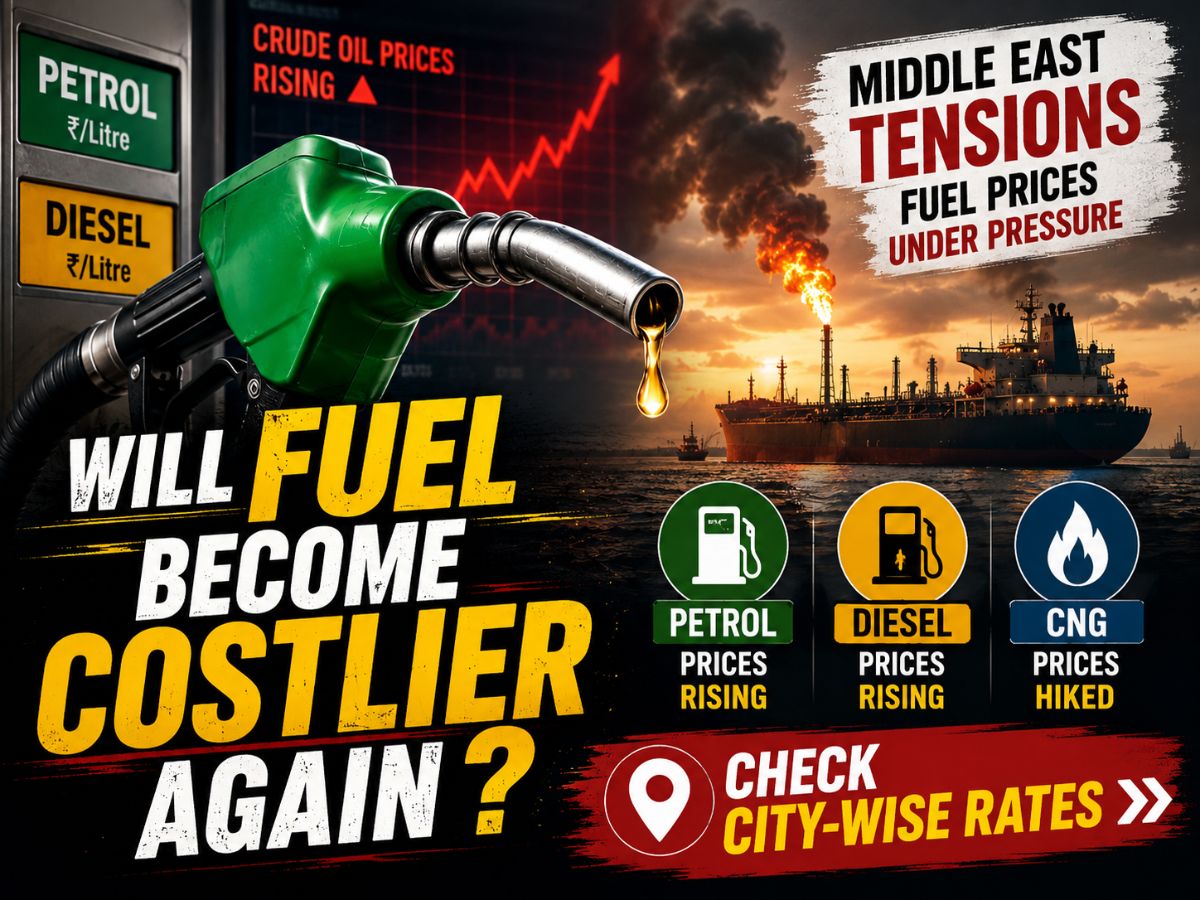
Petrol and Diesel Prices Today, May 24, 2026: On Saturday, state-owned oil marketing companies increased the price of petrol and diesel. Consumers will once again have to pay the increased price of energy at the international level.
The price of petrol has increased by 87 paise per litre, while the price of diesel has increased by 91 paise per litre. Thus, the retail price of petrol and diesel will go up by nearly Rs.5 a litre within 10 days, the highest rise witnessed in recent times.
This is the third price rise in recent days after a Rs 3 hike on May 15th and a Rs 0.90 hike on May 19th. The oil companies cite the increase in global crude prices as a reason.
At the same time, the market also keeps a close eye on the situation of war in Iran and increasing tensions at the Strait of Hormuz, which is a critical route for oil trading globally. Any disturbance there affects crude and freight costs everywhere.
As Global Oil Risks Grow, Rumours Of Fuel Shortages Rise
And there are also reports of fuel shortages gaining ground in parts of the market, alongside rising prices, in the face of geopolitical uncertainty.
But the current price revisions are based on international crude movements, not an announced domestic supply disruption. Oil marketing companies have continued to claim that the changes are calibrated pass-throughs of higher import costs.
The immediate concern for households and businesses is less about availability and more about the knock-on effect on transport expenses, logistics and inflation.
Petrol Prices Today in India (May 24, 2026)
| City | Petrol Price (Per Litre) |
|---|---|
| New Delhi | ₹99.51 |
| Kolkata | ₹110.61 |
| Mumbai | ₹108.45 |
| Chennai | ₹105.38 |
| Gurgaon | ₹100.16 |
| Noida | ₹99.51 |
| Bangalore | ₹108.09 |
| Bhubaneswar | ₹106.10 |
| Chandigarh | ₹98.95 |
| Hyderabad | ₹112.81 |
| Jaipur | ₹109.84 |
| Lucknow | ₹99.28 |
| Patna | ₹110.47 |
| Thiruvananthapuram | ₹112.64 |
Diesel Prices Today in India (May 24, 2026)
| City | Diesel Price (Per Litre) |
|---|---|
| New Delhi | ₹92.49 |
| Kolkata | ₹97.02 |
| Mumbai | ₹95.02 |
| Chennai | ₹97.08 |
| Gurgaon | ₹92.73 |
| Noida | ₹92.84 |
| Bangalore | ₹95.99 |
| Bhubaneswar | ₹97.73 |
| Chandigarh | ₹86.94 |
| Hyderabad | ₹100.94 |
| Jaipur | ₹95.05 |
| Lucknow | ₹92.64 |
| Patna | ₹96.53 |
| Thiruvananthapuram | ₹101.55 |
CNG Also Becomes Costlier
It’s not just petrol and diesel that are being squeezed.
Delhi’s Compressed Natural Gas (CNG) prices were hiked on Saturday by 1 per kg to 81.09, the third revision in recent days.
The total increase now stands at ₹4 per kg after this:
May 15: Increase of ₹2 per kg
May 17: 1 per kg hike
May 23: 1 per kg hike
That could mean higher operating expenses for commercial transport, cabs and delivery networks.
But Why Do Petrol and Diesel Prices Differ From state to state?
Have you ever noticed that while filling fuel in a state, the price there feels considerably pricier than in another state? Well, it might not always be due to the crude oil prices.
As petrol and diesel prices move up again this month, the Centre has said state-level taxes remain one of the biggest reasons behind the wide gap in retail fuel rates across India.
According to the government, excise duty charged by the Centre stays uniform across the country. But the final amount consumers pay at the fuel station changes because every state follows its Value Added Tax (VAT) structure and may also add local cesses or fixed charges per litre.
That means even when oil companies revise prices nationally, the actual impact on consumers can vary depending on where they live.
In a statement issued after the recent hike, the government maintained that the states with a larger VAT slab, in most cases, still have higher prices at retail outlets. The government cited states like Telangana and Kerala, in which petrol and diesel prices still prevail as the highest, while regions such as Gujarat, Uttar Pradesh, Delhi, Haryana, Goa and Assam have comparatively lower rates.
The Centre explained the difference this way: “The States with the highest VAT impose effective rates of 30% and more, layered with per-litre additions and infrastructure cesses. The states with the lowest impose rates closer to 20 per cent, no per-litre addition, and no further cess,” said a notification issued by the Centre.
The government also highlighted that after the latest revision, petrol prices crossed ₹112 per litre in Andhra Pradesh, Telangana and Kerala.
Giving more details on how taxes differ, it said, “Andhra Pradesh charges 31 per cent VAT plus Rs 4 a litre plus a road development cess, taking the effective rate close to 35 per cent. Telangana takes petrol close to Rs 116. Kerala adds a social security cess on top of its base VAT.”
At the same time, the Centre said some states have managed to keep fuel rates comparatively lower. According to the government, Gujarat, Uttar Pradesh, Delhi, Haryana, Goa and Assam currently have petrol prices at or below ₹102 per litre.
The note also included a political swipe over fuel pricing: “The same opposition leaderships that ask the Central Government to cut excise duty for the relief of the consumer have at no point cut the VAT their own State Governments levy on the same litre of fuel.”
So, What Does It All Mean For The Average Consumer?
The fact is that the prices faced by families, transport operators and businesses are likely to become more linked to international energy markets than to government policy within the country. That means crude oil movement, tensions in the Middle East and future pricing decisions by oil companies could remain key triggers to watch in the days ahead.
(Disclaimer: This article is for informational purposes only and should not be considered investment advice. The views, opinions, and recommendations expressed herein are those of the respective experts. Readers are advised to consult a qualified financial advisor before making any investment decisions.)
Priyanka Roshan is a business writer and assistant editor at the NewsX website who tracks everything from stock market swings and corporate earnings to personal finance trends and policy shifts. Known for turning fast-moving business developments into sharp, reader-friendly stories, she combines speed, accuracy, and a data-driven approach to break down complex financial news for everyday audiences.
With over 9.5 years of newsroom experience, Priyanka has worked with leading media organisations, including Moneycontrol, Times Now, and Ping Digital, covering diverse beats such as business, politics, technology, auto, travel, sports, and the world. From live breaking news desks to SEO-led digital storytelling, she specialises in creating engaging content that keeps readers informed without overwhelming them.





