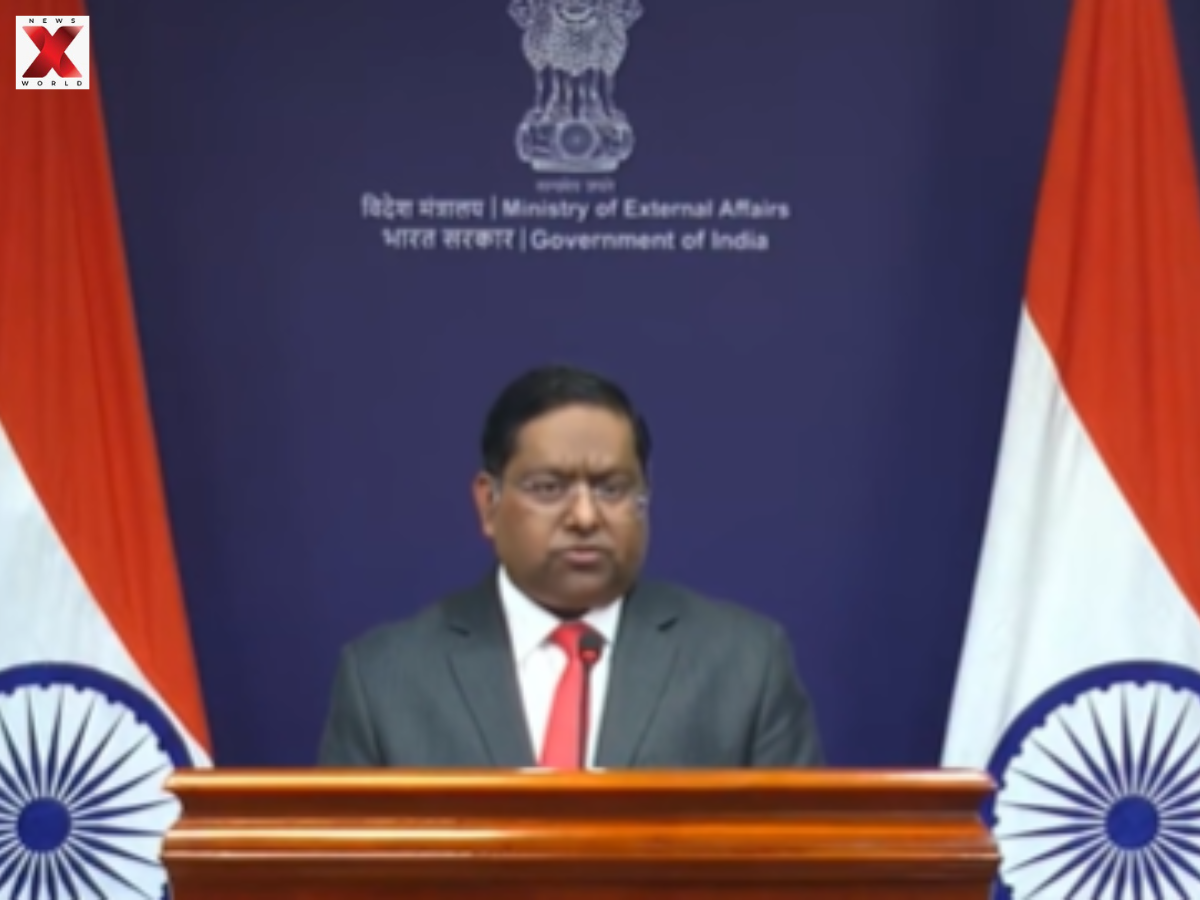

India on Thursday dismissed Pakistan’s allegations that New Delhi was fuelling tensions with Afghanistan, describing the claims as “baseless” and accusing Islamabad of deflecting blame for its own actions.
At the weekly media briefing, Ministry of External Affairs spokesperson Randhir Jaiswal rejected the accusations, saying Pakistan’s long record of state-sponsored terrorism undermines the credibility of its claims.
“On Pakistan, about the statement that they had made. So, on that, I would like to say that we reject such baseless allegations. It has become second nature for Pakistan to blame India for its misdeeds. As a state sponsor of terrorism for decades, Pakistan has zero credibility when it comes to cross-border terrorism; no amount of storytelling is going to alter this reality, nor is anyone fooled by Pakistan’s assumed victimhood,” he said.
Pakistan and Afghanistan have exchanged airstrikes and claims of casualties along the Durand Line in February. Pakistan launched air strikes on Afghanistan’s capital, Kabul, and other cities, as clashes escalate along the two countries’ shared border.
On February 27, Pakistan launched airstrikes targeting Kabul and other Afghan cities. Pakistan’s Defence Minister, Khawaja Asif, declared an “open war,” stating that Pakistan’s “cup of patience has overflowed.”
He accused the Taliban of harbouring global terrorists and exporting militancy.
The Afghan Ministry of National Defence claimed that 55 Pakistani soldiers were killed in retaliatory operations along the Durand Line on February 26.
The Durand Line dispute and the Taliban’s return to power in 2021 have fueled tensions between Pakistan and Afghanistan, with frequent clashes reported.
In particular, Pakistan wants the Taliban to rein in armed groups such as the Pakistan Taliban, known by its acronym TTP, which it says Afghanistan is harbouring.
The TTP emerged in Pakistan in 2007 and is separate from the Taliban in Afghanistan, but shares deep ideological, social and linguistic ties with the group, as per Al Jazeera.
Armed attacks in Pakistan by the TTP and the Balochistan Liberation Army (BLA), which operates in the resource-rich Balochistan province, have surged in recent years. Khyber Pakhtunkhwa and Balochistan, which border Afghanistan, have borne the brunt of the violence.
India strongly condemned Pakistan’s airstrikes in Afghan territory, specifically noting the civilian casualties (including women and children) during Ramadan and reiterated its support for Afghanistan’s sovereignty and territorial integrity.
Official Spokesperson’s response regarding Pakistan’s airstrikes on Afghanistan had read, “India strongly condemns Pakistan’s airstrikes on Afghan territory that have resulted in civilian casualties, including women and children, during the holy month of Ramadan. It is another attempt by Pakistan to externalise its internal failures. India reiterates its support for Afghanistan’s sovereignty, territorial integrity and independence.”
United Nations Secretary-General Antonio Guterres has urged both sides to adhere to international law, according to a statement delivered by his spokesperson, Stephane Dujarric.
(With ANI Inputs)