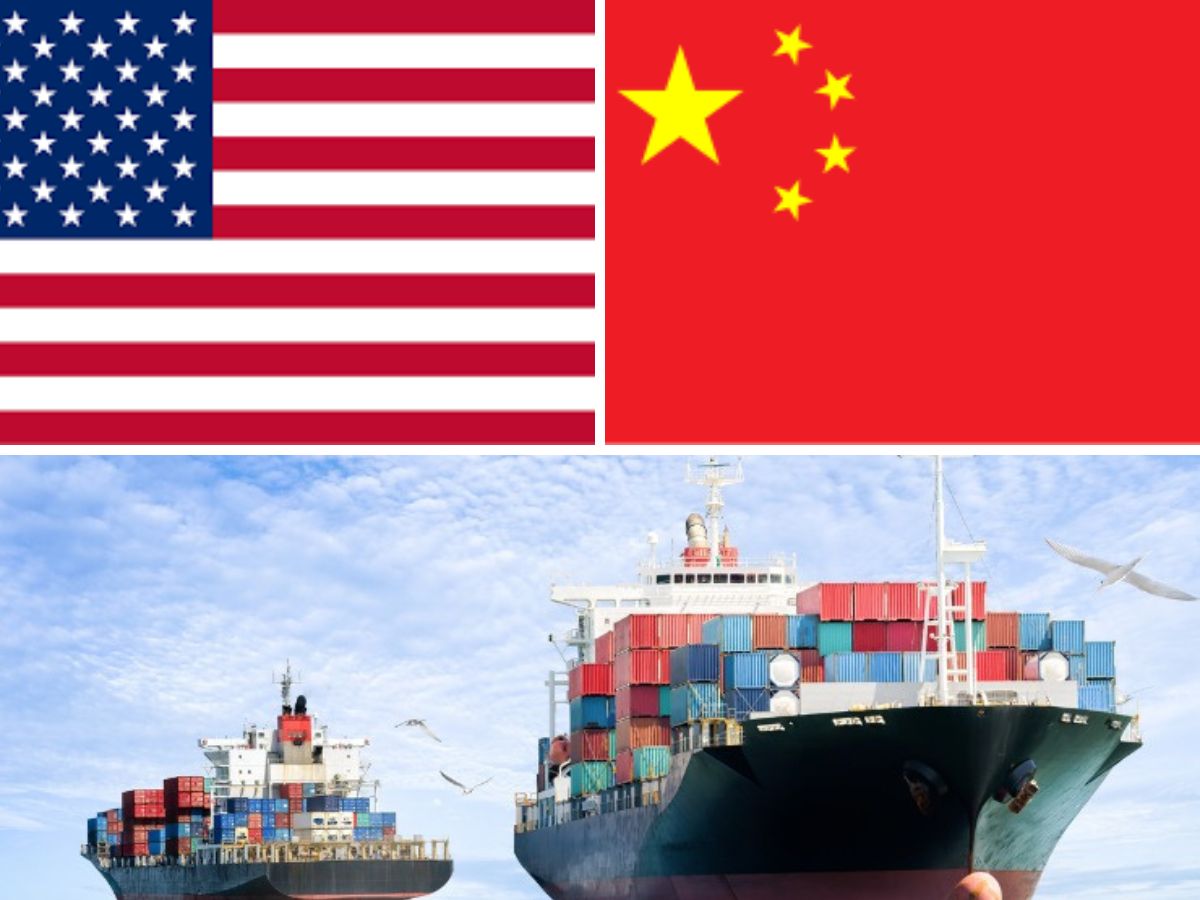
The US-China trade standoff has created uncertainties for regional economies. As the US and China concluded a high-level trade meeting in Stockholm with “no deal,” economic uncertainty is rising across the Asia-Pacific region.
With tariffs between the world’s two major economies possibly surging, countries across the Asia-Pacific region are strategically preparing to protect their economies from the ripple effects that could reshape trade dynamics, supply chains, and regional agreements.
US officials labeled the meetings as “constructive”; however, no resolution was reached. A rise in tariffs could increase costs for Asian exporters that rely on cohesive supply chains involving both the US and China.
Export-Driven Economies May Feel the Pressure
Exports play a vital role in shaping the economies of various Asian countries such as Vietnam, South Korea, Taiwan, Malaysia, and Thailand. Many of these nations may benefit from the earlier phase of negotiations with the US. The US-China trade conflict has redirected investments in China’s manufacturing sector.
However, the uncertainty surrounding trade tariffs could further decrease investor confidence. It may disturb manufacturing schedules, operations, value chains, and put pressure on regional economies.
South Korea, for instance, is heavily dependent on both US and Chinese demand for its semiconductors and electronics. The country may now face sluggish export growth. Similarly, Malaysia and Thailand, key nodes in the automotive and electronics supply chains, could see higher input costs.
Opportunities and Challenges for ASEAN and India
Countries like India and other members of ASEAN may find new opportunities to expand their bilateral trade agreements.
India has recently finalized a Free Trade Agreement (FTA) with the UK and is negotiating trade alignments with the European Union and other nations.
However, analysts warn that overdependence on any of the major economies could lead to geopolitical risks, especially if the US-China competition extends beyond trade.
Also Read: Global Trade On Edge: China-US Talks End Without Tariff Deal Ahead Of August Deadline
Ankur Mishra is a journalist who covers an extensive range of news, from business, stock markets, IPOs to geopolitics, world affairs, international crises, and general news. With over a decade of experience in the business domain, Ankur has been associated with some of the reputed media brands. Through a sharp eye on global marketplaces along with deep insights and analysis of business strategies, Ankur brings simplicity to the complex economic matrix to decode market trends and empower people.
He is committed to entrenched data, facts, research, solutions, and a dedication to value-based journalism. He has covered trade tariff wars, international alliances, corporate policies, government initiatives, regulatory developments, along with micro- and macroeconomic shifts impacting global fiscal dynamics.
A strong western disturbance brings a sudden weather shift to Delhi. IMD issues yellow alert…
A gondola at Engelberg-Titlis ski resort crashed, killing a 61-year-old woman. High winds up to…
Chaitra Navratri 2026, starting March 19, honors Maa Durga’s nine divine forms. Sharing heartfelt wishes…
