

The Iran war is giving a hard time for the US as the sanctioned West Asian country has unexpectedly remained defiant against the combined might of America and Israel. Employing its low-cost missiles and drones, Iran has made sure that the US pays a huge price by spending millions of dollars on its high-end, expensive weaponry.
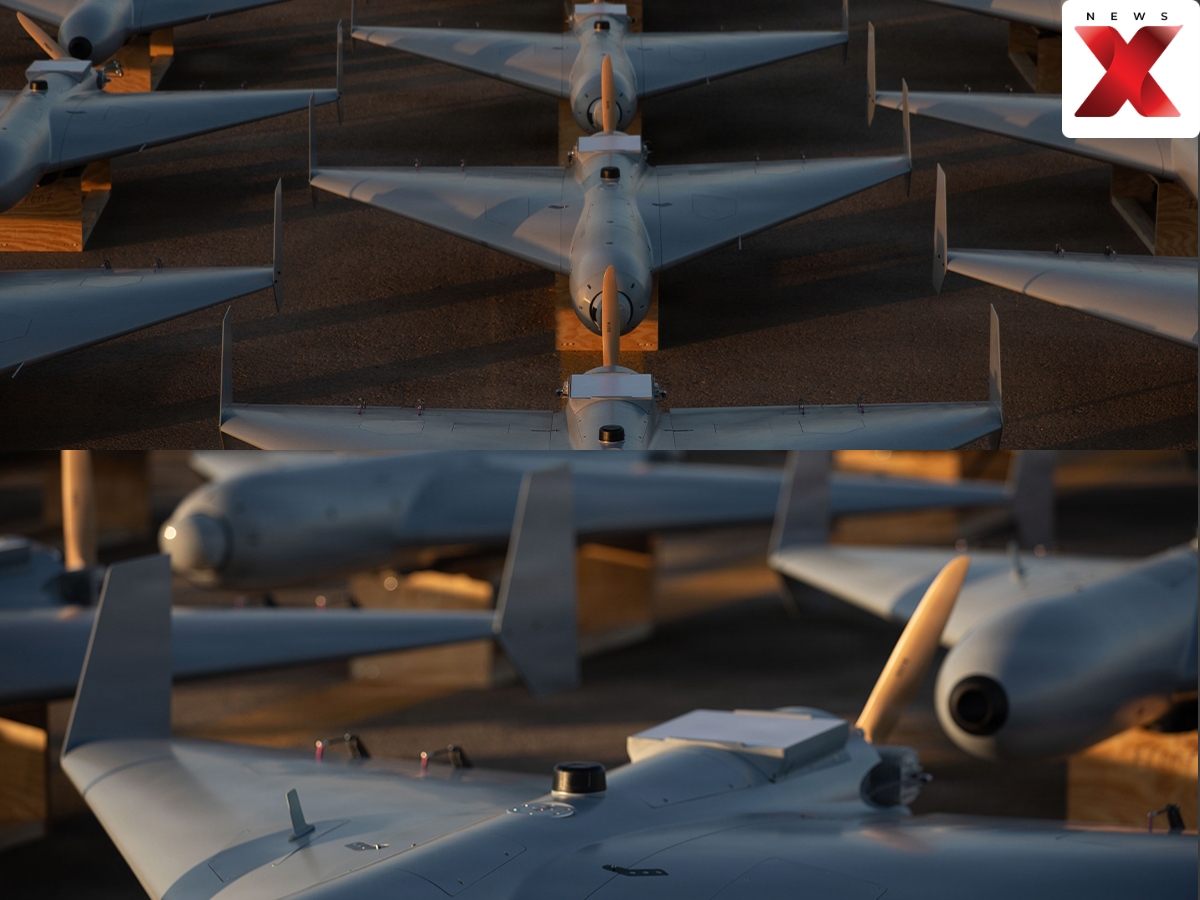
To combat this cost anomaly, the US has quietly introduced a new class of attack drone known as the FLM-136, commonly referred to as “Lucas.” The weapon is reportedly developed by reverse-engineering technology pioneered by Iran’s own drone programme.
Reports indicate that the new US drone’s design philosophy is based on Iran’s Shahed series.
What Is Lucas Drone And How It Is Designed By Reverse-Engineering Iran’s Technology
According to defence reports, the Lucas drone was developed after engineers studied Iranian drone technology and reproduced a simplified version suited for American operations.
According to defence analysts, the system is essentially the “Toyota Corolla of drones.”
It is not designed to be technologically sophisticated or visually impressive, but rather to be dependable, inexpensive and easy to manufacture in large numbers.
Lucas Drone: Cost of Toyota Corolla of Drones
One of the defining features of the Lucas drone is its price. Each unit is estimated to cost between $10,000 and $55,000, placing it in roughly the same economic bracket as Iran’s Shahed drones.
This cost difference becomes striking when compared with conventional US weapons. A single Tomahawk missile, for example, can cost more than $2 million, making large-scale deployments significantly more expensive.
CENTCOM’s Task Force Scorpion Strike – for the first time in history – is using one-way attack drones in combat during Operation Epic Fury. These low-cost drones, modeled after Iran’s Shahed drones, are now delivering American-made retribution. 🇺🇸 pic.twitter.com/VYdjiECKDT
— U.S. Central Command (@CENTCOM) February 28, 2026
How US Used Lucas Drones To Strike IRGC Facilities
The drones have already been deployed in operations targeting infrastructure linked to the Islamic Revolutionary Guard Corps (IRGC). These strikes reportedly focused on weapons infrastructure and facilities involved in drone manufacturing.
Reports claim that the use of Lucas drones played a role in reducing Iranian drone activity during the early phase of the war. A
Lucas Drone Features
Lucas drones can operate for up to six hours, travel more than 500 miles, and fly autonomously during missions. These characteristics allow the United States to launch repeated low-cost strikes over long distances.
However, analysts note several limitations. The drones may struggle in complex electronic warfare environments, particularly in regions where GPS jamming or advanced electronic countermeasures are widely deployed.
Such environments could include a potential future conflict involving technologically advanced militaries, such as China.
What Are Iran’s Shahed Drones?
Iran’s Shahed drone series, along with ballistic missiles, has become one of Tehran’s most significant domestically produced air weapons.
The system was designed as a relatively cheap tool of asymmetric warfare. Rather than directly outperform Western air defences, the strategy focuses on overwhelming and exhausting them through volume.
The original Shahed-131 model first demonstrated its operational capability in September 2019, when it was used in an attack on a Saudi oil refinery.
When news of the Lucas system surfaced in December 2025, a senior Iranian official reportedly reacted with sarcasm, saying, “There is no greater honour than seeing self-proclaimed superpowers kneel before an Iranian drone and copy it.”
Zubair Amin is a Senior Journalist at NewsX with over seven years of experience in reporting and editorial work. He has written for leading national and international publications, including Foreign Policy Magazine, Al Jazeera, The Economic Times, The Indian Express, The Wire, Article 14, Mongabay, News9, among others. His primary focus is on international affairs, with a strong interest in US politics and policy. He also writes on West Asia, Indian polity, and constitutional issues. Zubair tweets at zubaiyr.amin




