
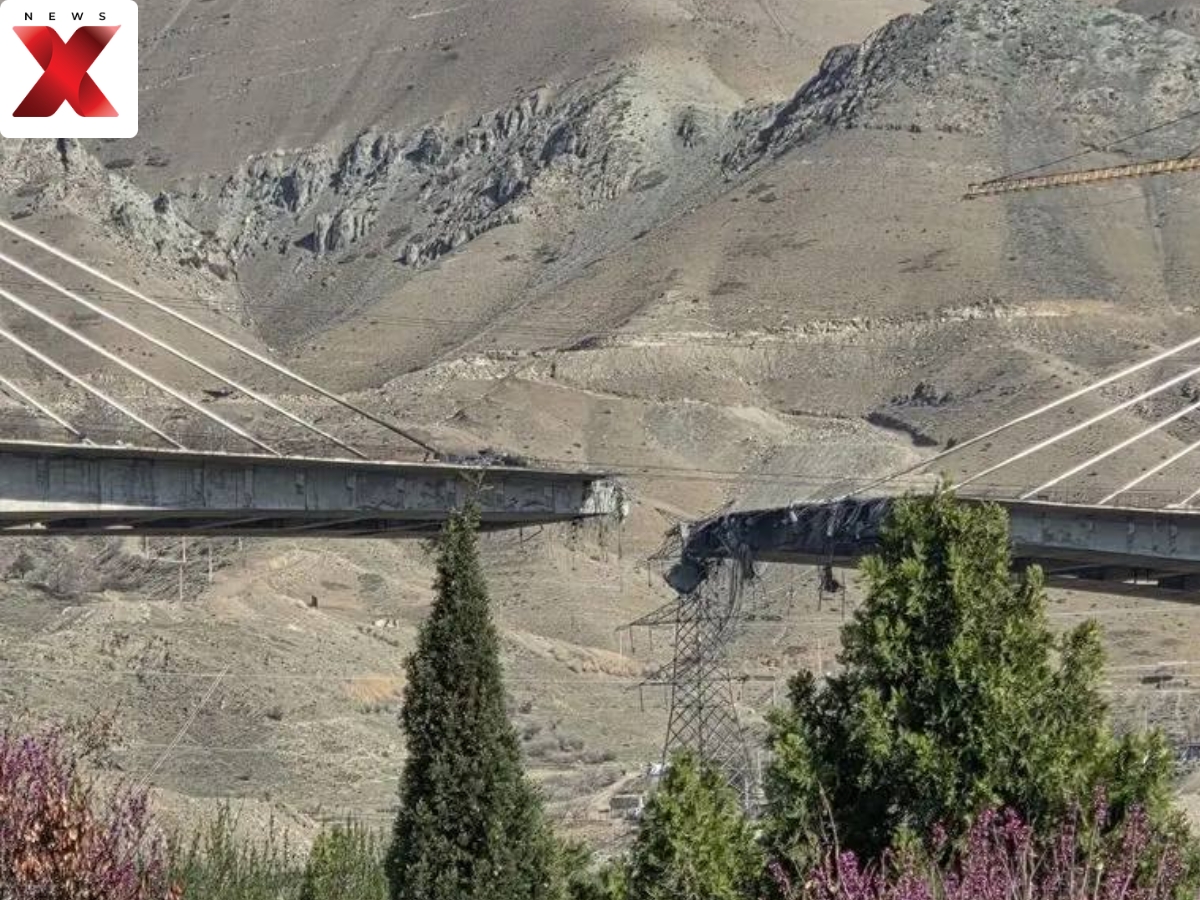

US President Donald Trump on Thursday claimed that Iran’s largest bridge had been struck, sharing a video that appeared to show the structure collapsing and warning Tehran that further action could follow if it failed to reach an agreement with Washington.
In a post on the social media platform Truth Social, Trump said the attack had destroyed a major piece of Iranian infrastructure and urged the country to strike a deal before the situation escalates further.
“The biggest bridge in Iran comes tumbling down, never to be used again — Much more to follow! IT IS TIME FOR IRAN TO MAKE A DEAL BEFORE IT IS TOO LATE, AND THERE IS NOTHING LEFT OF WHAT STILL COULD BECOME A GREAT COUNTRY! President DONALD J. TRUMP.”
US Army Chief of Staff Removed
In a separate development on Thursday, the US Army’s top officer, Randy George, was dismissed from his position as Chief of Staff.
According to three US defence officials cited by Reuters, the decision was taken by US Defence Secretary Pete Hegseth, marking the latest leadership shake-up within the Pentagon’s senior ranks.
The move comes at a time of rising geopolitical tensions and growing military activity involving the United States and its allies.
Trump Maintains Hardline Stance on Iran
Trump’s comments followed a warning issued a day earlier in which he threatened to bomb Iran “back to the Stone Ages” if tensions escalated further.
Doubling down on his rhetoric, the US president again took to social media to claim that the bridge had been sent “tumbling down,” while cautioning that additional strikes could follow.
The strikes have also had broader economic implications for Iran. The country’s two largest steel plants have reportedly been forced offline following repeated attacks carried out by the United States and Israel, according to company statements.
Strategic Significance of the B1 Bridge
The bridge referenced by Trump is the B1 bridge, which was inaugurated earlier this year and is considered the highest bridge in the Middle East.
The project stretches approximately 1,050 metres and features a central column rising 136 metres. Built at a cost of about $400 million, the bridge was intended to boost regional trade and improve connectivity between Tehran and northern parts of the country.
Iran’s semi-official news agency Fars News Agency reported that the strikes were concentrated around the Azimiyeh area of Karaj. According to the report, the bridge itself was targeted on the Karaj Northern Bypass.
Reacting to the attack, Iranian Foreign Minister Seyed Abbas Araghchi said, “Striking civilian structures, including unfinished bridges, will not compel Iranians to surrender. It only conveys the defeat and moral collapse of an enemy in disarray. Every bridge and building will be built back stronger. What will never recover: damage to America’s standing.”
Striking civilian structures, including unfinished bridges, will not compel Iranians to surrender.
It only conveys the defeat and moral collapse of an enemy in disarray. Every bridge and building will be built back stronger. What will never recover: damage to America’s standing. pic.twitter.com/872zuE36qD
— Seyed Abbas Araghchi (@araghchi) April 2, 2026
Zubair Amin is a Senior Journalist at NewsX with over seven years of experience in reporting and editorial work. He has written for leading national and international publications, including Foreign Policy Magazine, Al Jazeera, The Economic Times, The Indian Express, The Wire, Article 14, Mongabay, News9, among others. His primary focus is on international affairs, with a strong interest in US politics and policy. He also writes on West Asia, Indian polity, and constitutional issues. Zubair tweets at zubaiyr.amin




