

US President Donald Trump on Wednesday shrugged off the responsibility of securing the Strait of Hormuz. While delivering a 90-minute national address, he said that other countries should assume primary responsibility for securing and reopening the strategically vital Strait of Hormuz. Iran has imposed a selective lockdown on the Strait after the US attacked the country on February 28.
What Trump Said On Strait Of Hormuz
During his address, Trump said that while the United States would remain supportive, it should not carry the primary burden of safeguarding the critical maritime corridor.
“We will be helpful, but they should take the lead,” Trump said while referring to efforts to reopen the Strait.
He added that other nations must take responsibility for ensuring the passage remains operational.
“They must take care of that passage, they must cherish it, they must grab it,” Trump said, claiming that the task could be accomplished easily.
Iran Reacts To Donald Trump’s Comments On Strait Of Hormuz
Iran has responded to Trump’s comments related to the Strait. An adviser to Iran’s supreme leader said that the waterway would remain open and accessible to everyone but not to enemies of Iran.
Ali Akbar Velayati said in a post on X that the outcome of the ongoing conflict would depend on Tehran’s strategic approach rather than what he described as the “illusions” of its opponents.
“The Strait of Hormuz is open to the world, but it will remain closed to the enemies of the Iranian people and their bases in the region,” Velayati said.
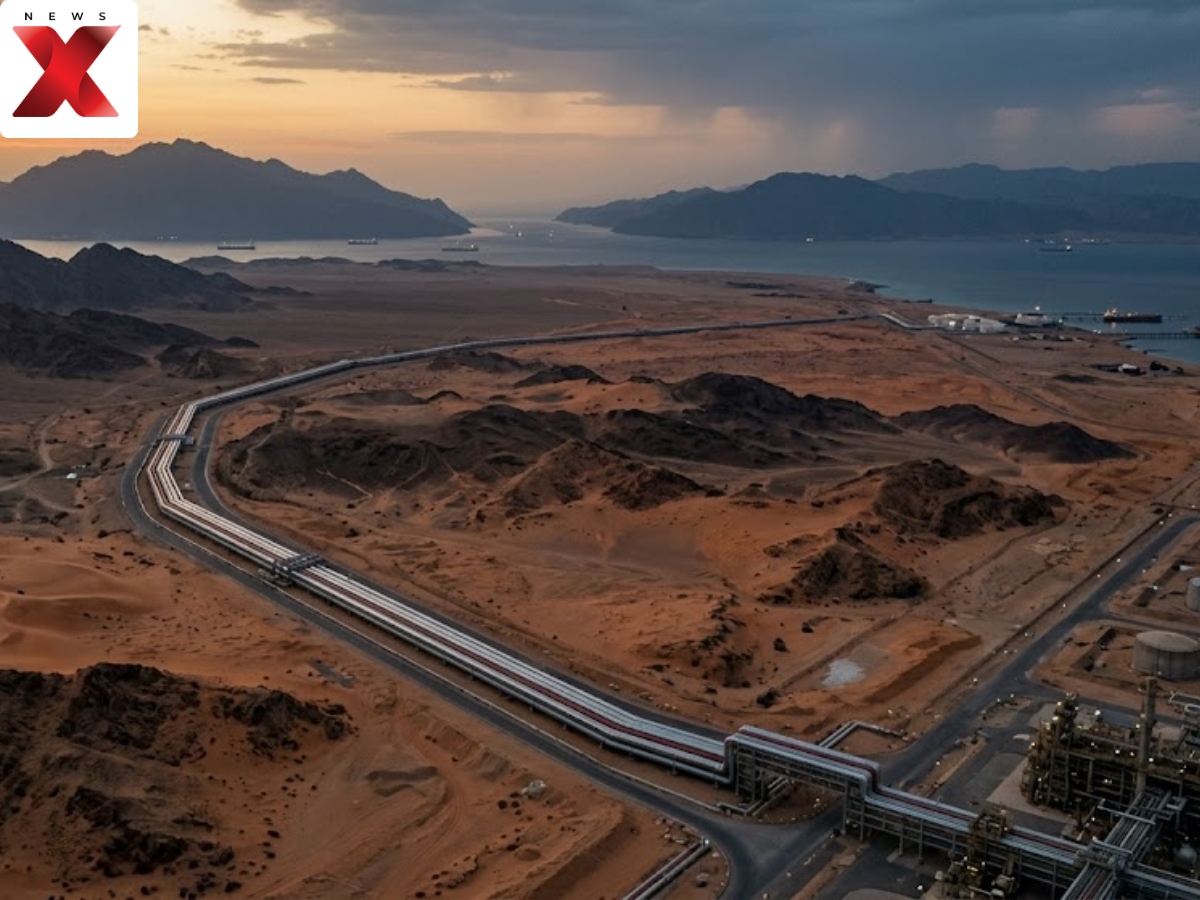
East–West Pipeline: Saudi Arabia’s Answer To Strait Of Hormuz Closure
In the midst of all these uncertainties concerning the Strait of Hormuz, countries in the Gulf are reportedly exploring alternative means for the export of oil and gas products.
In a report published by Financial Times, Saudi Arabia is reportedly expanding to utilize its East–West pipeline as a means to circumvent the Strait of Hormuz.
The pipeline stretches for 1,200 kilometers and transports oil from the Abqaiq oil fields in the Eastern Province of Saudi Arabia to the Red Sea port of Yanbu. The pipeline infrastructure was built in the 1980s due to fears of the Iran-Iraq War disrupting the flow of oil via the Strait of Hormuz.
Currently, the pipeline transports 7 million barrels of oil daily to the port of Yanbu. The pipeline infrastructure ensures the smooth flow of oil without the need to go through the Strait of Hormuz.
Saudi Arabia Considers Expanding Yanbu Pipeline Capacity
Saudi Arabia, which currently generates 10.2 million barrels of oil daily, is said to be exploring options to transport more of this product via the pipeline infrastructure.
Possible actions being considered include expanding the capacity of the existing pipeline or developing new routes to transport the crude oil to the Red Sea ports.
Although the decision to transport more crude oil via the pipeline infrastructure may be in the best interest of the country, experts point out the challenges involved in the decision.
Experts note that the cost of developing new infrastructure such as the pipeline would be at least $5 billion if built today.
Also Read: Strikes By US And Israel Hit Company Producing Cancer Drugs In Iran, Details Here
Zubair Amin is a Senior Journalist at NewsX with over seven years of experience in reporting and editorial work. He has written for leading national and international publications, including Foreign Policy Magazine, Al Jazeera, The Economic Times, The Indian Express, The Wire, Article 14, Mongabay, News9, among others. His primary focus is on international affairs, with a strong interest in US politics and policy. He also writes on West Asia, Indian polity, and constitutional issues. Zubair tweets at zubaiyr.amin




