PM Modi Era: India-Japan Ties and the Security of the Indo-Pacific
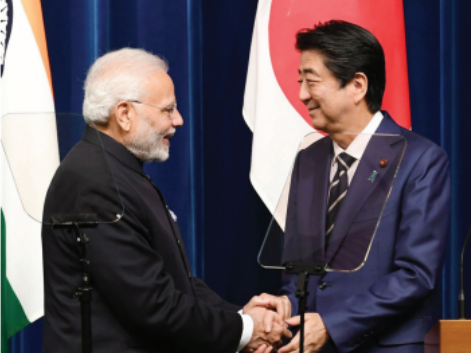
India has been rising under the leadership of Prime Minister Naren- dra Modi since 2014. One of the pillars of the Modi gov- ernment’s foreign policy has been promoting India–Japan cooperation. The Indian prime minister’s friendship with the former prime min- ister of Japan, Shinzo Abe, who was assassinated in July 2022, led the way in this regard. Recently, improved cooperation between India and Japan has become more evident. The two countries have been increasing their diplomatic exchanges, conducting joint exercises of their armed forces and seeking joint infrastructure projects. Therefore, it is logi- cal to ask why the relations between India and Japan have strengthened recently. This chapter seeks to ex- plore this by focusing on three questions: How have India–Japan relations devel- oped? How the cooperation between the two countries will promote India’s rise? How to deal with China, which has tried to prevent the rise of India?
The year 2007 was an im- portant turning point for the relations between India and Japan. Japan was a pioneer in creating the concepts of the Quadrilateral Security Dialogue (Quad) and the Indo-Pacific identity. In a speech entitled ‘Confluence of Two Seas’ given in the Indian parliament in 2007, the former prime minister of Japan Abe Shinzo intro- duced these ideas. He said, ‘By Japan and India coming together in this way, this “broader Asia” will evolve into an immense network spanning the entirety of the Pacific Ocean, incorporating the United States of America and Australia. Open and transparent, this network will allow people, goods, capital, and knowledge to flow freely. Initiated in 2007, the Quad is a security arrangement between Japan, the US, Australia and India. An important feature of Abe’s speech was that he in- troduced both the concepts of the Indo-Pacific and the Quad at the same time. The Indo-Pacific identity al- lowed Abe to include both the Pacific Ocean and the Indian Ocean in one con- cept, replacing the concept of ‘Asia-Pacific’, which did not include the Indian Ocean region. Because of rapid economic development, both the Pacific and Indian Ocean regions are increas- ingly emerging as influential regions in world politics. For example, the International Institute for Strategic Stud- ies in the UK pointed out that nominal Asian defence spending (excluding Austra- lia and New Zealand) over- took that of NATO Europe in 2012. Therefore, to explain current trends in world politics, Abe saw a need for new concepts that tied in all ascendant regions, includ- ing both the Pacific and the Indian Ocean regions. However, this rising Indo- Pacific region has been un- der threat. Prime Minister Abe believed that it should not be a China-dominated region. He explained this idea in his article ‘Asia’s Democratic Security Dia- mond’, which was published in Europe just before he was sworn in as the prime min- ister for a second time in 2012.2 The Indo-Pacific is a geographic concept that in- cludes all the countries sur- rounding China. The Quad includes all the great powers except China. In this case, Prime Minis- ter Abe wanted to emphasise the importance of India and its integration into the Quad. Both Japan and Australia are long-time US allies with es- tablished modes of coopera- tion. India was the newcom- er. To cooperate with India, Japan needed the security architecture of the Quad. Since then, the relations between India and Japan have developed both bilat- erally and multilaterally.
As stated earlier, Prime Minister Abe came up with the concepts of Quad and the Indo-Pacific because he wanted to promote coopera- tion with India. But, is the cooperation between India and Japan beneficial for In- dia? Indeed, Quad and the Indo- Pacific are not only beneficial for Japan, they are vital for India. There are two reasons for this: first, In- dia’s rise relies on maritime security and second, India needs to deal with China, which could restrict its rise. India’s ascent relies on economic rise. However, the economy relies on maritime security, which is directly linked with the safeguarding of the sea lines of communi- cation (SLOCs) of trade and energy import. Ships can carry huge products and energy without high cost. Compared with land routes, there are few terrorist-relat- ed problems on the SLOCs. Therefore, if India rises eco- nomically, it will rely more on maritime security. Cooperation of maritime powers such as the US, Japan and Australia is beneficial to secure India’s SLOCs. In addition, India itself has the potential to become a maritime power. History is a testament to this. From the eighteenth century to the 1970s, Great Britain was the most influential country in the area. What gave the Brit- ish their influence was their naval power, which enabled them to go anywhere and approach or attack various countries. Later, because the British could not maintain their naval power, they had to withdraw from the east of Suez in the 1970s. Alfred Thayer Mahan, while analysing the case of British naval power, listed six important factors that make a country a strong sea power: geographical posi- tion, physical conforma- tion (especially the length of coastline), the extent of territory (especially the balance of coastline and military power to defend), the number of population (for working at sea), the character of the people, and the character of the govern- ment. In his opinion, the British dominated the sea because they did not need to concentrate to defend their land borders. They had a long coastline as well as sufficient military power to defend it, and there was enough population to work at the sea. This was why the British were able to adjust to new societies and develop these colonies: their govern- ment supported maritime expansion; and the British dominated the sea. Thus, if Mahan is right, these fac- tors were crucial to Britain maintaining its influence in maritime affairs. By exten- sion of this view, India has enough potential to become a sea power
India has a good geo- graphical position, with high mountains separating the Indian subcontinent from Eurasia. History reveals how this can work to India’s ad- vantage. There are only three empires that dominated most of the subcontinent: Maurya Empire, Mughal Empire and the British Raj. The territories of these three empires were very similar, and were based on the line of mountains. The only excep- tion was the Khyber Pass, which was used by Alex- ander the Great. Therefore, the Indian subcontinent is a kind of an island, and India can concentrate its naval forces if it has the required will to climb up the global or- der by becoming a sea power. In addition, the history of Cholas indicates another geographical advantage of India. The Chola Empire, which was located in south- ern India, made an expedi- tion to Southeast Asia in the eleventh century. Their area of influence expanded to the whole coastal area of the Bay of Bengal. This historical fact is another good example of India’s geographical advan- tage. Since India is located at the northern centre of the In- dian Ocean, the country can access not only Southeast Asia, but also all sides of the Indian Ocean, including the Middle East and East Africa.
India has physical confor- mation because of its 7,517 (only mainland 6,100) km of coastline. Moreover, In- dia has been a reliable and important source of marine manpower in the world. Thus, India also satisfies the condition of number of pop- ulation to work at sea. Also, the Chola Empire reflects the possibility of the people of India being oriented towards being a sea power. India’s strategic objective should therefore be to emerge as a maritime power. India has been providing security in the Indian Ocean region. Thus, according to Mahan’s theory, India has sufficient potential to become a sea power, which also indicates that India could become an influential country in the Indo-Pacific.
India’s maritime potential, however, could face a threat from China, which has been increasing its activities around India.
India–China Land Border China’s incursions increased in the 2010s. There are in- dications that the number of incursions along the India– China border was 213 in 2011 but increased to 633 in 2019. In 2020, the situation esca- lated further. China entered the India side in the spring and the two sides clashed in June. At least twenty Indian soldiers sacrificed their lives and seventy-six were injured (Chinese fa-talities are unknown). In the aftermath of these clashes, China continued to redeploy fighter jets and missiles from other areas of the country, such as DF-17, DF-21, DF-26 missiles, J-11, J-16, J-20 fighter jets, S-400 surface-to-air missiles, H-6 bomber with cruise missiles. DF-17 use new types of hy- personic warheads that the US and Japan cannot inter- cept through missile defence systems. J-20 is a stealth fighter jet. Thus, China is deploying the latest weap- ons to increase tensions on the border areas. Moreover, it is also building more than 600 villages, which could be military camps in the India– China border area.
China’s activities in the In- dian Ocean region are also a threat to India. China has invested in many infra- structure projects in the In- dian Ocean region through the Belt and Road Initia- tive (BRI). Because China charges high-interest rates, it creates huge debt for re- cipients. (Generally, the World Bank and the Asia Development Bank charge 0.25–3 per cent as interest. In the case of China’s BRI, the interest rate is 6–8 per cent.) Thus China can wield strong influence over its loan recipients. For example, Dji- bouti, which has a huge debt to China, leased a big naval base from China. And Sri Lanka gave China the right to control their Hambantota port for ninety-nine years. In the case of Pakistan too, Chi- nese troops are deploying in the port developed by China. China also provides weapons to this region. Their high- tech, sensitive ma- chines are used under rough conditions and are prone to breakage. Thus, it requires constant maintenance and repair. If countries receive Chinese weapons, they rely on a supply line of repair parts from China. China exports submarines to Pakistan and Bangladesh, and provides frigates to Sri Lanka. Myanmar also got JF-17 fighter jets jointly de- veloped by China and Paki- stan. Through these arms exports, China has increased its influence on the recipient countries. China is deploying its mil- itary in this region. Since 2008, it has deployed naval ships for counter-piracy measures off the coast of Somalia. It has started to de- ploy many submarines un- der the guise of ‘anti-piracy’, despite these submarines not being effective in deal- ing with piracy. Chinese na- val fleets have already called at ports in all the coastal countries around India. And China has been continuously deploying six to eight naval ships in the northern part of the Indian Ocean. When the pro- China government of the Maldives faced a seri- ous situation in 2018, China sent fourteen warships to the Indian Ocean. Along with its activities on its border with India, China’s activities in the areas surrounding In- dia is a ploy to restrict the rise of India’s influence in the region.
The answer to this is likely influenced by China’s ter- ritorial expansion in the sea around Japan, Taiwan and the South China Sea, which has many similarities with what it has done in the Indo- China border area and the Indian Ocean region. China’s territorial expan- sion has three features. The first feature of note is China’s repeated disregard for cur- rent international law when laying claim to new territory. In the East China Sea, China did not claim the Senkaku Islands of Japan before 1971, but its attitude has since changed. The Senkaku Is- lands are in a strategic loca- tion to pressure Taiwan and have potential oil reserves. China continues to make incursions along the Indo- China border, although the Tibetan exile government has stated that these areas belong to India. China has ignored current interna- tional law and expanded its territorial claim in all three areas.
The second feature of China’s territorial expan- sion is timing. Whenever it has found a power vacuum, Beijing has exploited the sit- uation. For example, China occupied half of the Paracel Islands just after France withdrew in the 1950s. In the 1970s, one year after the US withdrew from Viet- nam, China occupied the other half of the islands. In the 1980s, China expanded its activities in the Spratly Islands and occupied six features there, just after the Soviet Union decreased its military presence in Viet- nam. And in the 1990s, China occupied Mischief Reef three years after US troops withdrew from the Philippines. These instances indicate that China tends to expand its territorial reach when military balances change and power vacuums are detected.
If that observation is true, China will continue to esca- late its activities. Over the past decade, the military balance has been changing. According to the Stock- holm International Peace Research Institute (SIPRI), China increased its military expenditure by 63 per cent from 2013 to 2022. During the same period, India in- creased its military expen- diture by 47 per cent and Japan by 18 per cent.
This data indicates that our observation about China is indeed true. A comparison between the number of Chinese vessels identified within the contiguous zone in the waters surrounding the Senkaku Islands in Japan and China’s incursions in the Indo-China border area sup- port this view. These incur- sions are similar to China’s activities around the Sen- kaku Islands of Japan.
A third feature of China’s territorial expansion is non- military control. China’s threat is bound up with the strength of its budget. China can change the status quo by force when its mili- tary power is stronger than others, and so maintaining a military balance is impor- tant. However, because of its strong economy and ample budget, China’s military modernisation has outpaced other countries.
And if these countries de- pend too heavily on trade with China, their economies will be hostage to it. For ex- ample, when Australia in- sisted on an international investigation to identify the origin of COVID-19, China delayed processing Austra- lian imports like wine and lobster. Dependence on the Chinese market is a pow- erful weapon for Beijing to expand its influence, and ultimately expand its ter- ritories.
In the case of foreign in- frastructure projects, the situation is the same. China has used foreign infrastruc- ture projects to expand its sphere of influence. Because of its favourable economic situation, China can invest heavily in these projects and create huge debts and obligations for recipient countries. Countries with significant Chinese invest- ment and debt are hesitant to criticise China, even when it flouts international rules.
A lack of respect for interna- tional law, expansion of ter- ritorial claims where there are power vacuums, and attempts at economic domi- nance or other non-military methods to expand influ- ence abroad are all common themes of China’s exploits in the Indo- Pacific region. Thus, the question remains: how should the Quad coun- tries, including India and Ja- pan, respond? Knowing the pattern of China’s behaviour points towards the answer: they should do the opposite of what China wants.
First, the Quad must con- tinue to respect and insist upon a rules-based order grounded in current in- ternational law. The joint statements of both Quad summits mention that a free, open, rules-based order will ‘meet the chal- lenges to the rules- based maritime order, including in the East and South China Seas.’10 These words carry great significance because China has tried to change the status quo by force and continually challenges inter- national norms.
Second, Quad countries need to fill perceived power vacuums by maintaining a military balance. To do this, they need to increase their defence budgets. But it is not an easy task. What can the Quad do to discourage China’s ter- ritorial expansion? If Quad countries coordinate well, they can force China to de- fend multiple fronts at once. In such a scenario, China would need to simultane- ously make defence expen- ditures on its border with India as well as against Japan (and the US) on the Pacific side. This sort of co- operation would provide a way to maintain a military balance even if China’s mili- tary expenditure were rising at a rapid pace. In this case, offensive ca- pability is key. If India and Japan (with the US and Aus- tralia) possess long-range strike capabilities, their combined capability forces China to defend multiple fronts. Even if China de- cides to expand its territo- ries around the Indo-China border, it will still need to ex- pend a certain amount of its budget and military force to defend itself against a poten- tial attack from Japan (and the US). Currently, India, Japan and Australia are all planning to possess 1,000– 2,000 km long-range strike capabilities such as cruise missiles and glide bombs. These moves could be criti- cal.
Integrate military and non-military policy as one overall strategy Third, the Quad needs to integrate non-military ef- forts into its overall strat- egy. China’s military power relies on its ample budget. But China is a top-three lev- el trading partner for India and Japan (with the US and Australia). Quad countries need to integrate their eco- nomic efforts and reduce their reliance on China. Decoupling and risk-diver- sifying of supply chains and markets are necessary. Japan has already begun to do so. With Japan relocating its factories from China to Southeast Asia and South Asia, the number of Japa- nese citizens living in China has decreased from 1,50,399 in 2012 to 1,01,786 in 2023. At the same time, the num- ber of Japanese people living in the US has increased from 4,10,973 in 2012 to 4,14,615 in 2023. Now, Japan and its allies and like-minded countries should relocate their factories and find new markets elsewhere. India is a new hope.
In the case of foreign in- frastructure projects, the situation is the same. Even if purely for civil purposes, Japan’s infrastructure proj- ects are a useful way to neu- tralise China’s influence in the Indo-Pacific region. For example, when China proposed the Sonadia port project to Bagladesh, Japan counter-offered with its own Matabari port project, even though the two locations were very close together. Bangladesh ultimately chose Japan’s Matarbari port project. Therefore, propos- ing alternative projects and financing sources can be an important step to neutralise China’s influence. The Asia– Africa Growth Corridor led jointly by India and Japan, the Blue Dot Network led by Quad and the Japan-led Indo-Pacific Vision are very effective towards this end. Former prime minister Abe Shinzo’s speech to the Indian parliament in 2007 was the important turning point for India– Japan relations. Strong relations between these two countries can potentially lead to India’s rise. However, combined with the India– China border, China’s activities are surrounding India to contain it s influences. India and Japan need to join hands to overcome the challenges from China. Considering the pattern of China’s territorial expansion, cooperation among the Quad, particularly India and Japan, can be a solution. Insisting on respect for a rules- based order, maintaining a military balance, and integrating military and non-military policies into its overall strategy are essential for the Quad to achieve this goal. Now is the time to do so.
Dr Satoru Nagao is a Fellow (Non-Resident) at Hudson In- stitute, based in Tokyo, Japan. From December 2017 to No- vember 2020, he was a Visit- ing Fellow at Hudson Institute, based in Washington, DC. Dr Nagao’s primary research area is US–Japan–India security cooperation.
This article is extracted from the essay India–Japan Ties and the Security of the Indo-Pacific published in the book Indian Re- naissance: The Age of PM Modi, edited by Aishwarya Pandit.
Chaitra Navratri 2026 begins March 19, marking the Hindu New Year. Devotees perform Maa Shailputri…
International opera star Rainelle Krause has died unexpectedly after a brief hospital stay. The Metropolitan…
The IMD has issued a yellow alert for Delhi-NCR as a western disturbance triggers three…
