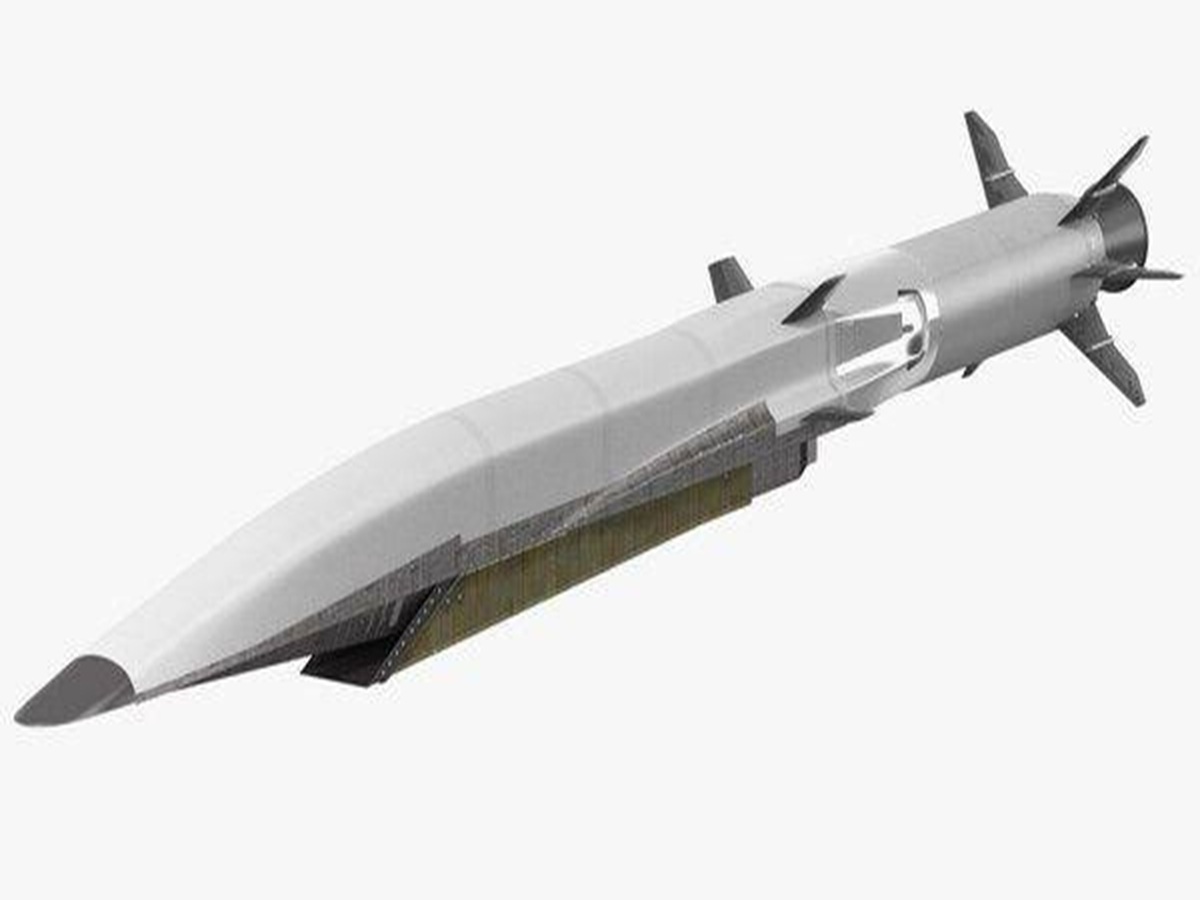
India has successfully tested its formidable new hypersonic missile under Project Vishnu, officially known as the Extended Trajectory-Long Duration Hypersonic Cruise Missile (ET-LDHCM). This groundbreaking development, with a recent successful trial reportedly conducted between July 14-16, 2025, is set to redefine India’s strategic defense posture, placing it firmly alongside global powers like China, Russia, and the United States in the elite club of nations with advanced hypersonic missile technology.
The ET-LDHCM is engineered for unmatched speed and stealth, making it virtually impervious to current radar and air defense systems. Capable of achieving incredible speeds between Mach 8 to Mach 10 (approximately 11,000 to 12,300 km per hour), this missile is a significant leap from India’s existing supersonic cruise missiles like BrahMos (Mach 3). It utilizes an advanced scramjet engine that leverages atmospheric oxygen for sustained hypersonic flight, a technological marvel allowing it to maintain extreme speeds over long distances while remaining lightweight.
While India’ s Vishnu missile is poised to become a formidable force, Russia currently holds the title for the world’ s most powerful operational hypersonic missile: the Avangard. Unlike conventional missiles, the Avangard is a hypersonic glide vehicle (HGV) that works in conjunction with an Intercontinental Ballistic Missile (ICBM) system. It boasts an astonishing re-entry speed of Mach 20 to Mach 27 (24,000 to 33,000 km per hour), making it virtually impossible for even the United States’s advanced anti-missile systems to intercept due to its extreme speed and ability to perform sharp, evasive maneuvers mid-flight. Unveiled in 2019, the Avangard can deliver a nuclear warhead as powerful as 2 megatons over a range of up to 10,000 km.
India’s Project Vishnu, spearheaded by the Defence Research and Development Organisation (DRDO), aims for similar strategic superiority.
The ET-LDHCM is designed as a multi-role hypersonic glide vehicle with an expected range of 1,500 km, potentially extendable to 2,500 km. It is capable of carrying a significant payload of 1,000 to 2,000 kilograms, including both conventional and nuclear warheads. A key strength of Vishnu is its versatile launch capability, allowing deployment from land, air, or sea platforms, ensuring operational flexibility across all branches of the military. Its advanced design incorporates plasma stealth effects and heat-resistant materials capable of withstanding temperatures up to 2000°C, ensuring high defense penetration against enemy radar and missile shields.
The emergence of weapons like Russia’s Avangard and India’s rapidly developing Vishnu signals a new era of hypersonic warfare, where speed, stealth, and unpredictable maneuvering dictate military dominance. Once fully operational, with HGVs expected by 2027-2028 and ET-LDHCM by 2030, Vishnu is set to significantly bolster India’ s nuclear deterrence, providing a clear strategic edge over regional adversaries like Pakistan and countering China’s growing influence. This advancement will not only enhance India’s defense capabilities but also solidify its position as a major player in global military technology and security on the world stage
The US Department of Homeland Security has announced free flights and a USD 2,600 exit…
Dhurandhar 2 review out: Hamza’s Badla delivers blood-filled action, Ranveer Singh in beast mode- book…
A month after announcing Team India's men's central contract list, the BCCI is reportedly set…
