
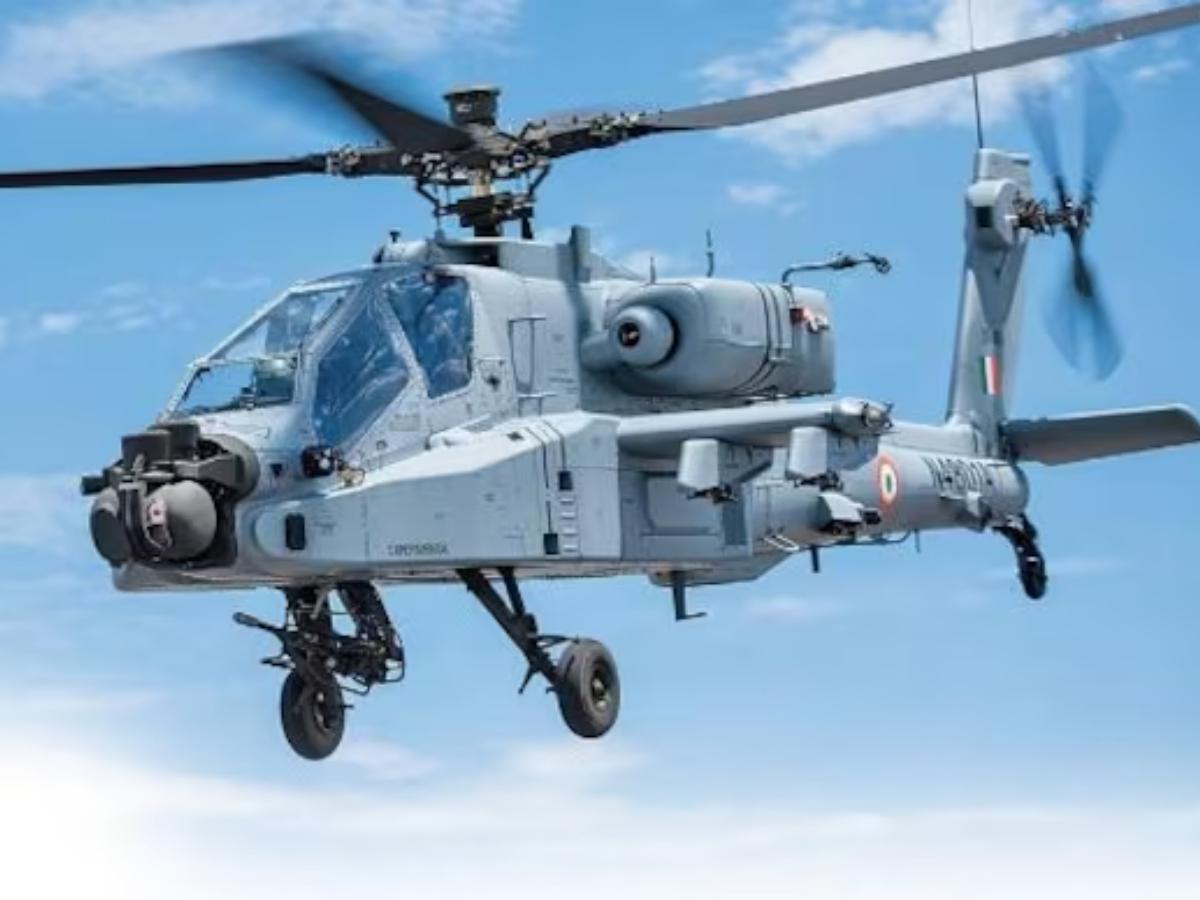

After a delay of over 15 months, the Indian Army is finally set to receive its first batch of Apache AH-64E attack helicopters, significantly boosting its operational strength along the western border amid heightened alert under Operation Sindoor.
According to sources familiar with the delivery process, three Apache helicopters are expected to be handed over to the Army Aviation Corps on July 22. These advanced combat helicopters will mark a new chapter in the Indian Army’s air combat capabilities.
USD 600 Million Deal Faces Delay
In 2020, the Indian Army reportedly signed a USD 600 million deal with the United States for six Apache helicopters. The original delivery timeline was to be between May and June 2024, but delays in technical discussions and supply chain issues on the US side of procurement now has the helicopter slated to be delivered in December 2024.
The six helicopters were to be delivered in two batches of three. While the second batch is expected later this year, the arrival of the first batch is already more than a year late, causing operational disruptions.
Apache Squadron Raised Without Helicopters
In early March of 2024, The Army raised, at Nagtalao, Jodhpur, the first Apache squadron. There are trained pilots and ground staff that are ready, however, the Squadron has remained non-operational due to the helicopters not arriving. This has created an acute readiness gap considering the responsive nature of the security environment vis-a-vis the changing conditions on the western frontier.
A Game-Changer for Army Aviation Corps
The Apache AH-64E is one of the world’s most capable attack helicopters, if not the best. With its advanced targeting equipment, night vision and unrivalled firepower, it will drastically improve the Indian Army’s precision strike capability and combine these capabilities with improved ground operations.
Even though the Indian Air Force (IAF) previously inducted 22 Apache helicopters under a 2015 deal in the last two years, this Apache helicopter will be the first helicopter batch for the Army specific operational requirements. The helicopters will be used by the Army for offensive and defensive roles, especially under the current mandate for operations under Operation Sindoor.
Existing Fleet and Operational Challenges
The Army Aviation Corps currently operates a mix of aircraft tailored for multiple roles. These include:
-
Advanced Light Helicopter (ALH) Dhruv – mostly grounded since January 2025 due to a crash involving a Coast Guard version.
-
Rudra helicopters – armed versions of the ALH used for close air support and anti-tank roles.
-
Cheetah and Chetak helicopters – used for reconnaissance and evacuation.
-
Light Combat Helicopters (LCH) – suited for offensive roles in high-altitude areas.
-
Dornier 228 fixed-wing aircraft – deployed for logistics and reconnaissance.
-
Heron and Searcher UAVs, and Mi-17 helicopters for surveillance and transport roles.
Some of these platforms were temporarily grounded or partially operational earlier this year due to safety issues that created a temporary gap in the critical missions of reconnaissance and medevac.
Improvement to Advent Preparedness
The delayed induction of Apache helicopters has been a significant obstacle in modernizing India’s ground-attack capabilities for a long time. Their delivery is anticipated to enhance combat preparedness or operational readiness, strengthen border defence, and enable better response to evolving threats in the western sector.
As tensions on India’s frontiers, and especially in sensitive areas, continue to rise, the delivery of the attack helicopters is particularly timely.
ALSO READ: UP Bans Weapons And Loud Bikes On Kanwar Yatra Routes Amid Violence Reports




