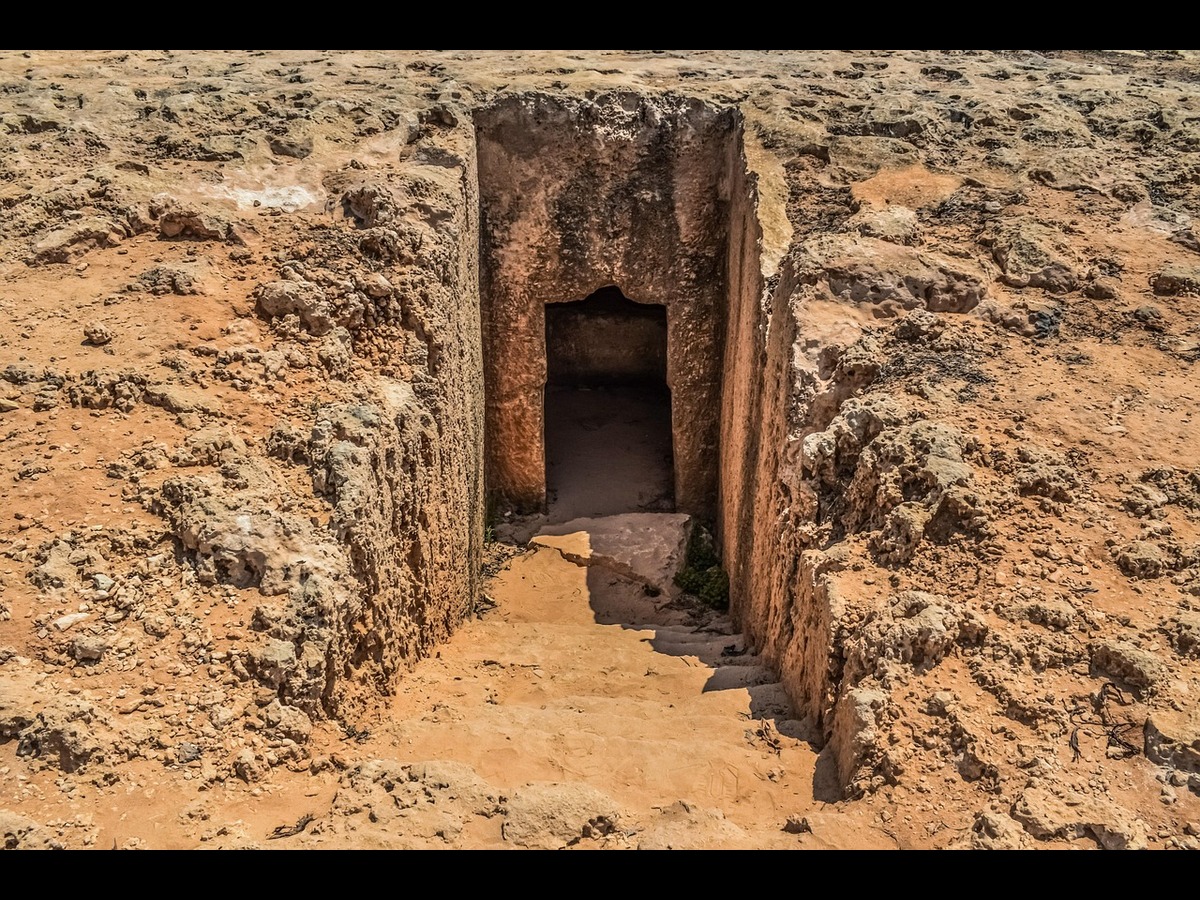
Iraq has faced a drop in its water levels, uncovering ruins that are thousands of years old. (Image Credit - Pixabay)
Archaeologists in northern Iraq have discovered 40 ancient tombs after water levels in the country’s largest reservoir dropped because of drought. The tombs, thought to be more than 2,300 years old, were found near the Mosul Dam in the Khanke region of Duhok province.
Bekas Brefkany, director of antiquities in Duhok and head of the excavation team, said on Saturday that the tombs were uncovered when water levels fell “to their lowest” this year. His team had surveyed the site in 2023 but could only see parts of a few tombs at that time. With the lower water levels, they were finally able to carry out proper excavation work.
Experts said the tombs trace its origin to the Hellenistic or Hellenistic-Seleucid period. Brefkany noted that the team further wants to excavate and transfer the findings to the Duhok Museum for study and preservation, since the area could be submerged again.
This is not the first time drought has revealed hidden treasures in Iraq. In the last few years, drop in water levels have exposed ruins that are thousands of years old. While the droughts have been devastating for farming, electricity, and daily life, they have given archaeologists rare chances to make discoveries.
Iraq has been suffering from rising temperatures, severe water shortages, and five straight years of drought. Authorities warn that water reserves are now at only 8 percent of full capacity, making this year one of the driest since 1933. Officials noted that dams in neighbouring Iran and Turkiye, which have slashed the flow of the Tigris and Euphrates rivers, considered a lifeline for Iraq for thousands of years.
Earlier, in another discovery on the other side of the world, scientists in Australia had identified a rare, new species of ancient whale from a fossil found on a beach. The fossil was originally discovered in 2019 at Jan Juc Beach in Victoria and included parts of the skull, teeth, and ear bones. Moreover, the site is already famous for unique whale fossil finds.
The new species is named Janjucetus dullardi, and is reportedly only the fourth known member of the mammalodontid family. It is an early group of whales that lived during the Oligocene Epoch, around 34 to 23 million years ago. However, unlike modern whales, they had strong jaws, sharp teeth, and may have even had small, stubby legs.
Also Read: Ancient Discoveries That Changed Everything: 7 Archaeological Finds That Rewrote Human History
A gondola at Engelberg-Titlis ski resort crashed, killing a 61-year-old woman. High winds up to…
Chaitra Navratri 2026, starting March 19, honors Maa Durga’s nine divine forms. Sharing heartfelt wishes…
A bomb threat at Dick's Sporting Goods in Canton Marketplace, Georgia, triggered evacuations and heavy…
