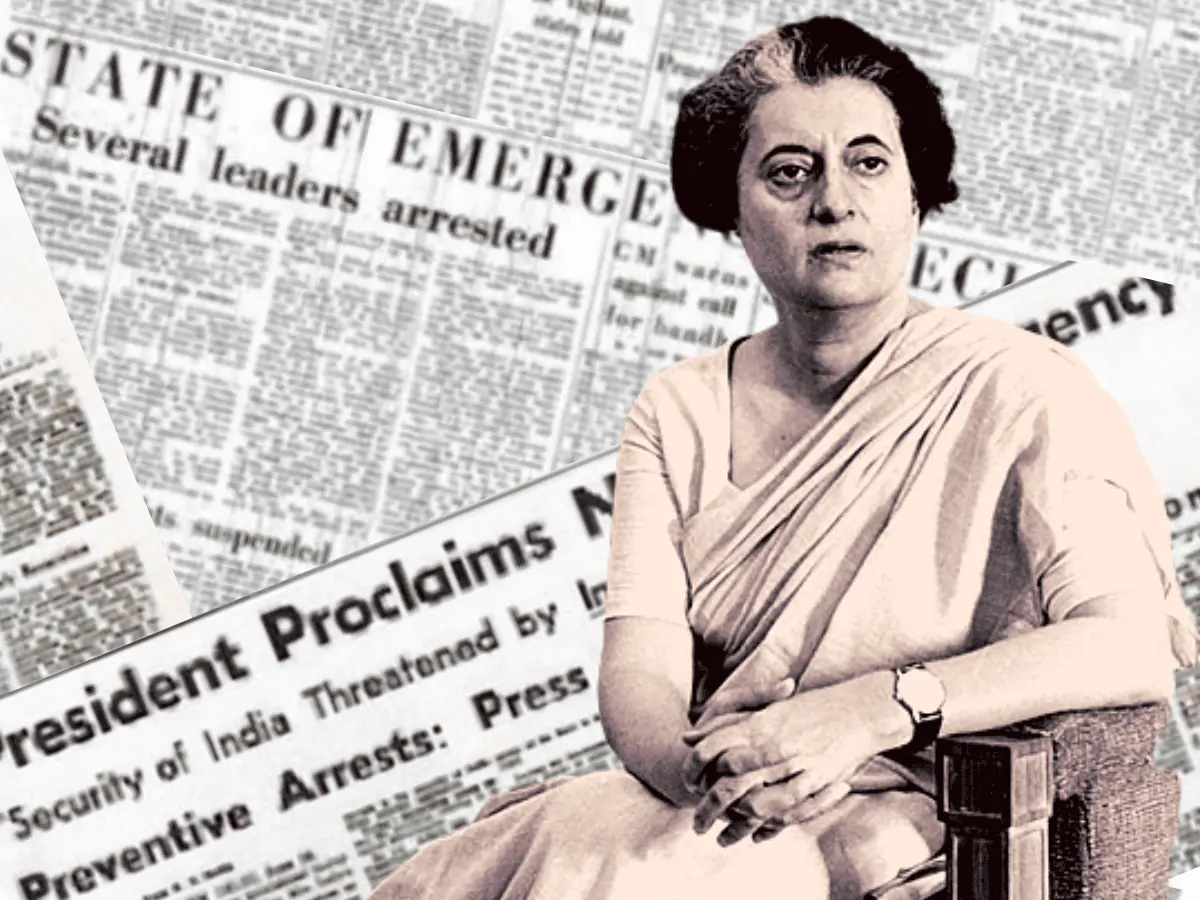
The Emergency period in India (1975–77) is remembered as one of the most violent phases of the country’s democratic journey. Announced by Prime Minister Indira Gandhi on June 25, 1975, it suspended fundamental rights, restricted press freedom, and gave the state unprecedented powers. But beyond censorship and mass arrests, the most disturbing memory of the Emergency was the sterilisation drive an aggressive population control campaign that left deep scars on Indian society.
While India had been testing family planning policies since the 1950s, the Emergency reversed these measures into coercive state action. The face of this campaign was Sanjay Gandhi, Indira Gandhi’s younger son, who held no official government position but enjoyed immense powers. He was confident that unchecked population growth was the root cause of poverty and unemployment so he pushed for rapid and large-scale sterilisation.
In 1976, the government introduced a new population policy and health officials were assigned strict sterilisation targets. District administrations, the police, and even schoolteachers were mobilised to ensure compliance. In many regions, men were threatened with the denial of ration cards, housing, or government jobs if they refused.
Sterilisation camps set up across the country, especially in northern states such as Uttar Pradesh, Bihar, and Haryana. Men were often rounded up by force, sometimes herded into trucks and taken to makeshift facilities. While a small number agreed in exchange for cash or consumer goods like radios, for many the “choice” was misleading.
The scale was astonishing. In 1976 alone, more than 8 million sterilisation operations were carried out—the highest in India’s history. Many were performed in unhygienic conditions, leading to infections, permanent health complications, and even deaths. Reports of botched surgeries and mass coercion spread quickly, fueling public resentment.
The sterilisation campaign came to represent the excesses of the Emergency. It was not just about population control it was about the state interfering into the most personal aspects of life. Citizens were stripped of agency over their own bodies, and the poor were unfairly targeted.
For countless families, the memories are not abstract. Men returned from camps scarred, sometimes unable to work again. Some never came back at all. These stories, passed down through generations, explain why the very word “Emergency” still evokes fear and anger.
The backlash was swift and decisive. In January 1977, Indira Gandhi, confident of her fame, called for elections. Instead, the Congress party suffered a historic defeat, with the sterilisation drive widely seen as a central factor in the public’s sentiment. The Janata Party came to power, marking the first time Congress was defeated since independence.
Nearly five decades later, the Emergency is remembered not only as a period of censorship and dictatorship, but as a time when ordinary people’s rights were crushed in the name of national progress. The sterilisation drive remains the darkest reminder of how uncontrolled power, combined with flawed policy, can result in mass suffering.
It continues to stand as a warning that democracy is not just about holding elections, but about protecting the dignity, freedom, and choices of every citizen.
Also Read: Russia’s Lavrov, EAM Jaishankar Set To Hold Talks on ‘Bilateral Cooperation’ in Moscow
Israeli PM Benjamin Netanyahu announced that recent joint Israel-U.S. strikes destroyed Iran’s nuclear and missile…
Israeli Prime Minister Benjamin Netanyahu says Israel is weakening Iran’s military, destroying missiles, nuclear infrastructure,…
Dhurandhar 2’s ₹500 crore actor fee claim sparks buzz, but Rakesh Bedi’s actual pay was…
