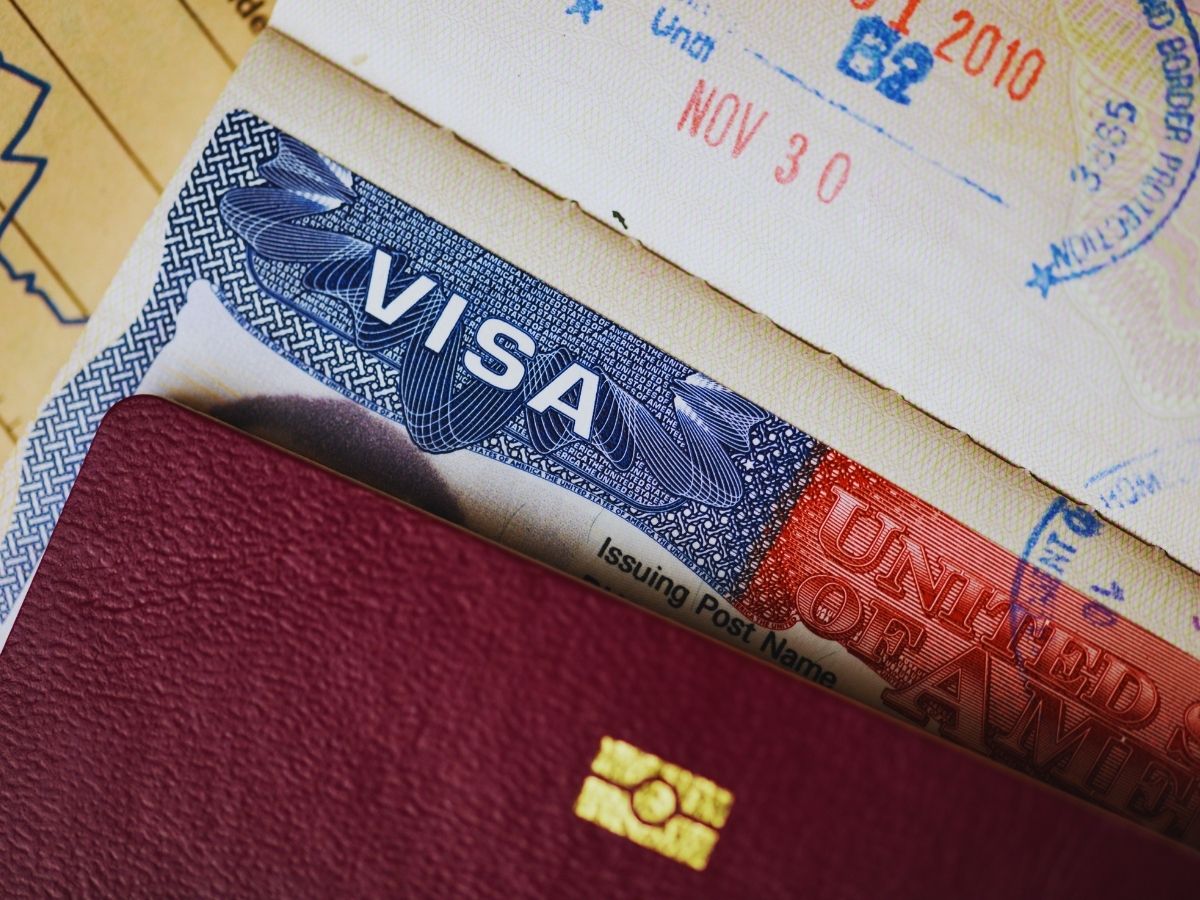
11 Indian Nationals Charged In US For Staging 'Armed Robberies' At Stores To Secure U Visa Immigration Benefits (Photo: Canva Image Used For Representation Only)
The US government is adding new layers to the immigration screening process with the administration officials now expected to screen applicants for signs of “anti-Americanism.” The latest update, announced by US Citizenship and Immigration Services (USCIS) on Tuesday, includes checking applicants’ social media accounts for anti-American, terrorist, or antisemitic activities.
According to the USCIS, immigration officers will now consider whether an individual applying to live or work in the US has shown “any involvement in anti-American or terrorist organisations” or engaged in “antisemitic activity.” Social media vetting — first introduced in June under President Donald Trump’s administration — will now be expanded to cover signs of “anti-American activity.”
“America’s benefits should not be given to those who despise the country and promote anti-American ideologies,” USCIS spokesperson Matthew Tragesser said, while adding that immigration benefits like living and working in the US are a privilege, not a right, and that the agency is committed to “root out anti-Americanism” through “rigorous screening and vetting.”
While Tuesday’s policy update does not provide a specific definition of “anti-Americanism”, it does, however, refer applicants to parts of the 1952 Immigration and Nationality Act (INA) that restrict people affiliated with Communist groups or those who oppose government by force.
The federal agency also mentioned:
However, those opposing the move say the unclear wording could lead to confusion about what behaviours might be flagged.
The announcement for new screening has caused alarm among immigration advocates, lawyers and scholars some of whom fear that it would likely open the door to subjective judgments and bias while making immigration decisions.
Jane Lilly Lopez, sociology professor at Brigham Young University, told the Associated Press, “For me, the really big story is they are opening the door for stereotypes and prejudice and implicit bias to take the wheel in these decisions. That’s really worrisome.”
Aaron Reichlin-Melnick, senior fellow at the American Immigration Council, wrote in a post on X that the term “anti-Americanism” has no precedent in immigration law and is essentially defined by the current Trump administration.
Reichlin-Melnick added that Trump’s policy echoes the era of McCarthyism from the 1950s – a period known for aggressive persecution of perceived political dissenters.
Houston-based immigration attorney Steven Brown also posted on X, “American values are a subjective standard not found in the INA.”
Experts have warned that this policy means immigrants will face greater hurdles in proving that they meet the administration’s standards.
“It means you are going to just do a whole lot more work to provide evidence that you meet our standards,” AP quoted Jane Lilly Lopez as saying.
Notably, the announcement also comes amid other recent immigration tightening moves, including visa revocations and additional screening for naturalisation applicants’ “good moral character.”
While the agency has insisted that the policy is about immigration benefits and discretion, some question the constitutional limits. Ruby Robinson, senior attorney at the Michigan Immigrant Rights Center, told ABC News recently that constitutional protections should apply to all people within the US, regardless of status.
“A lot of this (Trump) administration’s activities infringe on constitutional rights and do need to be resolved, ultimately, in courts,” Robinson reportedly said.
Others, meanwhile, have said that First Amendment rights don’t apply to non-citizens outside the US.
The USCIS has said the update is effective immediately and applies to all pending and new applications, meaning immigrants and visa applicants can expect more intense scrutiny moving forward — with officers given broader discretion to deny benefits based on perceived anti-American attitudes.
ALSO READ: Caught Drunk Driving in U.S.? You May End Up Losing Your Student Visa! What We Know So Far
Israeli PM Benjamin Netanyahu announced that recent joint Israel-U.S. strikes destroyed Iran’s nuclear and missile…
Israeli Prime Minister Benjamin Netanyahu says Israel is weakening Iran’s military, destroying missiles, nuclear infrastructure,…
Dhurandhar 2’s ₹500 crore actor fee claim sparks buzz, but Rakesh Bedi’s actual pay was…
