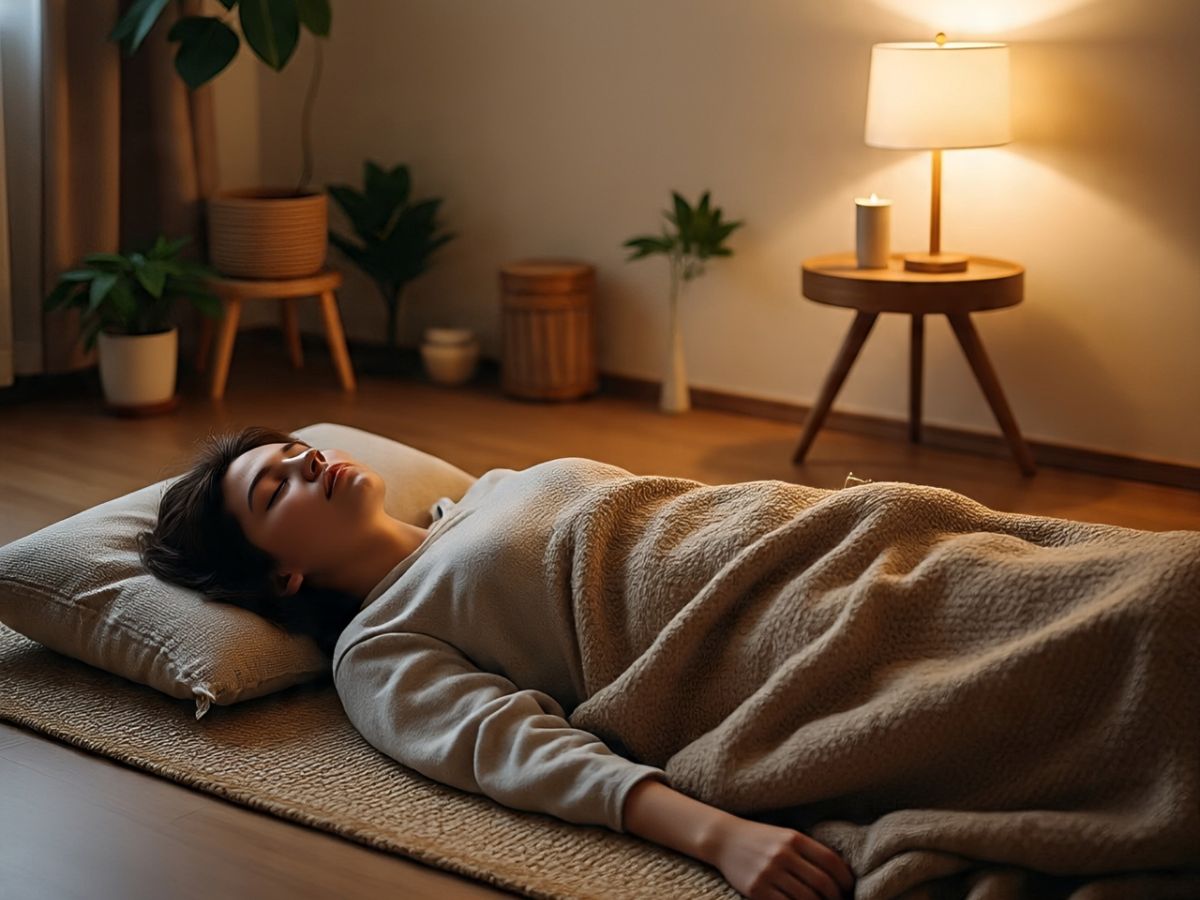
Sleeping on the floor has been a tradition in many cultures for centuries and provides you with some surprising health benefits, if done correctly. Here are 10 health benefits that you may get by adopting this minimalist sleeping style.
Sleeping on a firm surface can provide some relief by helping your spine align more naturally and reduce discomfort before, after, or during the night caused by overly soft mattresses.
The hard surfaces of the ground will prevent your body from sinking into the ground the same way as soft materials, which can help maintain a proper spinal posture, critical for combating chronic pain and injury.
Sleeping on the floor can limit the amount of tossing and turning you have during the night, as the surface does not sink as a soft mattress might and will encourage your body to remain still, resulting in deeper and longer periods of restorative sleep.
The hard surface will help those with sciatica because the firmness will alleviate nerve-related pain better than a soft mattress.
Hard surfaces will also help distribute body weight more evenly so the pressure distributed across multiple points of your body provides more relief from pressure point pain, joint pain, and stiffness.
Sleeping on the floor can provide cooler sleep (heat rises), good for warmer weather or people who sleep hot or wake up sweaty at night.
For people who tend to fall out of bed often, sleeping on the floor poses less risk of injury from falling.
Sleeping with a flatter, straighter posture can better circulation and reduce swelling and inflammation in your limbs over time.
It is a traditional thought by ancient cultures that when we ground ourselves (have physical contact with the earth), it is believed to promote natural healing and with that eases negative energy.
People who sleep on the floor also tend to stretch and be more flexible, prompted by their sense of daily routines. In this case, flexibility promotes good joint mobility and can be important at all ages.
Whether sleeping on the floor improves back health, posture, and sleeping patterns or creates more distressful sleeping patterns for others (especially those people with certain conditions, allergies, or some assistance needed), a healthcare provider will be able to guide better sleep patterns and promote a safe practice for resting.
This content is informational only. Consult a healthcare professional before changing sleep habits, especially if you have pre-existing back, joint, or musculoskeletal conditions.
Vani Verma is a content writer with over 2 years of experience in lifestyle, entertainment, health and digital media. She has a knack for creating engaging and research-driven content that resonates with readers, blending creativity with clarity. Passionate about media trends, culture, and storytelling, she strives to craft content that informs, inspires, and connects.
Dr. Anjali R. Pandey Honoured with Skill Bharat Samman 5.0 for Excellence in School Leadership
Mumbai: Dr. Anjali R. Pandey, Principal of B.S.M. Dnyananand School, Thane, has been conferred with…
Iran holds a state funeral in Tehran for top officials Ali Larijani and Gholamreza Soleimani,…
SOMANY Ceramics Continues to Build Upon Its Waste Tile Reuse Initiative on Global Recycling Day 2026
New Delhi [India], March 18: On the occasion of Global Recycling Day, SOMANY Ceramics is looking back…
