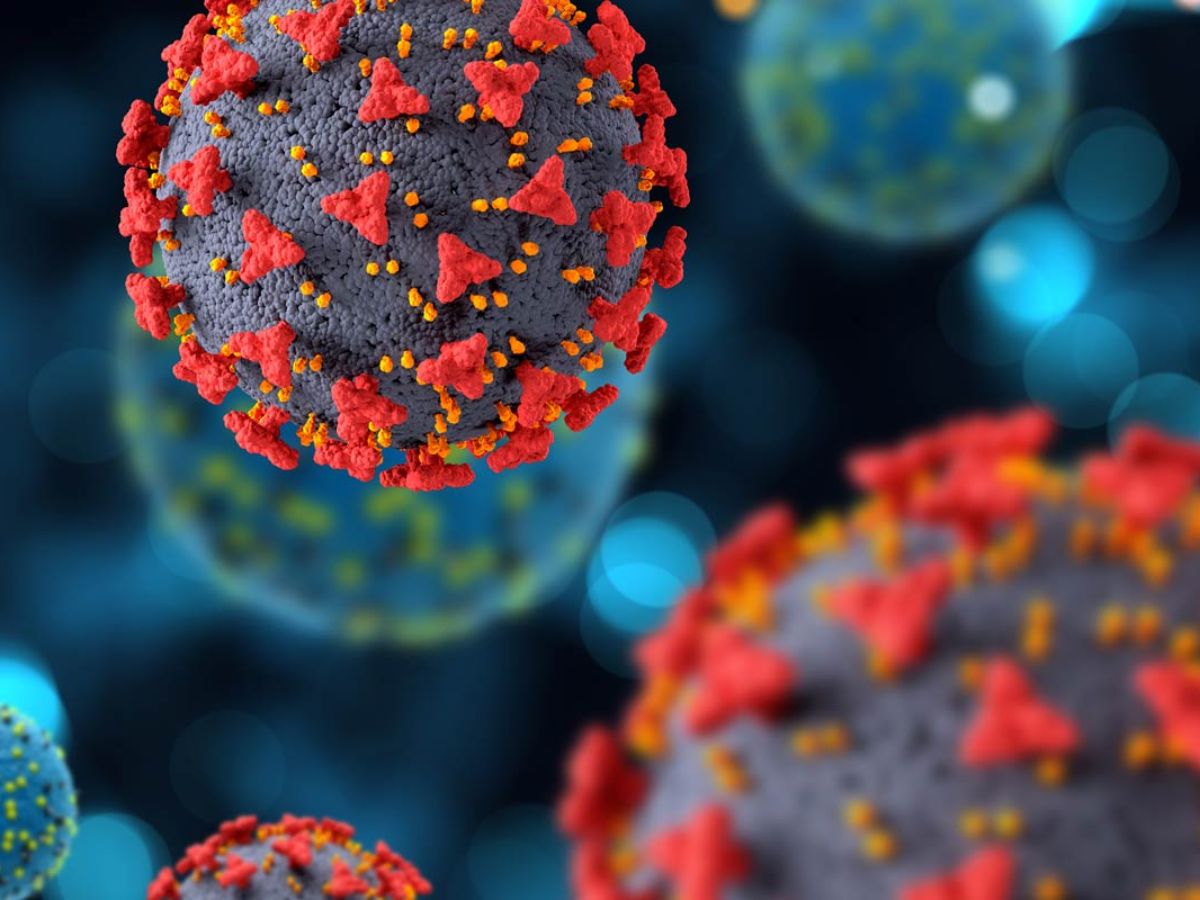
A new COVID-19 variant known as ‘Nimbus’, officially called NB.1.8.1, is spreading rapidly across the United States, the United Kingdom, China, together with several parts of Asia, and this spread raises fresh concerns among health officials.
Nimbus is descending now from within the Omicron family and became very quickly a dominant strain in recent weeks. Its high transmissibility coupled with a distinct symptom largely caused this: many patients describe a severe sore throat as feeling like “razor blades” in the throat.
According to the Centers for Disease Control and Prevention (CDC), Nimbus was responsible for nearly 37% of COVID cases in the U.S. in the two weeks leading up to June 7.
The NB.1.8.1 variant has been detected in at least 13 U.S. states, including California, New York, New Jersey, and Illinois, according to the Global Initiative on Sharing All Influenza Data (GISAID). Its spread is not limited to the U.S. though.
In the United Kingdom, health authorities have reported a noticeable 10% rise in COVID-related hospital admissions, with 947 people hospitalised in just the last week of May, according to the UK Health Security Agency (UKHSA).
The CDC has also confirmed that the variant is linked to a sharp increase in hospital admissions across China, particularly in urban areas.
In Asia, Singapore, Thailand, and India are also reporting a growing number of NB.1.8.1 infections, signaling that Nimbus may be on its way to becoming a globally dominant sub-variant.
What makes Nimbus stand out from previous variants is the intensity of the sore throat, which has led many to describe it as “razor blade throat” due to how painful it is.
Besides this, patients have reported symptoms that resemble classic Omicron-like infections, such as:
Nasal congestion
Fatigue
Mild cough
Fever
Loss of taste or smell
Runny nose
Loss of appetite
Muscle pain
Some patients are also experiencing less common symptoms like diarrhea and nausea.
Despite the painful throat, experts say the variant doesn’t appear to cause serious illness in most people, especially those who are vaccinated or have previously recovered from COVID. However, older adults and those with weakened immune systems are still at risk for severe disease.
The World Health Organization (WHO) has started tracking NB.1.8.1 closely, although it has not yet been declared a variant of concern. The variant was first detected in China earlier this year, and since then, its quick spread has caught the attention of global health agencies.
Even though NB.1.8.1 is still considered a mild to moderate illness for most, its high transmission rate is enough to worry public health experts.
India, too, is seeing a slow but steady increase in COVID-19 cases. As of the latest figures, the country has an active caseload of 5,976 cases, according to the Union Health Ministry. In the last 24 hours alone, 507 people recovered from the virus.
Experts believe this new rise is due to multiple emerging Omicron sub-variants, including LF.7, XFG, JN.1, and now NB.1.8.1 (Nimbus).
Although hospitalisation rates in India remain relatively low, doctors are urging people to stay cautious, especially during the upcoming monsoon months when respiratory infections tend to rise.
Kamal Kharazi, a senior adviser to Iran’s supreme leader, was injured in a US-Israeli strike…
Iranian President Masoud Pezeshkian has issued an open letter to US citizens hours befores US…
A four-member international crew, including NASA astronauts and a Canadian Space Agency representative, has launched…
