LIVE Mumbai Lift Horror: Hydrogen Balloon Explosion Injures Two
Mumbai Lift Horror: Hydrogen Balloon Explosion Sparks Fireball
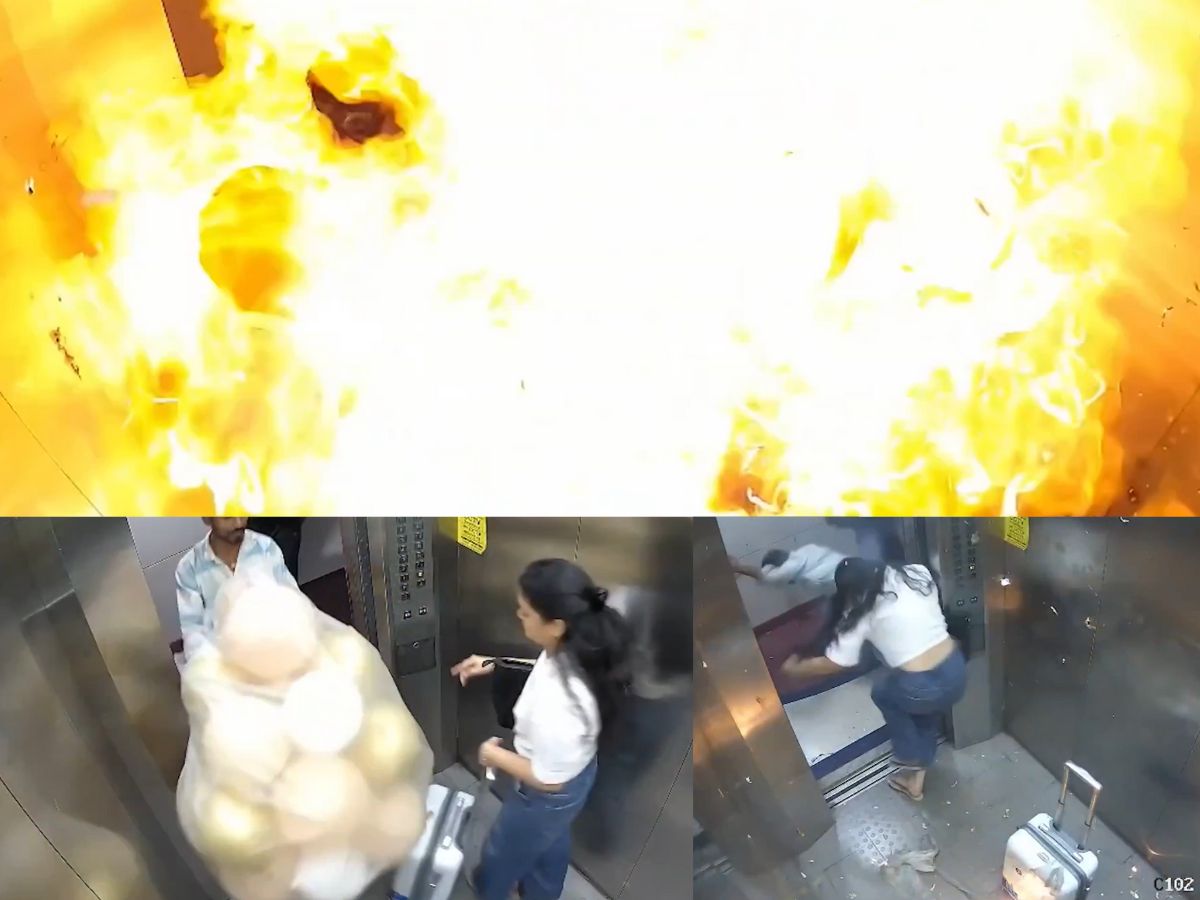
What started as a seemingly ordinary elevator movement in a Goregaon building, Mumbai, on February 4, 2026, quickly turned into a heart-stopping moment caught on CCTV. A woman, casually wheeling her trolley, pressed the floor button as a man behind her struggled to squeeze in over a dozen balloons. Just as another man in a black shirt tried to enter, and BOOM!- the balloons erupted in a sudden fireball, filling the elevator with flames and briefly obscuring the camera’s view. In seconds, all three scrambled out, the balloon man stumbling in panic.
The footage leaves you on edge: How could something as innocent as a bunch of balloons ignite such chaos? Authorities later confirmed two people suffered burn injuries, and a case was filed against the balloon vendor. This shocking incident serves as a fiery reminder: not all balloons are harmless.
Cause of Hydrogen Balloon Explosion: The balloons were filled with hydrogen gas instead of safe helium. Hydrogen is extremely flammable, and in the confined space of the elevator, a single spark triggered a sudden fireball, causing the explosion.
The woman pressed the floor button and made space for the balloon-carrying man.
Another man in a black shirt was about to enter when the balloons detonated.
CCTV footage briefly went dark as flames engulfed the elevator.
All three people ran out, with the balloon man stumbling.
Hydrogen balloons might look innocent, but they are ticking time bombs, far more dangerous than their safer cousin, helium. Hydrogen exists as a highly explosive substance, unlike helium, which remains completely non-flammable and safe for use at parties. A single spark, combined with one careless action, can transform a simple group of floating balloons into a fireball, causing severe injuries or even death in a closed environment.
So why do vendors even sell them? The answer lies in cost: hydrogen is significantly cheaper than helium, making it an attractive choice for balloon sellers. The balloons maintain identical lifting capacity, allowing them to float beautifully while hiding their true danger from buyers. Add in regulatory loopholes, and hydrogen balloons continue to appear in shops despite bans in many countries. The Mumbai elevator incident serves as a warning, showing how an apparently safe party product can become an explosive fire risk. Next time you see a hydrogen balloon, think twice before touching it.
Aishwarya is a journalism graduate with over three years of experience thriving in the buzzing corporate media world. She’s got a knack for decoding business news, tracking the twists and turns of the stock market, covering the masala of the entertainment world, and sometimes her stories come with just the right sprinkle of political commentary. She has worked with several organizations, interned at ZEE and gained professional skills at TV9 and News24, And now is learning and writing at NewsX, she’s no stranger to the newsroom hustle. Her storytelling style is fast-paced, creative, and perfectly tailored to connect with both the platform and its audience. Moto: Approaching every story from the reader’s point of view, backing up her insights with solid facts.
Always bold with her opinions, she also never misses the chance to weave in expert voices, keeping things balanced and insightful. In short, Aishwarya brings a fresh, sharp, and fact-driven voice to every story she touches.
Rajpal Yadav: The Delhi High Court on Thursday rejected Bollywood actor Rajpal Naurang Yadav’s final…
Russia said it regrets the expiry of the New START treaty, the last remaining nuclear…
Bengal hikes Lakshmi Bhandar aid by ₹500 ahead of polls; women to get ₹1,500–₹1,700 monthly…
