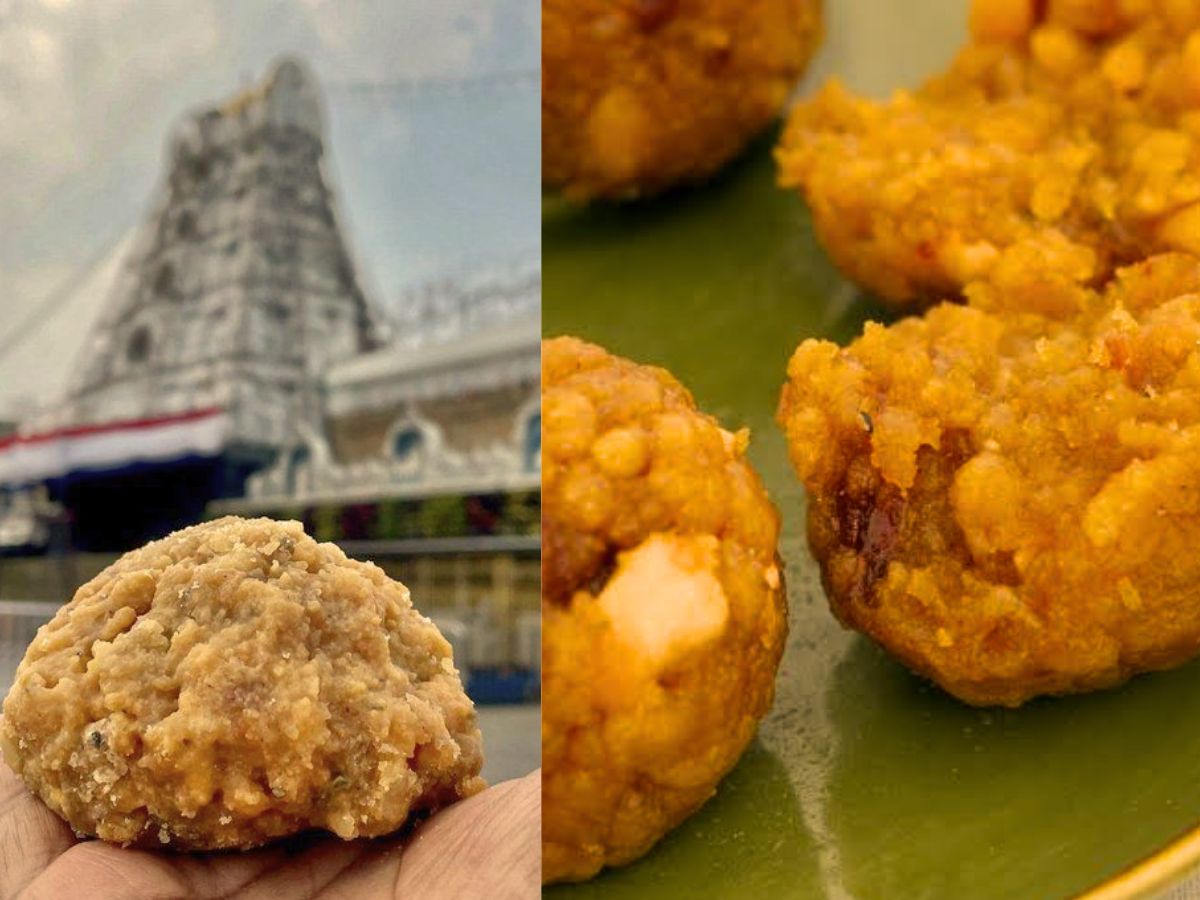
Tirupati Laddu Row: Andhra Pradesh government announced its ambitious plan to curb the adulteration of the ‘Srivari laddu prasadam’ of sacred Tirupati Tirumala Devasthanam using an advanced state-of-the-art food testing laboratory that is taking shape in Tirupati district’s Tirumala.
Speaking after attending a review meeting of the project, Andhra Pradesh Health Minister Y. Satya Kumar Yadav on Monday stated that the laboratory will commence operations next month.
The laboratory is being established under a memorandum of understanding signed between the Andhra Pradesh government and the Food Safety and Standards Authority of India (FSSAI) in October 2024.
The project has received a sanctioned allocation of around Rs 25 crore.
Tirumala Laddu Row: Novel ‘E-Nose’ And ‘E-Tongue’ To Detect Contamination
The laboratory will be equipped with state-of-the-art machinery to examine a wide range of food items, with its core technology focusing on an “electronic tongue” and an “electronic nose”.
These instruments, being procured from France at a cost of Rs 3.5 crore, are designed to conduct highly precise analyses.
Yadav further stated that the system is capable of identifying even the slightest variations in the purity, flavour profile, smell, and texture of ghee.
The initiative is aimed at maintaining stringent quality control over the ghee used in the preparation of the iconic laddu and other temple offerings, the minister added.
Tirumala Laddu Row: Microbiology Instruments To Be Procured
Apart from the e-tongue and e-nose, many other instruments are also being set up at the lab. These include sensors to detect the freshness of raw materials and microbiology testers.
“The testing at the lab will ensure that the laddu and the prasadams served to the devotees will be of the highest quality. About 90% of the work is over, and operations may start next month,” Yadav said.
Over 60 Types of Raw Materials To Be Tested By Lab
Similar to the existing Water and Food Analysis Laboratory of the Tirumala Tirupati Devasthanams (TTD), the body that manages the temple, the new lab will check the quality of ingredients used to prepare laddus and other offerings.
The lab will test more than 60 types of raw materials. These include ghee, cashew nuts, cardamom, sugar, almonds, jeera, water, dry fruits, rice, raisins, chickpeas, and other items commonly used in prasadam preparation.
Officials said the lab will also be equipped with advanced machines. These instruments will help detect metal contamination, pesticide residues and other harmful substances, ensuring the safety and purity of the offerings.