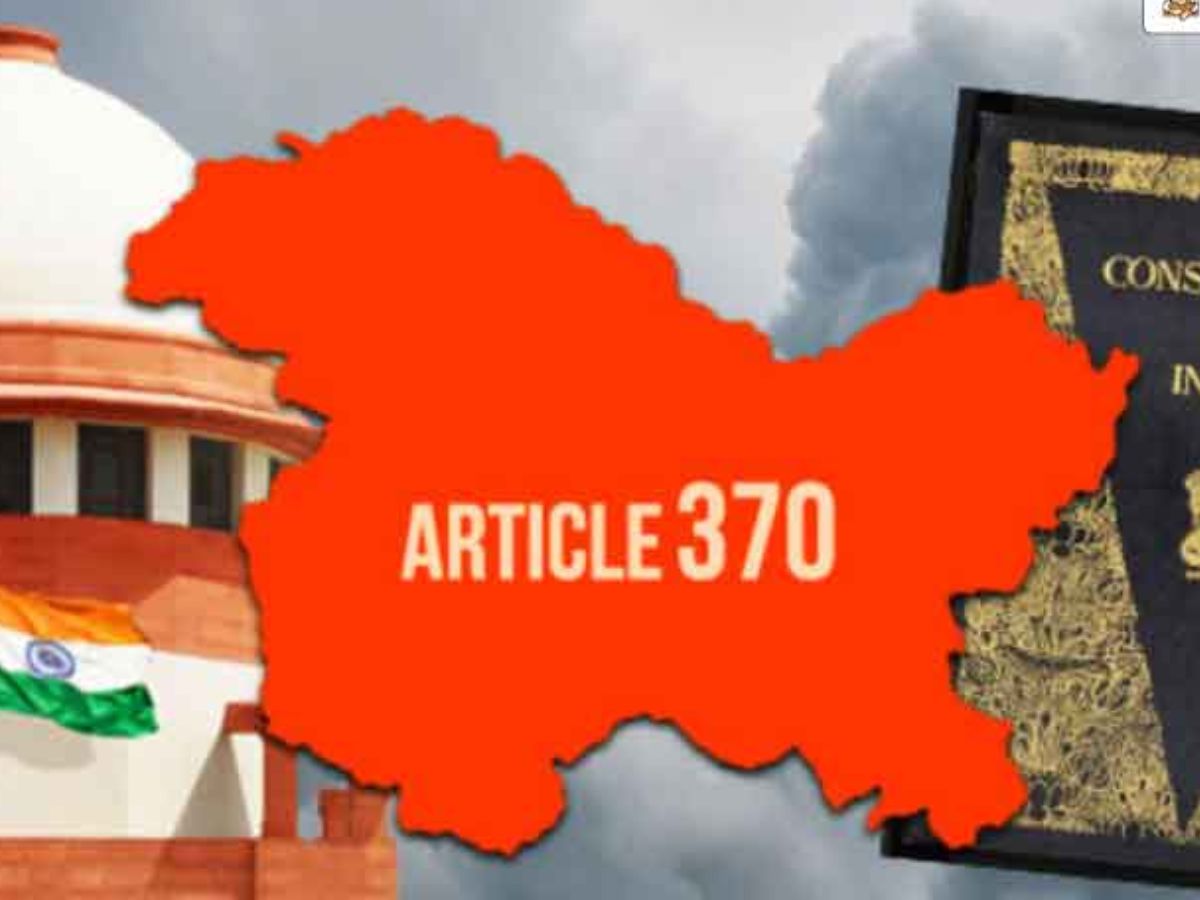
What Is The Jammu And Kashmir Reorganisation Act, 2019?
The Union government is likely to introduce a bill in the Lok Sabha on Wednesday, seeking restoration of statehood to Jammu and Kashmir (J&K). The Government of India abrogated Articles 370 and 35A on August 5, 2019, which had granted special status to Jammu and Kashmir since 1949.
As the government is all set to introduce a bill for the restoration of statehood to Jammu and Kashmir, it’s a good time to know about the key provisions of the Jammu and Kashmir Reorganisation Act, 2019.
Enacted on August 5, 2019, the Jammu and Kashmir Reorganisation Act bifurcated Jammu and Kashmir into two Union Territories – Jammu & Kashmir and Ladakh. This Act came in the wake of the abrogation of Article 370 of the Indian Constitution, which provided the erstwhile state with a special status.
As per the PRS India, the act provides for the reorganisation of the state of Jammu and Kashmir into the Union Territory of Jammu and Kashmir and the Union Territory of Ladakh. The Jammu and Kashmir Reorganisation Bill, 2019, was introduced in Parliament by Union Home Minister Amit Shah.
Article 370, which was placed under Part XXI of the Constitution -‘Temporary, Transitional and Special Provisions’ — permitted Jammu and Kashmir to draft its own Constitution. It restricted Parliament’s legislative powers for extending a central law on subjects included in the Instrument of Accession (IOA) over Jammu and Kashmir.
The Instrument of Accession was signed by Raja Hari Singh, Hindu King of the then princely state of J&K, and Governor General Lord Mountbatten in 1947, which gave Parliament the power to legislate only on Defence, External Affairs and Communications.
However, over the years, there has been a long debate over its abrogation amid growing concerns of terrorism, separatism, and a lack of development in the region. The political landscape shifted dramatically when Prime Minister Narendra Modi-led Central Government introduced a bill to revoke the special status of the state of Jammu and Kashmir.
The abrogation of Article 370 came with several changes for the state. It abolished the autonomy, removing special privileges. It also bifurcated the state into two Union Territories – Jammu and Kashmir and Ladakh. Due to this, J&K has lost its statehood.
Key Provisions
Following the enactment of the Jammu and Kashmir Reorganisation Act 2019, the state of Jammu and Kashmir was bifurcated into two Union Territories – J&K and Ladakh.
In a bid to boost infrastructure, healthcare, and education, development projects were announced in the state. In October 2024, Jammu and Kashmir held its first-ever assembly elections post-reorganisation.
ALSO READ: Centre To Introduce J&K Reorganisation Amendment Bill, 2025: A Look Back At The 2019 Act
Israeli Prime Minister Benjamin Netanyahu says Israel is weakening Iran’s military, destroying missiles, nuclear infrastructure,…
Dhurandhar 2’s ₹500 crore actor fee claim sparks buzz, but Rakesh Bedi’s actual pay was…
A major Reddit outage disrupted services worldwide from late Thursday night to early Friday, leaving…
