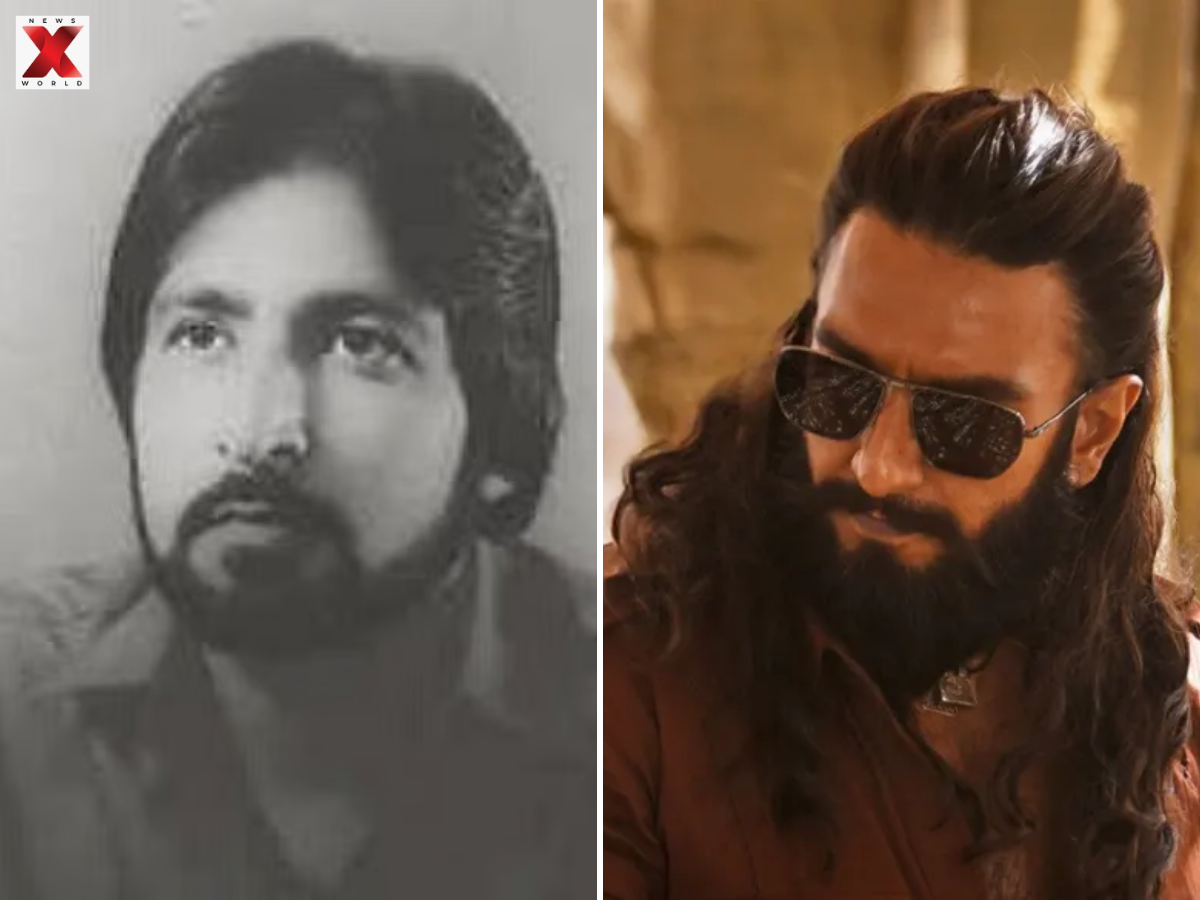
India's original Dhurandhar Ravindra Kaushik (IMAGE: X)
With Dhurandhar and its follow-up by the same title, the espionage, hidden missions in Pakistan, and the spirit of patriotism through betrayal, some see a lot of similarity between the films and real-life examples of Indian intelligence, most notably, the Black Tiger.
The fictional Dhurandhar type, dark and intense, and always fearless, is reflected in the incredible but tragic life of Ravindra Kaushik.
Former Indian Army and Intelligence Bureau officers believe that Kaushik, or the Black Tiger is a Research and Analysis Wing (RAW) deep-cover agent who had penetrated the military of Pakistan, provided valuable intelligence over the years, and survived torture, imprisonment, and a forgotten death.
Ravindra Kaushik was born on 11th April 1952, in Sri Ganganagar, Rajasthan. He grew up in a border town and therefore was naturally fluent in Punjabi and regional dialects.
According to journalist Praveen Swami, the lead to his recruitment was the fact that Kaushik grew up in theatre as he studied his graduation in Commerce at SD Bihani College in Ganganagar.
This was first performed in Lucknow in 1973, when Kaushik took part in a national-level dramatic competition, acting a mono-act of an Indian soldier being interrogated. His eloquence and style of speech attracted RAW talent spotters.
Kaushik according to VK Singh, a retired Major General and a former RAW officer, was also given a two-year intensive training at the RAW in Delhi as per his book India External Intelligence: Secrets of Research and Analysis Wing (RAW).
He was educated in Islamic theology, Pakistani Urdu subtleties, and the geography of the location of his intended destination so that his conversion to his second identity of Nabi Ahmed Shakir would be complete.
Kaushik made it to the border in the year 1975 when he was 23. His operation was a deep-cover infiltration, which is the most hazardous level of espionage. Instead, he joined Karachi University, where he graduated with a degree in law and later achieved the impossible.
He joined the Pakistan Army, where he rose to the rank of Major.
Kaushik made it to the top of the hierarchy and became a commissioned officer, eventually working as a Major in the Military Accounts Department, writes the former Joint Director of the Intelligence Bureau, Maloy Krishna Dhar, in his memoirs Open Secrets: India intelligence unveiled.
Between 1979 and 1983, Kaushik passed on high level intelligence to New Delhi. His news coverage of Pakistani troop movement in the Punjab sector and top-secret information about the nuclear plant at Kahuta gave India an upper hand. He led a full two-fold life, taking a Pakistani woman called Amanat as his wife where he had a kid, yet he remained faithful to India.
It was at this time that Prime Minister Indira Gandhi who realised the extent of his contributions, gave him the title of the Black Tiger which he supposedly received.
The failure of Kaushik did not come because of his own trade craft but rather because of an erroneous action on the part of a junior spy. In 1983, RAW dispatched a low-level agent, Inayat Masih to meet him.
The Telegraph report says that Pakistani counter-intelligence (ISI) intercepted Masih almost instantly. Being harshly interrogated, Masih collapsed and led the police to a park in Multan where he was to meet Kaushik.
Kaushik was apprehended in September, 1983. What ensued thereafter was a period of unimaginable suffering of ten and a half. He was moved between the interrogation centres in Sialkot and the high security cells in Kot Lakhpat and Mianwali jails.
Although the torture, which involved physical mutilation and mental isolation, Kaushik at first did not disclose his real identity, and he pretended to be a Pakistani citizen as long as possible.
In 1985 Kaushik was condemned to death by a Pakistani military court, which commuted the death sentence to life imprisonment.
In his time in captivity he was able to smuggle in some of his letters to his family. He told one of the most pitchy letters, quoted by The Hindu, that he had requested, “Kya Bharat jaise bade desh ke liye kurbani dene waalon ko yahi milta hai?” Is this what they get who sacrifice their lives to a great nation like India?
Ravindra Kaushik succumbed to death on November 21, 2001, in Mianwali Central Jail, due to pulmonary tuberculosis and heart disease, which was worsened by the almost twenty years of neglect and abuse. Being buried in an unmarked grave behind the prison.
Even Sunil Gavaskar can’t get tickets for Dhurandhar 2! Actor Rakesh Bedi reveals the legend’s…
ASSOCHAM announced India’s leadership in the BIMSTEC Business Council, highlighting a $5 trillion regional opportunity.
A Colombia military transport plane crashed shortly after takeoff near the Peru-Ecuador border, with up…
