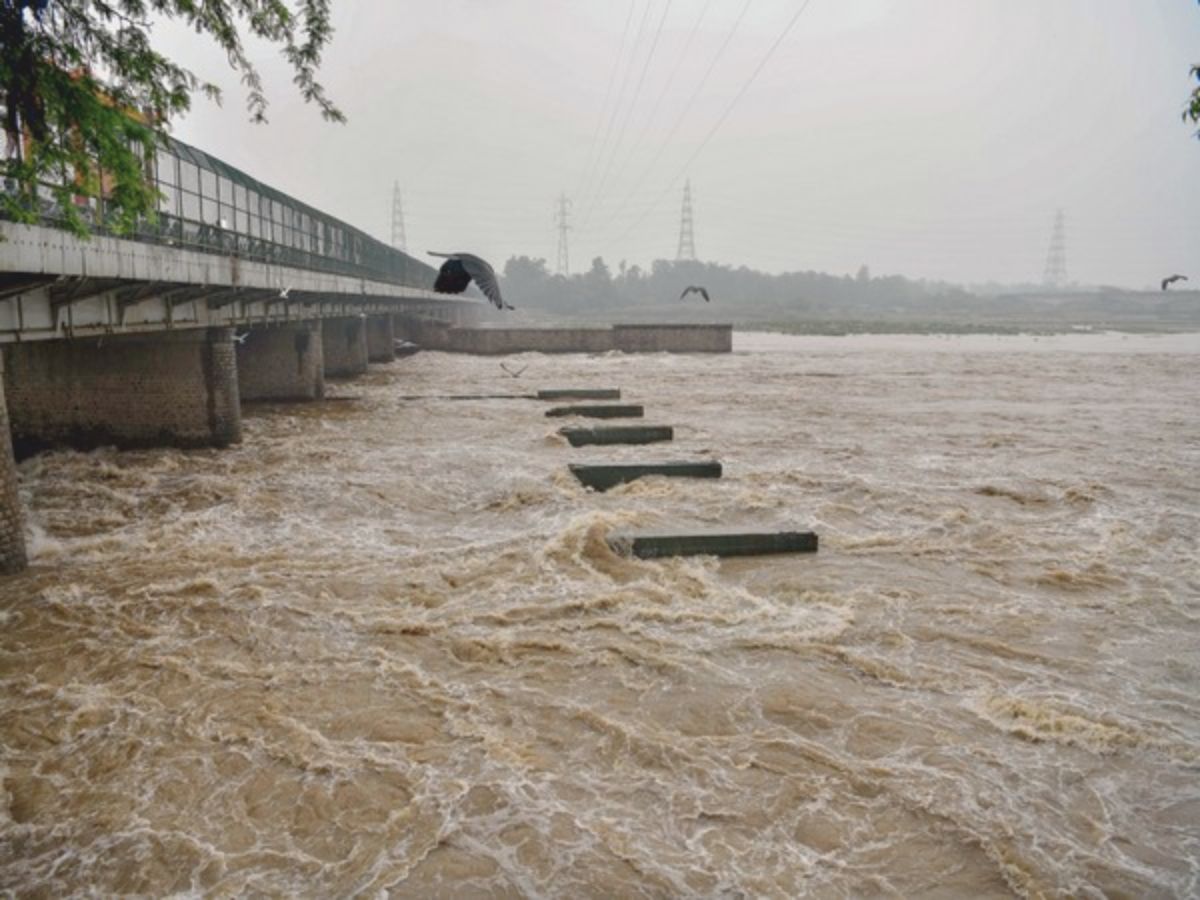
Yamuna breaches danger mark in Delhi, flood alert issued. (Representative image)
For the second consecutive time in more than two years, the Yamuna River crossed the danger level of 205.33 metres on Monday, placing the national capital on high alert. In the evening, the river had risen to 205.63 metres, triggering fear of flooding of low-lying areas. Officials assured that evacuations would be started once the water level reaches 206 metres a level likely to be crossed by early Tuesday, as per the Central Water Commission (CWC).
The sudden surge came after heavy outflows from Haryana’s Hathnikund barrage, from where officials let out over 100,000 cusecs of water for almost 12 hours continuously on Sunday. The peak discharge of 178,996 cusecs was the highest for the season till now. Delhi Chief Minister Rekha Gupta on Monday toured flood-hit areas to oversee preparedness and promised residents that rescue squads and shelters have been arranged.
Even as flood concerns dominate the headlines, the Delhi government has taken a major step toward addressing another crisis tied to the river pollution. The Expenditure Finance Committee, headed by Chief Minister Gupta, has approved the construction of 27 decentralised sewage treatment plants (D-STPs) across the city.
The ₹3,140 crore project will treat the sewage before it enters the Yamuna and cut down on the toxic waste that has been besetting the river for years. With the new facilities, the authorities expect to clean the river up, make it safer, and healthier for the millions of Delhiites who use it, directly and indirectly.
In the eyes of those living along the banks of the Yamuna, the river is no simple river; it is either a lifeline or a threat. The threat of imminent displacement and flooding looms with the rising water level, and the other villain silently, as it toxifies Delhi-ammonia.
Ammonia is a colorless, water-soluble gas that could be present in the water supply of the city. High concentrations have been shown to produce several health-related annoyances, including but not limited to vomiting, nausea, and neurological problems like memory loss and decreased ability to concentrate. Kidney impairment occurs with prolonged exposure, but infants and those with underlying medical conditions are the most affected.
For low-lying colony families, the crisis is double-edged the threat of evacuation by flood and the day-to-day plight of getting safe drinking water. “During every monsoon, we fear losing our homes. But all year round, we fear what’s in the water we drink,” says Yamuna Pushta resident Ramesh Kumar.
As the river keeps on rising, Delhi finds itself at a crossroads fighting short-term flood threats as well as dealing with the long-term health consequences of pollution. The government’s drive to clear the Yamuna brings hope, but at present, thousands of families wait in suspense, watching the water creep higher with every hour.
ALSO READ: Delhi News: Yamuna River Nears Warning Level In Delhi Amid Continuous Rain
Sofia Babu Chacko is a journalist with over five years of experience reporting on Indian politics, crime, human rights, gender issues, and stories about marginalized communities. She believes journalism plays a crucial role in amplifying unheard voices and bringing attention to issues that truly matter. Sofia has contributed articles to The New Indian Express, Youth Ki Awaaz, and Maktoob Media. She is also a recipient of the 2025 Laadli Media Awards for gender sensitivity. Beyond the newsroom, she is a music enthusiast who enjoys singing. Connect with Sofia on X: https://x.com/SBCism
Were Babar Azam, Fakhar Zaman Picked for T20 World Cup 2026 Despite Injuries? Check Shocking Details
The PCB medical panel has disclosed some startling new stating that Babar Azam and Fakhar…
Pakistan has cancelled its Republic Day parade amid a deepening fuel crisis, opting for a…
The Federal Bureau of Investigation is searching for Kalpeshkumar Rasikbhai Patel, an Indian national accused…
