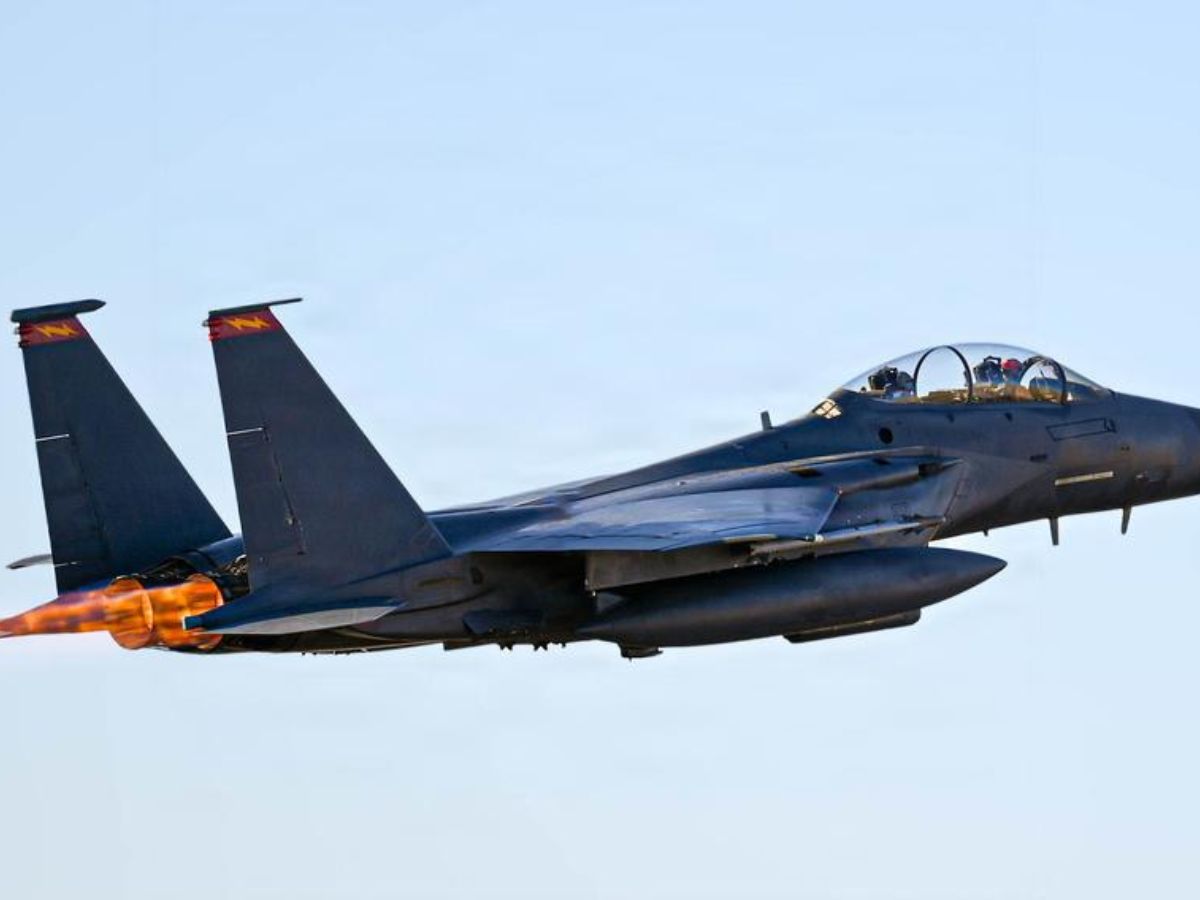
F-15E Shot Down Over Iran
The U.S. Air Force F-15E Strike Eagle aircraft crashed in Iran, which marks a major turning point for escalating regional conflicts. The pilot and weapons systems officer (gunner) used emergency ejection procedures to escape after the strike, which took place in the difficult terrain of Kohgiluyeh and Boyer-Ahmad Province.
The U.S. Central Command announced on Friday, April 3, 2026, that their Combat Search and Rescue operation had successfully retrieved one crew member through their dangerous mission.
The second airman remains in danger because Iranian provincial officials have organized local nomadic groups and villagers to help military forces with a “manhunt” that offers rewards for capturing the remaining American personnel.
Military experts consider the F-15E aircraft an effective combat plane for both ground and aerial missions, but it suffered destruction during an operational mission into southern Iranian territory.
Iranian state media, including IRIB, initially claimed the destruction of a stealth F-35, but subsequent forensic analysis of wreckage photos showing distinct tail fin debris and fuselage sections confirmed the airframe belonged to the 494th Fighter Squadron.
Iranian air defense systems succeeded in achieving their first kinetic intercept of an enemy aircraft despite the advanced electronic warfare capabilities present on the Strike Eagle.
The U.S. fighter aircraft lost its first operational crew since the recent combat activities began, which demonstrates how dangerous the airspace has become over the Persian Gulf.
The southern Iranian wilderness has become a military training ground to support the search for the second missing crew member. U.S. forces use HC-130J Combat King II aircraft and HH-60W Jolly Green II helicopters to conduct surveillance and rescue missions throughout the hazardous area, which includes the location where the aircraft went missing.
The mission to find the missing airman has evolved into a standard Survival Evasion Resistance and Escape (SERE) operation. The airman must use the mountain landscape to avoid enemy detection while carrying only his survival vest, which contains a coded GPS beacon, his sidearm, and his emergency food supply.
The ongoing competition between U.S. extraction teams and Iranian search parties has created a dangerous situation that will determine upcoming diplomatic and military operations.
A recent media graduate, Bhumi Vashisht is currently making a significant contribution as a committed content writer. She brings new ideas to the media sector and is an expert at creating strategic content and captivating tales, having working in the field from past four months.
Crown Fire Chaos: Residents Flee As Rapid Brush Blaze Erupts Near Acton, Los Angeles County
The Crown Fire erupted near Acton, Los Angeles County, spreading rapidly across 20 acres due…
Season 3 of XO, Kitty ends with emotional highs as Kitty Song Covey embraces self-growth…
The Springs Fire in Moreno Valley rapidly grew from 5 to 50 acres in 30…
