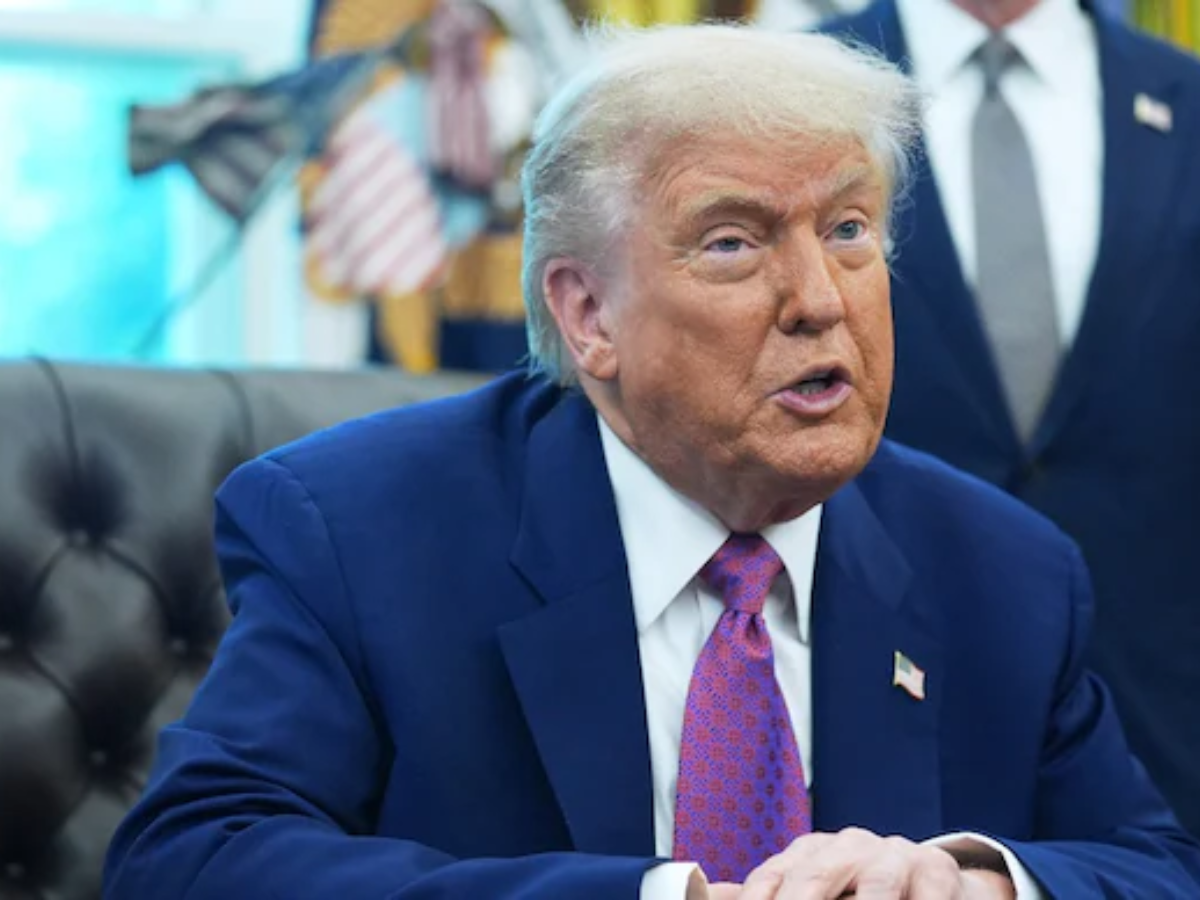
US Tariff Deal With India (Pic Credit: X)
United States President Donald Trump confirmed on July 1 that the US and India will soon announce a trade deal that includes “much less tariffs,” according to a report by ANI. Speaking to reporters, Trump said, “I think we are going to have a deal with India. And that is going to be a different kind of a deal. It is going to be a deal where we are able to go in and compete. Right now, India does not accept anybody in. I think India is going to do that… we are going to have a deal for much less tariffs.”
Both nations have intensified efforts to finalise a Bilateral Trade Agreement (BTA) before July 9, when a 90-day tariff pause ends. The deadline marks a pivotal moment, with trade talks gaining urgency.
ANI cited government sources who confirmed that India has taken a firmer stance, particularly on agricultural issues. The Indian delegation, led by Chief Negotiator Rajesh Agrawal, has extended its stay in Washington. Two negotiation rounds were initially scheduled for July 3 and 4, but the talks have now been extended as both sides aim to finalise an interim agreement before the tariff suspension expires.
The extended negotiations aim to prevent the reimplementation of suspended 26% reciprocal tariffs, which were paused for 90 days starting April 2. A senior official told ANI, “The failure of these trade discussions would trigger the immediate reimplementation of the 26 per cent tariff structure.” India’s tough position stems from domestic sensitivities around its agricultural sector, which remains politically and economically vital. Most Indian farmers operate small-scale farms, making any concessions politically risky. The US continues to demand lower duties on agricultural imports such as apples, almonds, tree nuts, and genetically modified crops.
While the US presses for reduced duties on food and agricultural imports, India is pushing for better market access for its labour-intensive goods. These include textiles, garments, leather products, and jewellery, along with agriculture-based exports like bananas, shrimp, grapes, oilseeds, and processed food. India also remains resistant to opening its dairy sector, a long-standing stance that has remained unchanged despite US demands.
Both countries are aiming for an ambitious long-term goal: increasing bilateral trade volume from $191 billion to $500 billion by 2030, through gradual reductions in tariffs and greater mutual market access.
Swastika Sruti is a Senior Sub Editor at NewsX Digital with 5 years of experience shaping stories that matter. She loves tracking politics- national and global trends, and never misses a chance to dig deeper into policies and developments. Passionate about what’s happening around us, she brings sharp insight and clarity to every piece she works on. When not curating news, she’s busy exploring what’s next in the world of public interest. You can reach her at [swastika.newsx@gmail.com]
The Trump administration has shared a 15-point peace plan with Iran through intermediaries, including Pakistan,…
Alan Ritchson, star of Reacher and War Machine, is under investigation after a physical altercation…
Iran says the US and Israel struck targets near the Bushehr Nuclear Power Plant, raising…
