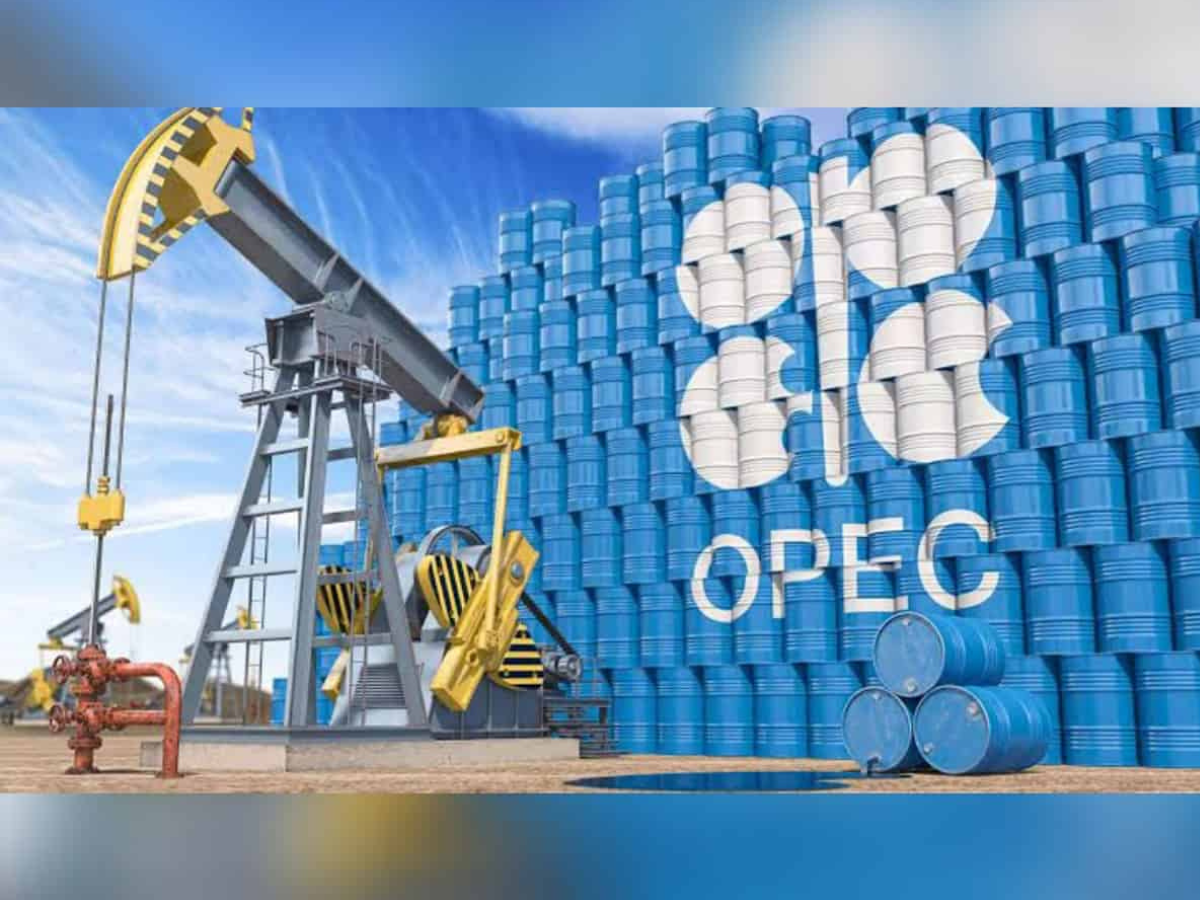
OPEC+ Countries including Saudi Arabia, Russia, the UAE, Iraq, Kuwait, Oman, Kazakhstan, and Algeria are trying to realign the global production matrix.
Eight key members of the OPEC+ alliance including Saudi Arabia, Russia, the UAE, Iraq, Kuwait, Oman, Kazakhstan, and Algeria are trying to realign the global production matrix with the current demand and supply deviations. Due to the current global supply instability, OPEC+ has now agreed to raise oil production by 548,000 barrels per day (bpd) in August. This exceeds the previously expected increase of 411,000 bpd. The hike is part of an accelerated unwind of voluntary cuts totaling 2.2 million bpd.
These eight OPEC+ countries previously implemented voluntary adjustments in April and November 2023, namely Saudi Arabia, Russia, Iraq, UAE, Kuwait, Kazakhstan, Algeria, and Oman. They met virtually on July 5, 2025, to review global market conditions and outlook.
In order to maintain a stable global economic proposition, these OPEC+ countries will implement a 548,000 barrels per day production increase to align with the gradual return of 2.2 million barrels per day starting. The adjustments will remain flexible, allowing for pauses or reversals based on evolving market conditions to maintain stability.
Reasons and Timing are the Key
OPEC’s secretariat said the decision was based on a “steady global economic outlook” and low inventory levels. The move also responds to peak northern hemisphere summer demand and aims to regain market share versus non-OPEC producers, including U.S. shale.
What Next for the OPEC+
The other OPEC+ coalition members, beyond the core group of eight countries, will meet on August 3. The objective of this meeting is to consider the next monthly adjustment. Decisions may be affected by demand, inventory levels, geopolitical developments, and quota compliance.
What Is OPEC+
The Organization of the Petroleum Exporting Countries (OPEC) is a permanent intergovernmental organization created at the Baghdad Conference on September 10–14, 1960, by Iran, Iraq, Kuwait, Saudi Arabia, and Venezuela. The objective of OPEC is to coordinate and unite petroleum policies among Member Countries. Their aim is to secure fair and stable prices for petroleum producers globally. Their main objective is to remain efficient, economic, and provide a regular supply of petroleum to consuming nations. They also ensure a fair return on capital for those investing in the industry.
Ankur Mishra is a journalist who covers an extensive range of news, from business, stock markets, IPOs to geopolitics, world affairs, international crises, and general news. With over a decade of experience in the business domain, Ankur has been associated with some of the reputed media brands. Through a sharp eye on global marketplaces along with deep insights and analysis of business strategies, Ankur brings simplicity to the complex economic matrix to decode market trends and empower people.
He is committed to entrenched data, facts, research, solutions, and a dedication to value-based journalism. He has covered trade tariff wars, international alliances, corporate policies, government initiatives, regulatory developments, along with micro- and macroeconomic shifts impacting global fiscal dynamics.
Iran says the US and Israel struck targets near the Bushehr Nuclear Power Plant, raising…
Police are investigating whether five spent cartridges found at Ashok Kharat’s farmhouse were linked to…
Gujarat’s proposed Uniform Civil Code Bill makes it compulsory for all live-in couples to register…
