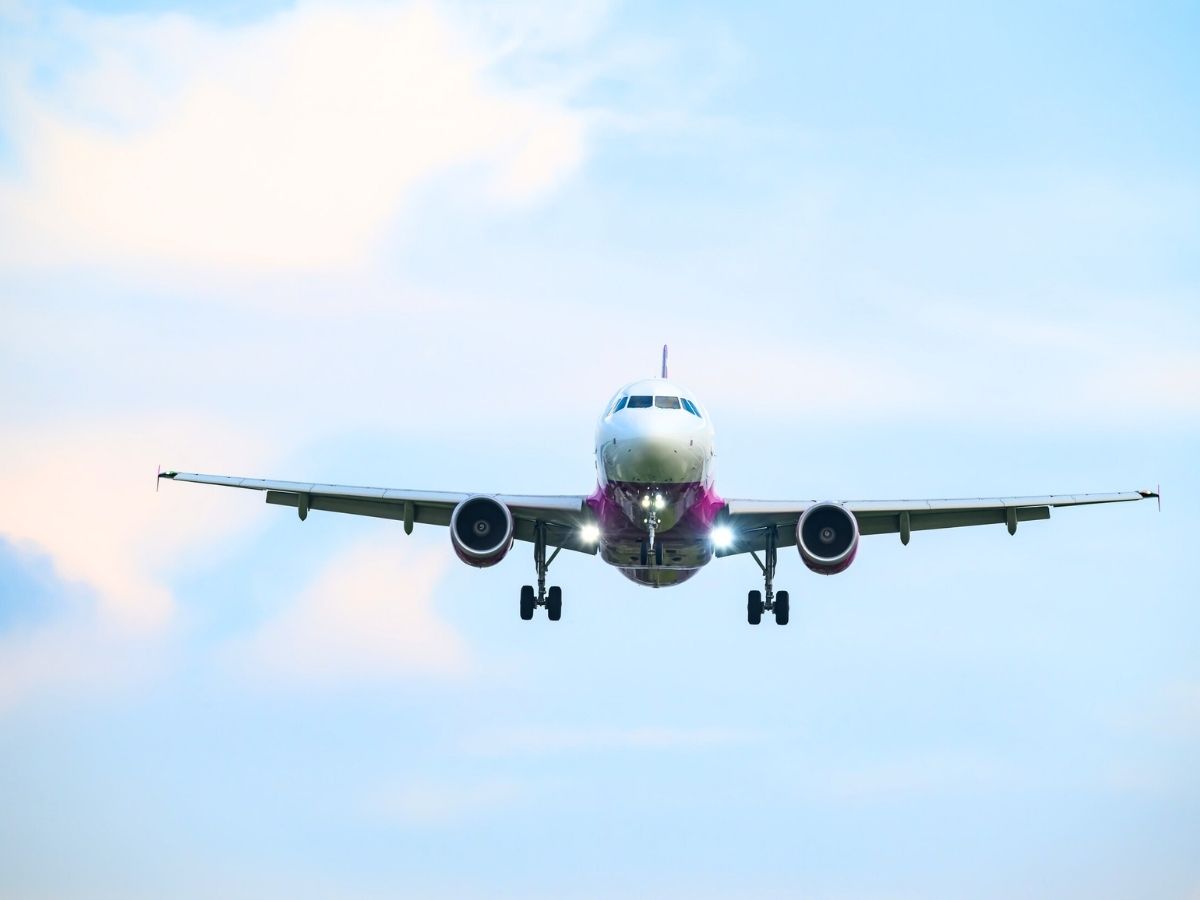
Why Iran’s Airspace Is Crucial For A Key East-West Route. (Photo: Canva)
Iran briefly shut its airspace for commercial flights for nearly five hours on Wednesday night amid escalating tensions with the United States, forcing airlines worldwide to reroute long-haul operations.
The closure came without official explanation, even as Tehran faced mounting pressure over its violent crackdown on nationwide protests and repeated warnings from Washington about possible military intervention.
Although the restriction was lifted early Thursday morning, the disruption had already triggered delays and cancellations across global aviation networks, particularly on routes connecting Europe and Asia.
Iran sits at the heart of one of the world’s most important aviation corridors, the Europe-Asia East–West air route. Its airspace forms the most direct great-circle path between Europe and destinations in South Asia, Southeast Asia, and East Asia.
For airlines, overflying Iran majorly reduces flying time, fuel consumption, and operational costs. Any diversion around Iranian airspace either north via Central Asia or south over the Arabian Sea adds hours to flight durations and sharply increases expenses, making even short closures highly disruptive.
Indian carriers were among those affected by Iran’s sudden decision. IndiGo confirmed that several international flights were impacted, while Air India said its aircraft were forced to use alternative routes, resulting in delays and cancellations.
Both airlines operate numerous long-haul services along the East–West corridor, connecting Indian hubs such as Delhi, Mumbai and Bengaluru to Europe and the United States. Any prolonged restriction over Iran threatens to severely strain their international schedules.
Air India issued a travel advisory warning passengers of possible delays and cancellations due to the evolving situation in Iran.
The airline said safety considerations had forced changes across parts of its international network, with several flights being rerouted and some cancelled where alternatives were not feasible.
“Passenger and crew safety remains our top priority,” Air India said, describing the disruption as unforeseen and urging travellers to check flight status before heading to airports.
The ripple effect of Iran’s airspace closure extended well beyond India. Germany issued a fresh directive advising its airlines to avoid Iranian airspace, shortly after Lufthansa adjusted its Middle East operations.
The United States already prohibits all US commercial aircraft from overflying Iran, while carriers such as flydubai and Turkish Airlines have cancelled multiple flights to Iranian destinations in recent days.
Flight-tracking data showed widespread diversions, with aircraft rerouted over Saudi Arabia, the Persian Gulf and Central Asia, adding delays across long-haul routes.
Iran’s aviation record has long raised safety concerns. In 2020, Iranian air defences mistakenly shot down Ukraine International Airlines Flight PS752, killing all 176 people onboard. Tehran initially denied responsibility before later admitting to the error.
More recently, Iran closed its airspace during last year’s 12-day conflict with Israel, reinforcing airline fears that escalating geopolitical tensions could once again endanger civilian aviation.
The airspace disruption coincided with reports that non-essential personnel were advised to evacuate from a key US military base in Qatar, while American military assets were repositioned across the Gulf. However, US President Donald Trump later suggested that any immediate military intervention might be on hold, making a series of vague statements about the situation in Iran.
Despite this, uncertainty continues to loom over the region, keeping airlines on high alert.
On Thursday, multiple Indian and international flights were forced to detour, causing cascading delays across long-haul operations. Flights from Delhi, Mumbai and Bengaluru to European cities such as London, as well as US destinations including New York and Washington, were among the worst affected.
India Today’s OSINT tracking showed several Air India and IndiGo flights adding anywhere between 15 to 45 minutes due to rerouting, underscoring how even brief airspace closures can disrupt global aviation flows.
With Pakistani airspace already restricted for Indian carriers, Iranian airspace has become even more critical for maintaining efficient East-West connectivity.
Any further shutdowns would significantly increase costs, strain crew schedules and reduce network reliability for Indian airlines already grappling with longer routes and higher fuel expenses.
As geopolitical tensions in the Middle East remain volatile, airlines worldwide including those from India are bracing for continued disruption along one of the world’s most vital aviation corridors.
Sofia Babu Chacko is a journalist with over five years of experience covering Indian politics, crime, human rights, gender issues, and stories about marginalized communities. She believes that every voice matters, and journalism has a vital role to play in amplifying those voices. Sofia is committed to creating impact and shedding light on stories that truly matter. Beyond her work in the newsroom, she is also a music enthusiast who enjoys singing.
UK PM Keir Starmer said British armed forces stationed in the region were also at…
19 Minute 34 Second Viral MMS: Is There A Season 2 Of The Video? Everything You Should Know
19 Minute 34 Second Viral MMS: Is There A Season 2 Of The Video?
Will Dubai, Abu Dhabi Stock Markets Open Today Amid US‑Israel‑Iran Conflict? Everything You Should Know
