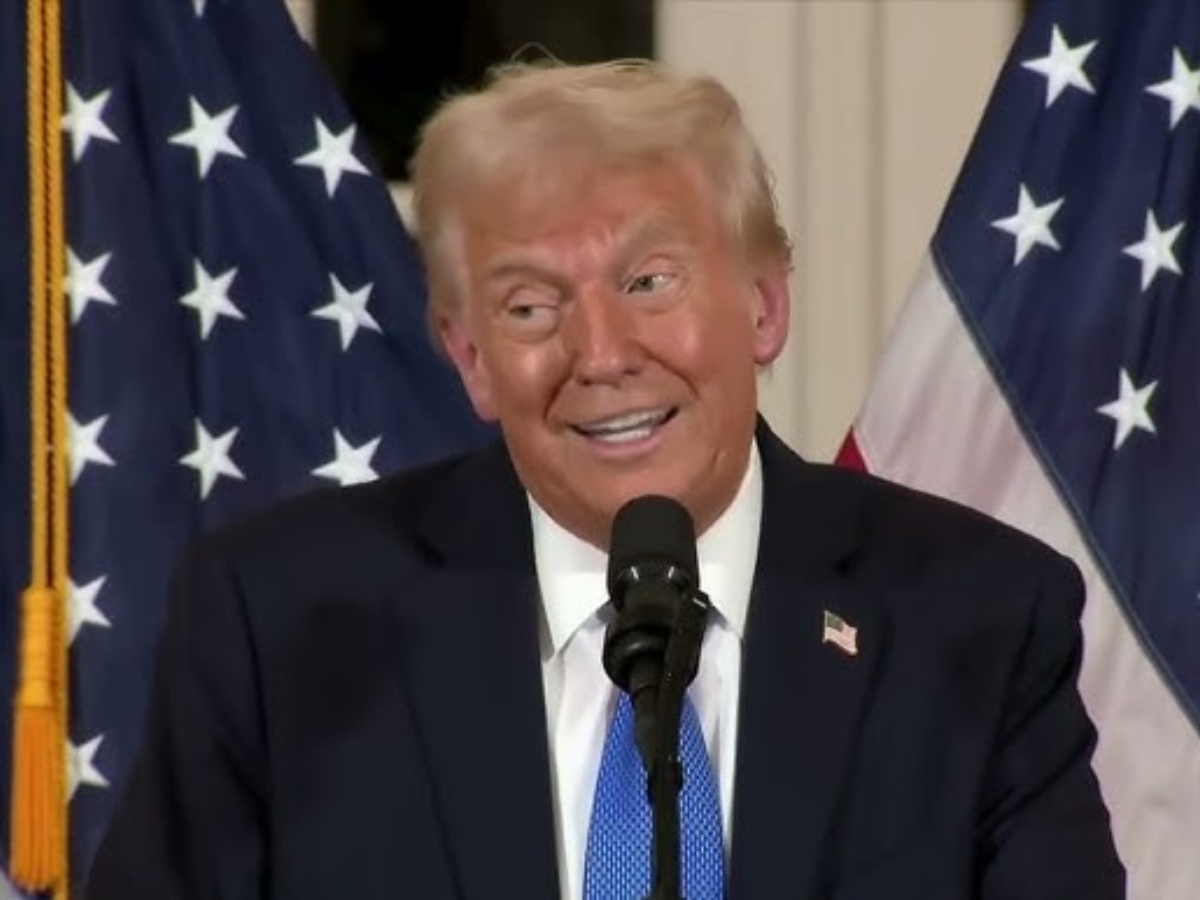
US 'Shouldn’t Even Have' Midterm Elections, Says Donald Trump; White House Clarifies He Was 'Joking And Speaking Facetiously' (Photo Credits: X)
As India’s Operation Sindoor came to light, it also revealed the terror infrastructure of Pakistan, which prompted Islamabad to request the United States for diplomatic support and, in return, offered trade benefits, investments, and access to essential minerals. This is all based on the documents that were filed under the US Foreign Agents Registration Act (FARA).
As per the research, the documents and from them, it is revealed that Pakistan’s diplomats and defense officials contacted the Americans more than 50 times through different means like emails, phone calls, and personal meetings during the operation. The filings were submitted by Squire Patton Boggs (US) for the Pakistani Government. It is worth mentioning that a New York Times investigation already pointed out that Pakistan’s lobbying expenditure had doubled in April and May.
Operation Sindoor was initiated in retaliation for a terrorist attack on tourists in Pahalgam, Kashmir, which was orchestrated by Pakistan. The Indian Armed Forces carried out the operation during the nights of May 6 and 7 and targeted nine terror camps in both Pakistan and Pakistan-occupied Kashmir.
Precision-guided missiles and long-range stand-off weapons
AI-enabled intelligence and targeting systems
Satellite and drone-based real-time surveillance
Integrated air-defence and counter-drone networks
China and India were among the major countries hit, with losses in Bahawalpur, Muridke, Muzaffarabad, and Kotli, the infamous havens of Jaish-e-Mohammed and Lashkar-e-Taiba. India underscored that the strikes were driven by intelligence, were confined to terror targets, and did not affect civilian as well as military infrastructures. After four days of tension, the guns fell silent on May 10 with both sides agreeing to a ceasefire after DGMO-level talks.
Not long after that, Pakistan shared with the United States a paper suggesting a change in their relationship, which included the following terms:
Trade and Investment: The United States would import more and lower the barriers, and the Special Investment Facilitation Council (SIFC) would grant them expedited access.
Minor Elements: There would be an opening to the reserves of copper, lithium, cobalt, and rare earths.
Monetary Modernization: A pacification of the US for fintech support, digitization, and debt reforms.
Security Alliance: The US would assist in counter-terrorism and would also recover its arms from Afghanistan.
Pakistan’s lobbyist contracts, totaling $5 million per year, were reported to have been signed in November 2025, revealing that the country’s efforts to contact Washington had been stepped up considerably.
Shubhi is a seasoned content writer with 6 years of experience in digital media. Specializing in news, lifestyle, health, sports, space, optical illusions, and trending topics, she crafts engaging, SEO-friendly content that informs and captivates readers. Passionate about storytelling, Shubhi blends accuracy with creativity to deliver impactful articles across diverse domains.
Britain’s former ambassador to the United States, Peter Mandelson, has been arrested by London police…
Gudakesh Motie and Shimron Hetmyer starred as West Indies crushed Zimbabwe by 107 runs in…
Check the latest Super 8 points table for the T20 World Cup 2026. West Indies'…
