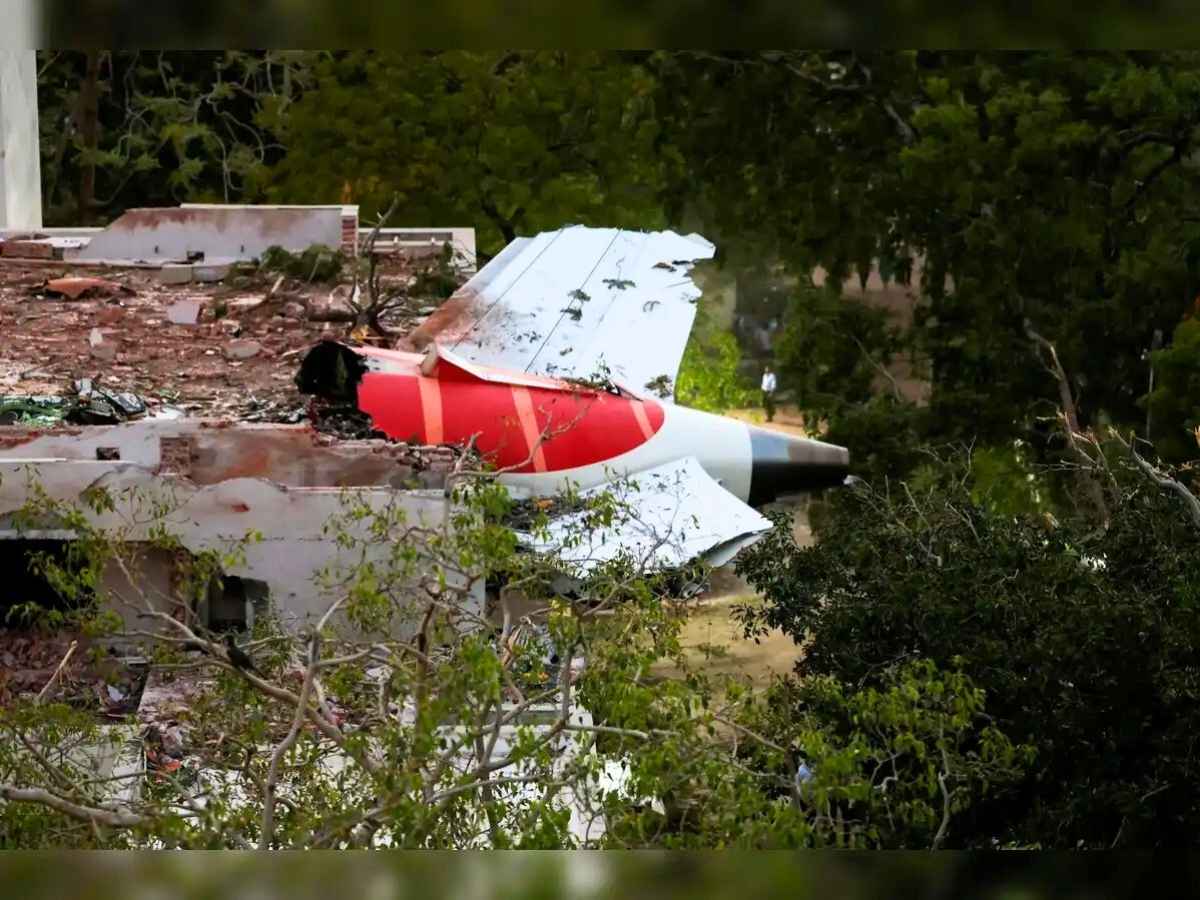
The Wall Street Journal reports that a cockpit audio recording suggests the Air India crash on June 12 may have been caused by the captain cutting off fuel supply to the engines mid-air.
In a stunning revelation, the Wall Street Journal has reported that the captain of the Air India flight which crashed in Ahmedabad last month may have accidentally cut off fuel supply to the engines, causing the deadly accident that claimed 260 lives.
According to sources familiar with the U.S. investigation, the report said that cockpit recordings suggest the captain moved the fuel control switches to the “cutoff” position only seconds after takeoff. This would have turned fuel off to both engines of the Boeing 787 Dreamliner, causing an almost immediate loss of thrust and crash.
According to the cockpit voice recorder, the first officer, who was piloting the aircraft at the time, questioned the more senior captain about the fuel cut. The captain reportedly denied doing so. Captain Sumeet Sabharwal and First Officer Clive Kunder has a collective flying experience of 15,638 hours & 3,403 hours respectively.
The aircraft was on route from Ahmedabad to London, departed the airport shortly before successfully and then crashed on take-off on 12 June. According to reported CCTV footage, a ram air turbine which is a backup device that deploys when the engine loses power, suggesting a power failure instaneously after takeoff.
Earlier, India’s Aircraft Accident Investigation Bureau (AAIB) released a preliminary report stating that both fuel switches were found in the “run” position at the crash site. It noted that the switches had moved to the “cutoff” position within a second of each other after takeoff, but did not explain how or why they were switched.
The report further mentioned that there were signs that both engines attempted to restart before the plane crashed at a low altitude.
In an internal communication to Air India employees, CEO Campbell Wilson stated that the preliminary findings did not indicate any mechanical or maintenance issues, and all necessary checks were up to date.
Additionally, the report offered no safety recommendations for Boeing or engine manufacturer General Electric (GE).
After the AAIB’s preliminary findings were released, the U.S. Federal Aviation Administration (FAA) and Boeing quietly informed aviation partners that the fuel switch lock system on Boeing aircraft is safe, according to a document seen by Reuters and confirmed by four sources familiar with the matter.
As investigations continue both in India and the U.S., families of victims and aviation authorities await a final explanation for what caused the shocking loss of the aircraft so soon after takeoff. The possibility of human error involving a senior pilot has raised concerns within the aviation community.
IPL 2026 | ‘Couldn’t Sleep at Night….’: Varun Chakravarthy Sheds Light On Emotional Journey With KKR
Varun Chakravarthy revealed early IPL panic attacks due to late debut and pressure, overcoming anxiety…
GTA VI: The much-awaited GTA 6 is set to be one of the biggest gaming…
A viral video captured an Indian auto rickshaw driving through London traffic, leaving commuters surprised…
