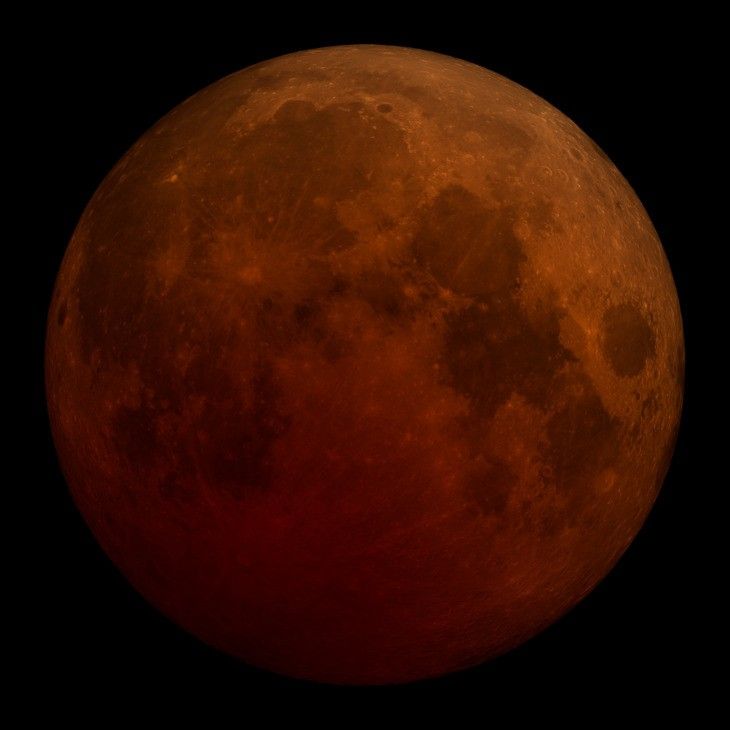
As Pitru Paksha starts on September 7, 2025, the lunar eclipse or Chandra Grahan, overlaps with the opening day of ancestral Shradh rituals. This occasional convergence of celestial and cultural observance augments an extremely spiritual dimension to ritual performance.
As per the Hindu tradition and believes, Shradh honors deceased ancestors through contributions like Tarpan and Pind Daan. This year, Shradh starts on Poornima, a full-moon day that also characterises the lunar eclipse. The eclipse’s Sutak period, a traditional opening during which rituals are avoided, commences at 12:57 PM IST, needing Shradh rites to be accomplished before this cutoff to preserve religious propriety.
Spiritual texts and direction view this arrangement as a “karmic amplifier.” The eclipse amplifies lunar energy, creating the mind more receptive, and the block between the physical and ancestral realms thinner. Carrying out Shradh earlier than eclipse is supposed to intensely resonate with ancestral blessings and intensify the efficiency of rituals
By traditional recommendation Shradh timings on September 7, 2025 are:
• Kutup Muhurat: around 11:54 AM to 12:44 PM
• Aparahna Kaal: beginning at 12:44 PM to around 4 PM
Families are encouraged to do their Tarpan and Pind Daan with dedication within these favourable windows before Sutak limits apply.
Outside timing, spiritual counsellors advise to continue pure, sattvic observances, vegetarian offerings, respectful attitude, meditation, and ancestral chants, whereas avoiding forbidden activities during Sutak and eclipse stages.
Why the Moon Looks Red during Chandra Grahan
Throughout the Lunar Eclipse, the red colour is twisted by Rayleigh sprinkles, the parallel atmospheric phenomenon that occurs during the sunsets.
When the sunlight goes through Earth’s atmosphere, it drops shorter blue wavelengths, even though it is stretched red and orange colour wavelengths are spread in the direction of the Moon, then producing an ambiguous, cherry radiance.
The specific shade of red, though, may differ based on atmospheric conditions triggered due to dust, pollution, or cloud cover.
Ankur Mishra is a journalist who covers an extensive range of news, from business, stock markets, IPOs to geopolitics, world affairs, international crises, and general news. With over a decade of experience in the business domain, Ankur has been associated with some of the reputed media brands. Through a sharp eye on global marketplaces along with deep insights and analysis of business strategies, Ankur brings simplicity to the complex economic matrix to decode market trends and empower people.
He is committed to entrenched data, facts, research, solutions, and a dedication to value-based journalism. He has covered trade tariff wars, international alliances, corporate policies, government initiatives, regulatory developments, along with micro- and macroeconomic shifts impacting global fiscal dynamics.
Dhurandhar: The Revenge releases March 19 with Ranveer Singh returning as Hamza. The big twist…
India vs Pakistan Set For Blockbuster Battle in FIH Hockey World Cup 2026 Group Stage
India face a tough Pool D at the FIH Hockey World Cup 2026 against Pakistan,…
Liverpool hosts Galatasaray at Anfield for the second leg of the Champions League Round of…
