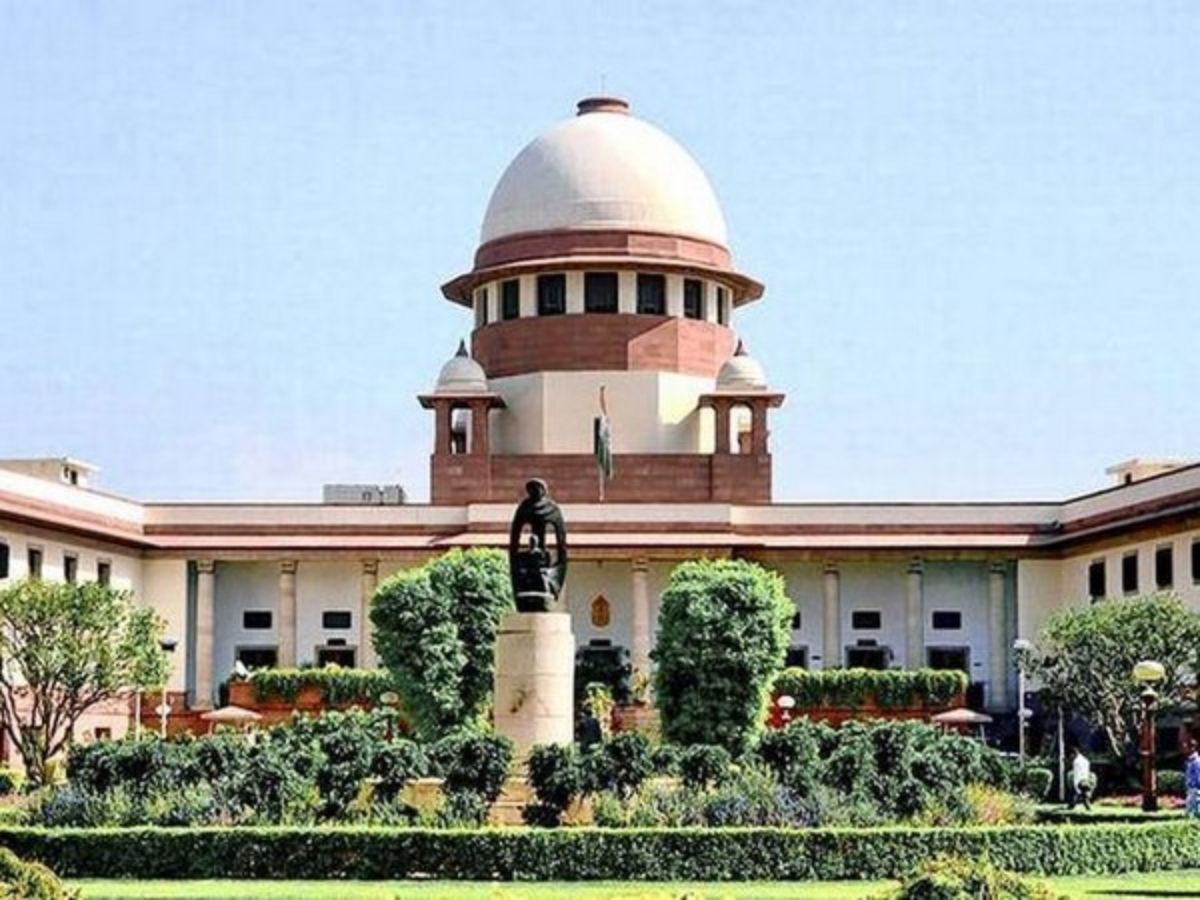
SC warns stubble burners: Jail time possible as Delhi-NCR pollution control takes center stage (Photo: ANI)
On Wednesday, the Supreme Court issued firm comments on air pollution in Delhi-NCR, indicating that farmers who burn their crop residue may be jailed as part of a solution to this social crisis. The bench said that while farmers should be recognised for their value in providing food for the people, it cannot be tolerated if environmental protections are ignored.
A two-judge bench, headed by Chief Justice of India B R Gavai and Justice K Vinod Chandran, said, “Farmers hold a special place in our hearts, but that doesn’t exempt them from protecting the environment. If criminal prosecution is available, sending some offenders behind bars will send the right message to society.”
Burning of stubble is the burning of straw stubble left after the crop harvesting of crops like rice and wheat on purpose. It is a method applied to clear land quickly and inexpensively for subsequent planting. Nonetheless, it contributes importantly to air pollution, emitting particulate matter into the air and creating dense haze, especially in northern India. The tradition is a dangerous health hazard to individuals of all ages. While stubble burning is prohibited in nations such as India and Pakistan, lax enforcement permits widespread continuation.
The court was hearing a suo-motu plea regarding vacancies in state pollution control boards in Uttar Pradesh, Haryana, Rajasthan, and Punjab. It directed these states, along with the Commission for Air Quality Management (CAQM) and the Central Pollution Control Board (CPCB), to fill vacancies within three months. Additionally, measures to prevent air pollution must be proposed within three weeks, ahead of the winter season, when pollution spikes.
The Supreme Court also advised the CAQM to consider alternative solutions to tackle air pollution, instead of imposing a blanket ban on construction activities during winter. The bench noted that prohibitory orders could leave daily wage workers unemployed, creating socio-economic consequences.
“Stopping construction work has other consequences; workers coming from different parts of the country will be left without jobs if a blanket ban is imposed,” the court observed.
During the hearing, Additional Solicitor General Aishwarya Bhati informed the court that 147 of 603 posts in the CPCB remain vacant, while the CAQM has 18 vacancies out of 56 posts. The court granted three months to fill these vacancies and one month to appoint the Permanent Member and Member Secretary of the CAQM.
The top court’s directive reflects a balanced approach holding polluters accountable while considering the livelihoods of workers and signals stricter scrutiny of stubble burning in the coming winters.
ALSO READ: Watch: Houses Swept Away, 7 Missing As Cloudburst Strikes Uttarakhand’s Chamoli
Sofia Babu Chacko is a journalist with over five years of experience reporting on Indian politics, crime, human rights, gender issues, and stories about marginalized communities. She believes journalism plays a crucial role in amplifying unheard voices and bringing attention to issues that truly matter. Sofia has contributed articles to The New Indian Express, Youth Ki Awaaz, and Maktoob Media. She is also a recipient of the 2025 Laadli Media Awards for gender sensitivity. Beyond the newsroom, she is a music enthusiast who enjoys singing. Connect with Sofia on X: https://x.com/SBCism
US F-35 Hit By Suspected Iranian Fire, Makes Emergency Landing, What Really Happened Mid-Air?
A US F-35 made an emergency landing after a suspected Iranian strike during a combat…
Garima Malhotra, mother of designer Manish Malhotra, passed away peacefully at 94 in Mumbai on…
The Chhattisgarh Professional Examination Board has declared CG TET 2026 results on March 19. Candidates…
