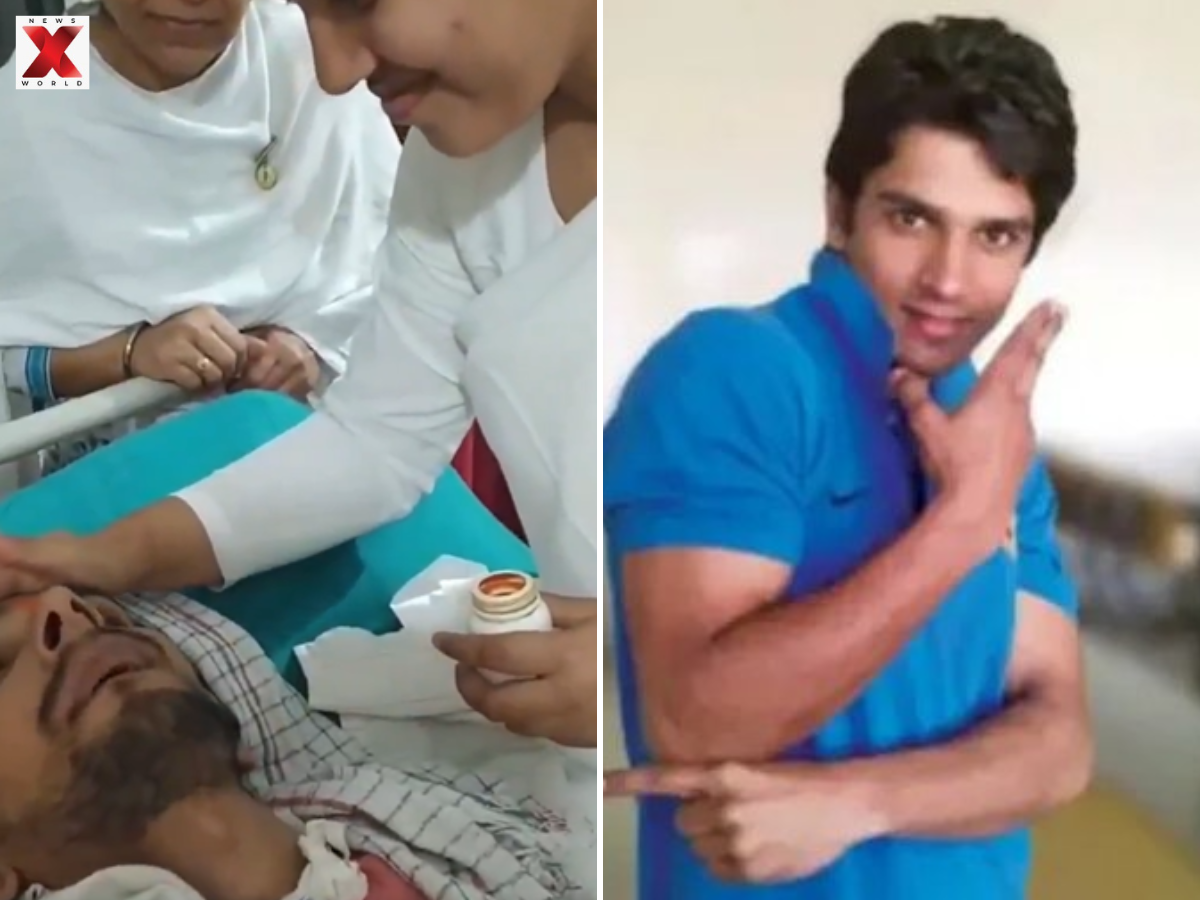
Harish Rana dies at 32 (IMAGE: X)
HARISH RANA DEATH: Harish Rana, who was the first person in India to be granted passive euthanasia, has passed away at AIIMS Delhi, according to news agency PTI.
The Supreme Court of India had permitted the withdrawal of life-sustaining treatment for the 32-year-old on March 11, 2026. He had remained in a vegetative state for over 13 years with little chance of recovery.
His father, Ashok Rana, earlier told ANI that the family had been fighting the case for three years. “No parent would want this for their child. He was a topper at Panjab University,” he said.
In its March 11 order, the court directed AIIMS Delhi to admit Rana and ensure all necessary procedures were followed for the withdrawal of life support.
In its verdict on March 11, the Supreme Court had asked AIIMS Delhi to admit Rana and provide all the facilities in carrying out this exercise of withdrawing the life support system.
The Supreme Court bench headed by Justice JB Pardiwala and Justice KV Vishwanathan allowed the withdrawal of clinically assisted nutrition and hydration (CANH) for Harish Rana, who has been in a vegetative state since he fell accidentally from a building in 2013.
After the Supreme Court verdict, Advocate Manish Jain said that the court has granted Rana the right to euthanasia under Article 21.
Informing about the next course of action, the advocate had told ANI on March 11 that “Within a week, he will be transferred to AIIMS, where all life support tubes will be removed, and he will pass away naturally.”
The advocate had explained that this decision has been taken in accordance with the guidelines issued in 2018 by the ‘Common Cause’ in the case of individuals in a palliative state with complete immobility.
Passive euthanasia is defined as the withdrawal or withholding of treatment, such as a breathing machine, a nutrition tube, or medication, to allow a patient to die naturally.
This is unlike active euthanasia, in which a person is intentionally killed, and passive euthanasia is considered to be more acceptable in a legal framework, such as in India under strict circumstances.
Passive euthanasia was recognised by the Supreme Court of India in a landmark judgment, and it is legal in India under strict circumstances.
Furthermore, the Supreme Court of India also recognised a “living will,” in which a person specifies their wishes regarding treatment in case they become terminally ill or incapacitated.
The Sikh community has filed an FIR against the makers of Dhurandhar: The Revenge, alleging…
Anjali Raghav accused Pawan Singh of inappropriate touching; Haryana Women’s Commission summons him on April…
The final episode of Meri Zindagi Hai Tu struck an emotional chord with viewers. Featuring…
