Pic Credit: X
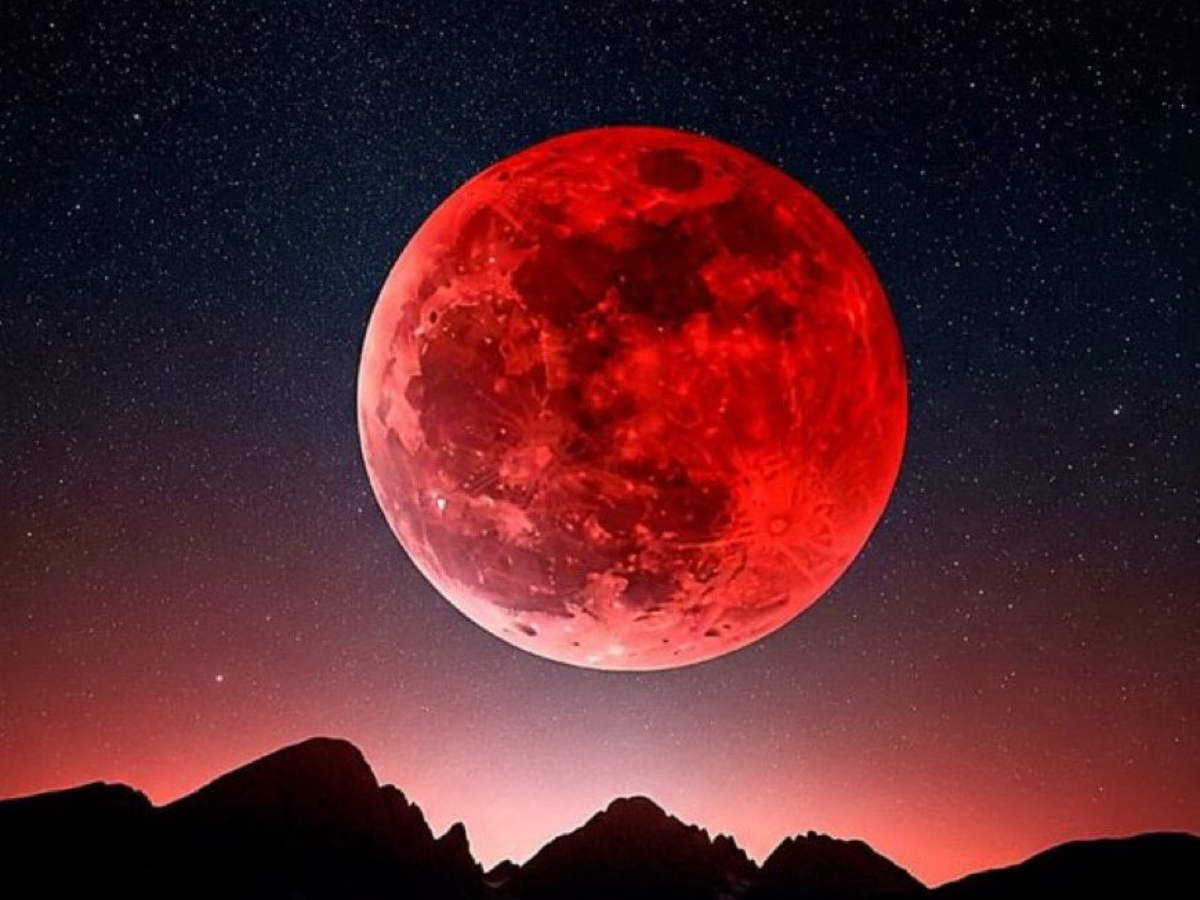
A total lunar eclipse will occur overnight from Sunday, September 7, into the early hours of Monday, September 8, 2025. During this rare celestial event, the full Moon will pass into Earth’s shadow and transform into a striking red “Blood Moon.”
The eclipse will last for about 82 minutes, offering a spectacular view for skywatchers across Asia, Western Australia, and Europe. Almost 77% of the world’s population will be able to see this phenomenon.
The lunar eclipse will reach its maximum phase at 5:11 p.m. EDT (21:11 GMT) on September 7, 2025. At this time, the Moon will be fully immersed in Earth’s shadow. Totality (complete coverage) will last for 82 minutes.
Skywatchers in these regions will have the best chance to witness the reddish glow of the Moon as it enters and deepens into totality.
The September 2025 eclipse begins as the Moon enters Earth’s penumbral shadow, creating a faint shading effect on the surface.
As the Moon moves deeper into the umbral shadow, the darker part of Earth’s shadow, it will gradually change color. During totality, the Moon will glow reddish-orange, popularly called a Blood Moon.
Skywatchers across Asia, Africa, Europe, and parts of Australia will be able to observe the entire eclipse, while others will witness partial stages. Major cities including Mumbai, Beijing, Hong Kong, Tokyo, and Sydney will experience a clear view.
For those in regions with poor weather or limited visibility, free livestreams will broadcast the entire event online.
Websites such as Space.com will also provide real-time coverage and updates, ensuring that the Blood Moon spectacle can be enjoyed worldwide. This eclipse marks the last total lunar eclipse of 2025, making it a highly anticipated event.
The Blood Moon occurs when Earth blocks sunlight from reaching the Moon directly. Instead, the atmosphere filters the sunlight, bending red and orange hues onto the lunar surface.
The September 2025 eclipse will sit deep within Earth’s umbra, causing the Moon to appear darker and redder than usual. Scientists say the reddish tint results from the scattering of shorter wavelengths of light, leaving only longer wavelengths like red and orange to reach the Moon.
Also Read: Lunar Eclipse 2025: Things One Should And Avoid During ‘Chandra Grahan’
Swastika Sruti is a Senior Sub Editor at NewsX Digital with 5 years of experience shaping stories that matter. She loves tracking politics- national and global trends, and never misses a chance to dig deeper into policies and developments. Passionate about what’s happening around us, she brings sharp insight and clarity to every piece she works on. When not curating news, she’s busy exploring what’s next in the world of public interest. You can reach her at [swastika.newsx@gmail.com]
The Coyote Flats Fire near Rockerville, Rapid City, has grown to 30–50 acres amid hot,…
Dhurandhar 2 sees Ranveer Singh as Hamza navigating Karachi’s criminal underworld in Aditya Dhar’s intense,…
Ustaad Bhagat Singh X premiered internationally before India on March 19, 2026, starring Pawan Kalyan.…
