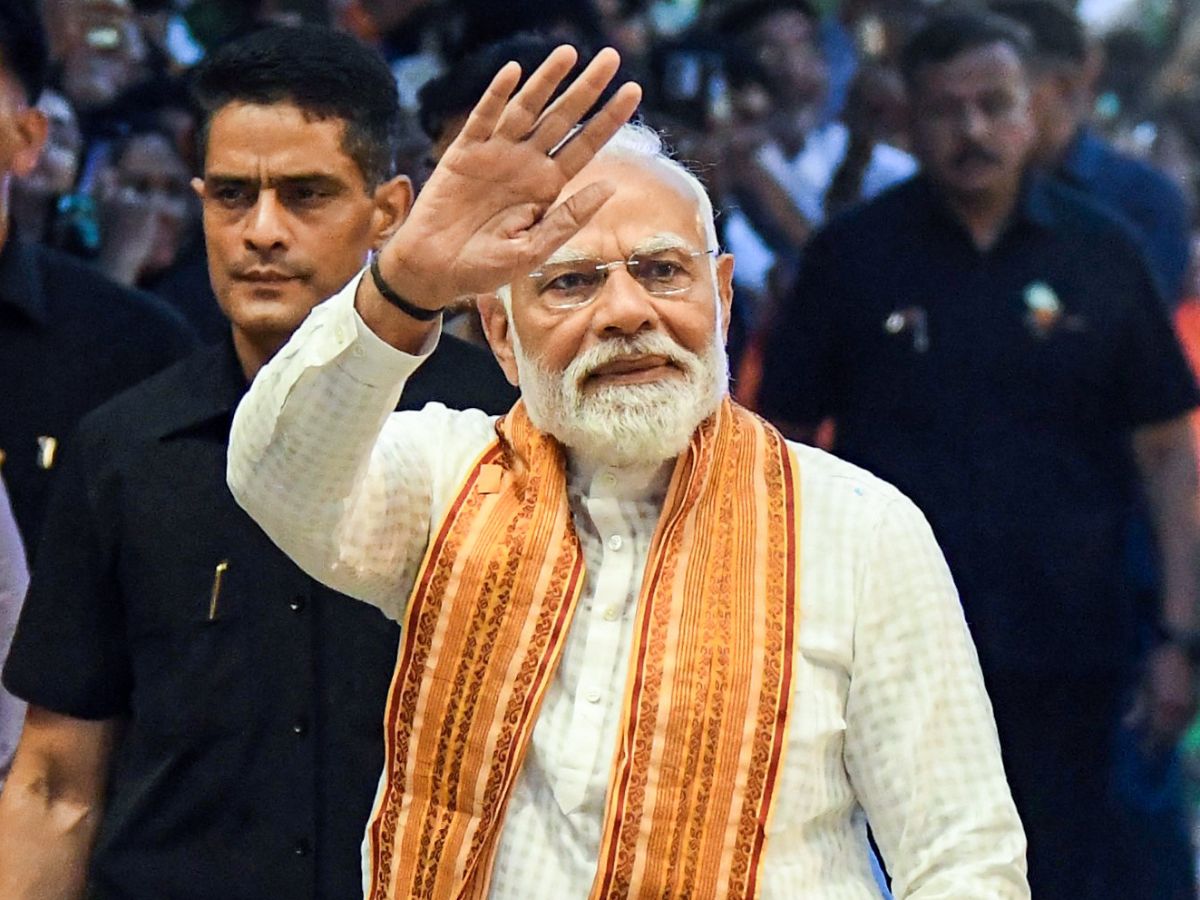
PM Modi is managing a fast-growing India in an increasingly complex world (Image: ANI, file photo)
Prime Minister Narendra Modi is set to achieve a major political milestone on June 10, when he surpasses Jawaharlal Nehru as India’s longest continuously serving democratically elected Prime Minister. PM Modi is set to break four records, some of which are already to his name. On that day, PM Modi will complete 4,399 consecutive days in office, overtaking Nehru’s post-election record of 4,398 days. The landmark also adds to a political journey that has already seen him become the longest-serving non-Congress Prime Minister and the first non-Congress leader to head majority governments twice.
The achievement comes as PM Modi approaches another significant benchmark. By June 10, he will have spent more than 9,000 days as an elected head of government, including his nearly 13 years as Chief Minister of Gujarat. That figure places him ahead of long-serving chief ministers such as Pawan Chamling of Sikkim and Naveen Patnaik of Odisha. Later this year, in October, PM Modi is also set to complete 25 years in public office. Over the course of his career, he has led the BJP to victory in six consecutive elections, three in Gujarat and three at the national level.
PM Modi, meanwhile, has governed an India that is vastly different from the one that existed during the early decades after Independence. The country is larger, more connected to the global economy, more digitally linked and far more exposed to international developments. This period has seen several disruptions at the global level, including the Covid-19 pandemic and geopolitical tensions.
Nevertheless, even amid all these difficulties, India has managed to do well on the world stage by growing its influence in international organizations, as well as positioning itself as one of the most rapidly developing economies in the world. It is important to note that governing a country consisting of over 140 crore people amid such changes can be quite a feat.
One of the defining aspects of PM Modi’s tenure has been the number of complex challenges faced by governments across the world during the past decade. The most significant was the Covid-19 pandemic, which created simultaneous pressures on healthcare systems, economies, welfare programmes and public services.
Contrary to earlier decades, all major decision-making in the modern era takes place under continuous public observation. The government is functioning within an atmosphere where everything is watched due to 24-hour news coverage and social media networks. The scrutiny is immediate and absolute on every move the government makes, the pandemic era serves as an example. PM Modi led one of the most populous countries through the COVID-19 era that has served as an example to the world.
The geopolitical nature in which leaders operate today is different from the Cold War era. Nehru operated in an international environment that was characterised mainly by two competing blocs, the US and the USSR. Today’s geopolitics is far more complicated than that of Nehru’s time.
Events such as the Russia-Ukraine War, the Israel-Hamas War and the tensions between the US and Iran have implications on matters to do with energy sources, international trade, food sources and international relations. It has been particularly difficult for India to manage these events because of economic and strategic considerations.
There have also been great changes in foreign policy. Whereas Nehru played an active role in shaping the Non-Aligned Movement, modern-day diplomacy entails interaction with various powerful nations at one time. With PM Modi at the helm of affairs, India has increased its interaction with such diverse nations as the US, Europe, Russia, West Asia, and the Global South.
The scale of governance has changed dramatically since Independence. India’s population has grown from around 34 crore during Nehru’s early years in office to more than 140 crore today. The electorate, economy, media landscape and political system have all become significantly larger and more complex.
Security issues have extended beyond the typical military threats. The government needs to be able to cope not only with the defense-related threats but also those involving terrorism, cyber-attacks, misinformation, supply chain problems, among others. At the same time, people demand more activities from the government on various fronts like technological, infrastructure, economic, and environmental issues.
Also Read: PM Modi To Become Longest-Serving PM On June 10, Breaking Nehru’s Record
Khalid Qasid is a media enthusiast with a strong interest in documentary filmmaking. He holds a Master’s degree in Convergent Journalism from AJK MCRC. He has also written extensively on esports at Sportsdunia. Currently, he covers world and general news at NewsX Digital.
Anthony Head, known for Buffy the Vampire Slayer, Ted Lasso and Merlin, has died at…
Why Only 8 MLAs Showed Up At Mamata Banerjee's Crucial Meeting
Mamata Banerjee's troubles within the Trinamool Congress appear to be deepening as poor attendance at…
CJI Surya Kant Heckled In UK? Here's What Happened During Q&A Session In London
A lecture by Chief Justice of India Surya Kant at Birkbeck College, University of London,…
