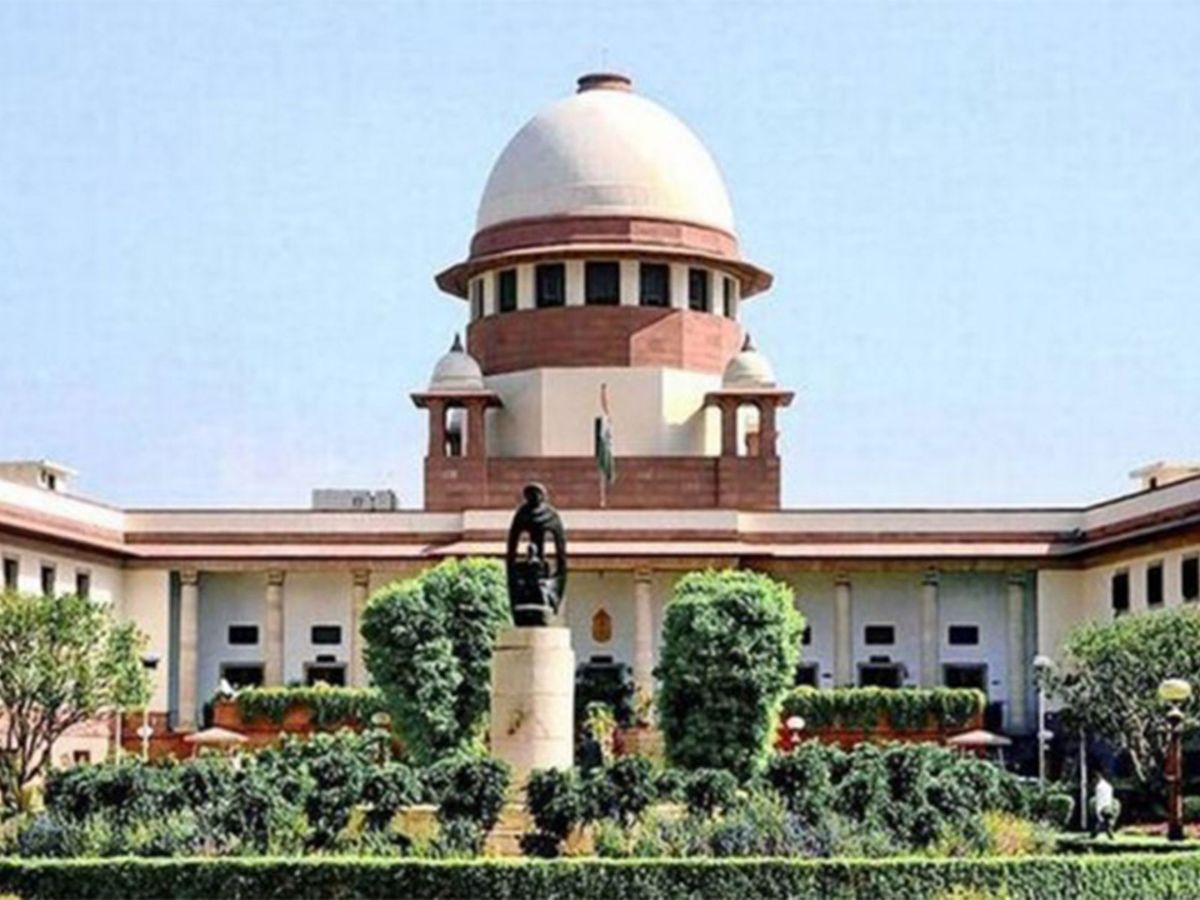
Supreme Court of India removes 3-month age cap for adoption maternity leave. (Image Credits- ANI)
In a landmark ruling strengthening the rights of adoptive parents, the Supreme Court of India on Tuesday struck down a legal provision that restricted maternity leave benefits for adoptive mothers only if they adopted children below three months of age.
The court declared the age restriction unconstitutional and ruled that all adoptive mothers are entitled to 12 weeks of maternity leave from the date of adoption, irrespective of the child’s age. The bench held that the earlier rule was discriminatory toward both adoptive mothers and children.
A bench comprising Justice J. B. Pardiwala and Justice R. Mahadevan emphasised that adoption is as meaningful as biological parenthood and should receive equal legal recognition.
The court examined Section 60(4) of the Code on Social Security, 2020, which allowed maternity benefits for adoptive mothers only if the adopted child was below three months old.
Calling the provision discriminatory, the bench ruled that such an age-based classification violates Article 14 of the Constitution of India (right to equality) and Article 21 of the Constitution of India (right to life and personal liberty).
“Adoption is an equally meaningful pathway for creating a family… biological factors cannot exclusively determine familial values and entitlements,” the court observed.
With this verdict, adoptive mothers will now be eligible for 12 weeks of maternity leave from the date they bring the child home, regardless of the child’s age.
The bench underlined that the purpose of maternity leave is not limited to childbirth but also includes bonding, caregiving, and helping a child settle into a new family environment.
“A mother cannot be differentiated between one who brings home a child less than three months and one who adopts a child of a higher age,” the court said.
The judges also stated that reproductive autonomy is not confined to biological birth, expanding the constitutional understanding of parenthood to include adoption.
The court placed strong emphasis on the best interests of the child, noting that older children especially those adopted from institutional care often require more time to emotionally adjust to a new family.
According to the bench, denying maternity leave in such cases not only disadvantages adoptive mothers but also undermines the developmental and emotional needs of adopted children.
“The paramount consideration has to be the best interest of the child… including the period required for the child to integrate into the new family,” the court observed.
The verdict came in response to a petition filed by Karnataka-based lawyer Hamsaanandini Nanduri, who challenged the provision as arbitrary and exclusionary.
Her plea pointed out that India’s adoption framework rarely allows adoption of children below three months, making the maternity leave benefit practically inaccessible for most adoptive mothers.
The challenge also traced the restriction to the Maternity Benefit Act, 1961, which was later reproduced in the Code on Social Security, 2020.
The Centre, represented by Additional Solicitor General K. M. Nataraj, had defended the provision, but the Supreme Court had agreed in December 2025 to examine its constitutional validity.
While delivering the verdict, the Supreme Court of India also urged the Union government to consider introducing paternity leave as a social security benefit.
The court noted that caregiving responsibilities should not fall solely on mothers and that a gender-neutral approach to parental leave would better support families and child welfare.
The ruling marks a significant step toward recognising adoption as an equal path to parenthood and ensuring that adoptive families receive the same legal protections as biological families.
By removing the three-month age cap, the court has ensured that maternity benefits serve their core purpose supporting the well-being of both parent and child during the crucial early phase of family bonding.
Sofia Babu Chacko is a journalist with over five years of experience reporting on Indian politics, crime, human rights, gender issues, and stories about marginalized communities. She believes journalism plays a crucial role in amplifying unheard voices and bringing attention to issues that truly matter. Sofia has contributed articles to The New Indian Express, Youth Ki Awaaz, and Maktoob Media. She is also a recipient of the 2025 Laadli Media Awards for gender sensitivity. Beyond the newsroom, she is a music enthusiast who enjoys singing. Connect with Sofia on X: https://x.com/SBCism
An MLA from Barabati-Cuttack, Sophia Firdous is the daughter of famous real estate businessman and…
IPL 2026: KKR Confirm Ajinkya Rahane as Captain Ahead of 19th Season | WATCH
Kolkata Knight Riders have backed Ajinkya Rahane as captain for IPL 2026 despite a disappointing…
Arjun Sarja’s romantic drama Seetha Payanam, featuring his daughter Aishwarya Arjun, is preparing for its…
