Content is no longer created for meaning; it is created for monetisation and fame.
Gone are the days when we laughed a little less loudly in public, sat a certain way, and made an effort to display our best behaviour. Today, we set up cameras on airport tarmacs, blast trending songs at full volume, and show off our garba moves with little regard for the inconvenience caused to those around us. Be it railway stations, busy roads, Times Square, or any other landmark, the agenda is to shoot some reels as soon as we arrive and upload them on social media or we don’t consider the holiday as complete. No matter the age. In return, we get a few clicks, a handful of followers, a fleeting sense of relevance, and often a fair share of public embarrassment. But the clicks seem to matter more than public perception. What changed us so dramatically and why?
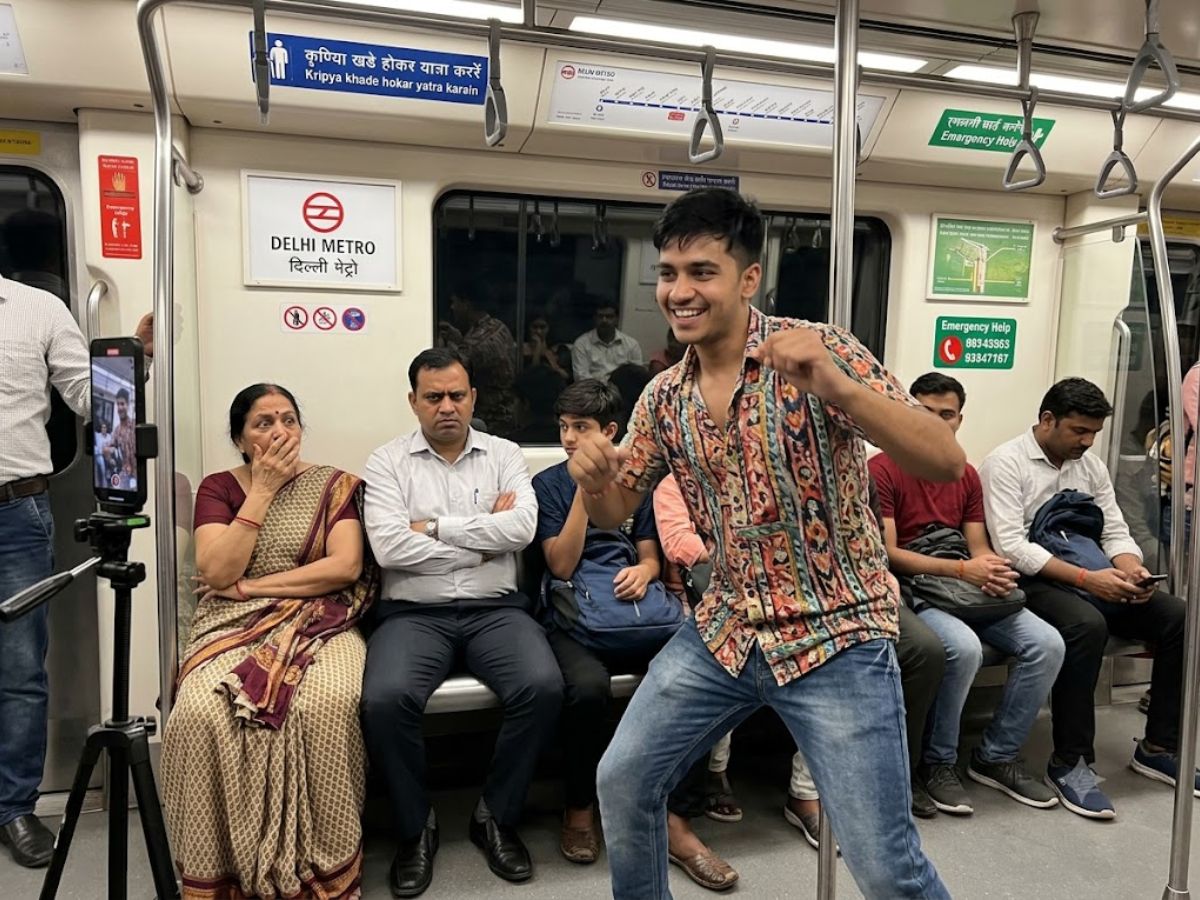
Recently, while scrolling through Instagram, a viral video appeared on feed. It showed a man dancing spontaneously inside Delhi Metro, while the co-passengers looked shocked and visibly uncomfortable. Why this sudden urge to dance in a metro? There seems to be only one answer: shoot an outrageous video on a phone, post it on Instagram, get more likes, and grab attention. Because this is a viral era.
In viral culture, people increasingly care about fame, popularity, and money. Reel culture offers quick fame, and sometimes even influence or power as a decision-maker. Slowly, attention became currency, and attention without responsibility became priority.
Social media began as a tool of connection. In the late 1990s, platforms like SixDegrees.com first allowed people to create online profiles and connect with friends. Later came Orkut, Facebook, Twitter, Instagram, and eventually TikTok-style short videos that we now call reels. At its core, it was meant to bring people closer.
For a long time, it actually did. Families separated by distance stayed connected. Movements found voice. Ordinary people could speak without needing a powerful gatekeeper. It felt democratic, even hopeful. Not had a colourful fake impression.
A powerful example of social media’s early purpose came during the 2010-2011 Tunisian Jasmine Revolution. When state media ignored protests after Mohamed Bouazizi’s self-immolation, citizens used Facebook, YouTube, and mobile phones to document reality.
These videos travelled globally. They helped break censorship and showed how ordinary people could challenge an authoritarian system. Social media, at that moment, acted as a witness, not a performer. It was about truth, urgency, and collective voice not virality for entertainment.
Today, that intent has shifted. Reel culture is no longer about communication; it is about performance. The goal is not to inform, but to trend anyway with more attention. Not to understand, but to engage. And in that race, shame, ethics, and sensitivity often disappear.
We have seen this shift in disturbing ways.
When national award winning Malayalam actor Salim Kumar passed away, his funeral became a stage for content creation for reel vultures. YouTubers and online media rushed in, filming grief instead of respecting it. His son Chandhu’s anger was not just personal, it was a reminder that mourning has been turned into material. Even death is no longer private; it is content. What should have been silence became footage, and footage became monetisation.
The common thread in all these cases is simple. Content is no longer created for meaning; it is created for monetisation and fame. The more shocking, emotional, or controversial it is, the more it spreads. And the more it spreads, the more valuable it becomes.
In this system, silence is boring, nuance is ignored, and context is lost. Everything must be short, sharp, and viral, even human grief. Even a bad joke will spread like a gospel. And creators don’t seem to mind because they think they are merely following the trend. FOMO is real.
The way forward is not to reject social media, but to rethink how we use it. Virality should not replace responsibility. Audiences must learn to pause before sharing, laughing, or condemning. Creators must remember that reach is not equal to right. Most importantly, we need to rebuild a sense of digital empathy. Not everything is content. Not every moment is a reel. And not every viral thing deserves attention.
Because if everything is reduced to content, even basic human decency becomes just another prop in the performance.
Sofia Babu Chacko is a journalist with over five years of experience reporting on Indian politics, crime, human rights, gender issues, and stories about marginalized communities. She believes journalism plays a crucial role in amplifying unheard voices and bringing attention to issues that truly matter. Sofia has contributed articles to The New Indian Express, Youth Ki Awaaz, and Maktoob Media. She is also a recipient of the 2025 Laadli Media Awards for gender sensitivity. Beyond the newsroom, she is a music enthusiast who enjoys singing. Connect with Sofia on X: https://x.com/SBCism
2 Workers Die, 6 Injured Including Owner in Mysuru Pub Fire
Two workers were killed and six people were injured after a fire broke out at…
Pakistan Air Force Trainer Jet Crashes Near Mardan, Two Pilots Killed
A Pakistan Air Force trainer aircraft crashed near Mardan in Khyber Pakhtunkhwa during a routine…
27th AsiaOne ASEAN Business & Social Forum 2026, Kuala Lumpur, Malaysia
Mr. Rajat Raj Shukal, Global Head & Principal Partner of AsiaOne Media Group New Delhi…
