Agriculture has always been the backbone of India’s socio-economic fabric, sustaining livelihoods for nearly half the population and feeding over a billion citizens. Since 2014, Prime Minister Narendra Modi’s government has sought to transform Indian agriculture with the mantra of “Beej se Bazaar Tak”—from seed to market. This comprehensive approach covers every stage of farming: ensuring access to quality seeds, improving soil health and irrigation, providing crop insurance and affordable credit, and finally connecting farmers to modern markets.
Over the last 11 years, farmers have witnessed an unprecedented shift in how they access government support. Direct benefit transfers, digital platforms, insurance schemes, and entrepreneurial opportunities have collectively enhanced incomes, reduced risk, and paved the way for sustainable farming.
PM-Kisan: Income Support for Every Farmer
At the heart of this transformation lies the PM-Kisan Samman Nidhi (PM-Kisan) scheme. Launched in 2019, it ensures an assured annual income transfer to small and marginal farmers. With more than ₹3.7 lakh crore disbursed to beneficiaries so far, the scheme has not only supplemented farm earnings but also freed farmers from middlemen and delays.
The tranches of ₹6,000 a year, though modest, have helped millions purchase seeds, fertilisers, and basic equipment on time, preventing them from falling into cycles of debt. For smallholders—who make up the majority of Indian farmers—this has meant both dignity and independence. Transferred directly into bank accounts using the JAM trinity (Jan Dhan–Aadhaar–Mobile), PM-Kisan has become an emblem of targeted and corruption-free governance.
Fasal Bima Yojana: A Safety Net Against Uncertainty
Farming in India has always been vulnerable to the vagaries of nature—unseasonal rains, floods, droughts, and pest attacks. To counter this, the government revamped crop insurance under the Pradhan Mantri Fasal Bima Yojana (PMFBY). Since its launch, over ₹1.75 lakh crore has been settled in claims, giving farmers a safety cushion against unpredictable losses.
The scheme has reduced premium rates, expanded coverage, and simplified processes so that farmers receive compensation swiftly. This financial shield has reduced the psychological burden on farmers, allowing them to invest in better inputs with confidence. For rural India, it has also meant stabilising household incomes and protecting food security.
Expanding Irrigation: Water to Every Field
No agricultural reform can succeed without water security. Recognising this, the government prioritised irrigation under the Pradhan Mantri Krishi Sinchayee Yojana (PMKSY). With allocations crossing ₹93,000 crore for 2021–26, the scheme has expanded irrigation networks to reach previously rain-fed areas.
This has resulted in record-breaking harvests—India’s foodgrain production touched 347 million metric tonnes in 2024–25, aided by assured irrigation and improved crop varieties. Complementary schemes like PM-KUSUM have promoted solar-powered pumps, ensuring sustainable water usage. The growth of micro-irrigation—such as drip and sprinkler systems—has also increased water efficiency, especially in arid regions.
Kisan Credit Cards: Affordable and Accessible Credit
Access to affordable credit has long been a challenge for farmers, who often fall prey to moneylenders charging exorbitant rates. The government expanded the Kisan Credit Card (KCC) scheme to cover not just crop farmers but also those engaged in livestock and fisheries.
As of 2025, 7.71 crore farmers have been provided with KCCs, enabling them to borrow at subsidised interest rates for seeds, fertilisers, and allied activities. Importantly, the loan limit under KCC was raised from ₹3 lakh to ₹5 lakh in 2025–26, reflecting rising input costs and diversification of farm enterprises. This easy access to institutional credit has curtailed rural indebtedness and encouraged farmers to invest in better practices and technology, fostering a cycle of growth rather than subsistence.
Agri-Startups: Farming Meets Innovation
One of the most exciting developments of the past decade has been the emergence of agri-startups, powered by youth entrepreneurship and government support. Between 2019–20 and 2024–25, 1,943 agri-startups were supported under the Rashtriya Krishi Vikas Yojana (RKVY).
These startups span diverse areas such as precision farming using drones, supply-chain logistics, farm-to-fork platforms, organic inputs, and AI-driven advisory services. The government also launched the Agriculture Infrastructure Fund (AIF) with a corpus of ₹1 lakh crore, financing warehouses, cold chains, and processing units.
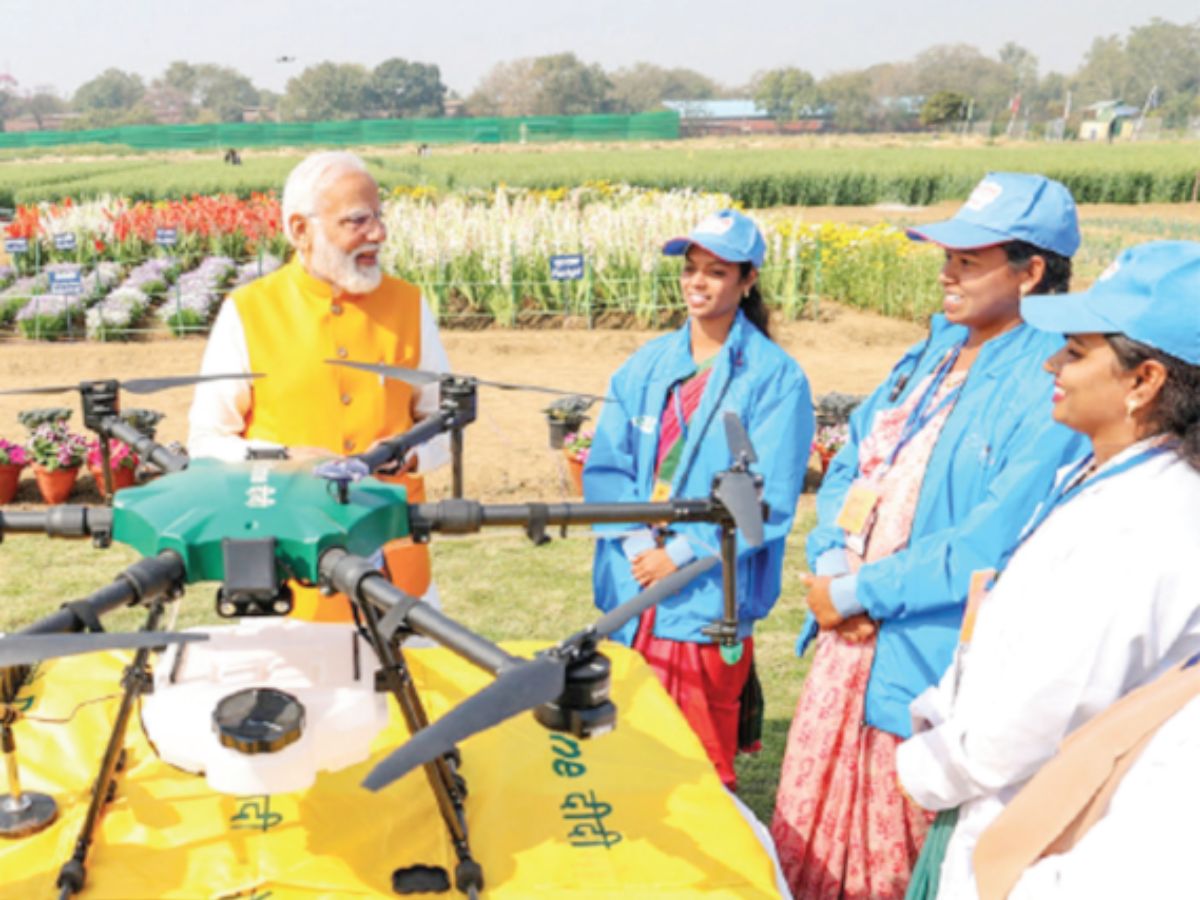
Additionally, the creation of over 1.8 lakh PM-Kisan Samriddhi Kendras as one-stop shops and the introduction of the ‘Namo Drone Didi’ programme have brought modern technology to the doorstep of rural India. These interventions ensure that farming is no longer seen as a backward occupation but as a sunrise sector full of opportunities.
Linking Farmers to Markets: From Local to Global
The vision of “Beej se Bazaar Tak” is incomplete without fair and transparent markets. The government’s e-NAM (National Agriculture Market) has linked 1,473 mandis across the country, ensuring real-time price discovery and reducing exploitation by middlemen.
Alongside, Farmer Producer Organisations (FPOs) have been promoted to give collective bargaining power to small farmers. The number of mega food parks has grown from just 3 in 2014 to 24 in 2024, boosting value addition and exports. Processed food exports have nearly doubled, while food processing capacity has expanded more than twenty times.
India today is the world’s largest producer of milk, second in egg production, and a significant exporter of fruits, vegetables, and honey.
Sustainability and Climate-Smart Agriculture
The government has also emphasised sustainable practices. Soil Health Cards, distributed to nearly 25 crore farmers, help promote balanced fertiliser use. The National Mission on Natural Farming (NMNF) promotes chemical-free agriculture, lowering input costs while protecting the environment.
India’s push for millets, celebrated as “Shree Anna” during the International Year of Millets in 2023, has revived traditional grains that are both climate-resilient and nutritious. As PM Modi said, “Millets are good for the consumer, the cultivator, and the climate.”
Visible Transformation: Then vs Now
The outcomes of these reforms are striking. Pulses procurement at MSP has grown 7,350% and oilseeds procurement by 1,500% since 2014. Milk production has risen 63.5%, fish production has nearly doubled, and food exports are at record highs.
Where once farmers struggled for irrigation, credit, and fair prices, today they are equipped with insurance, direct income transfers, digital platforms, and new markets. The shift from subsistence to prosperity is evident across India’s villages.
Farmers at the Heart of Viksit Bharat
Prime Minister Modi has repeatedly said that India’s progress is incomplete without the prosperity of its farmers. The “Beej se Bazaar Tak” framework ensures that no aspect of agriculture is left unaddressed—from seeds and soil to credit, insurance, irrigation, markets, and startups.
In the coming decades, as India aspires for Viksit Bharat by 2047, farmers are expected to play a central role. With the right policies, technology, and entrepreneurial spirit, the Indian farmer is no longer just a food provider but a key stakeholder in the nation’s journey towards becoming a global economic powerhouse.
Vani Verma is a content writer with over 2 years of experience in lifestyle, entertainment, health and digital media. She has a knack for creating engaging and research-driven content that resonates with readers, blending creativity with clarity. Passionate about media trends, culture, and storytelling, she strives to craft content that informs, inspires, and connects.
Aadu 3 Review: The much-awaited third installment of the cult comedy franchise is finally here,…
Following an Iranian drone attack on Dubai International Airport, the UAE has announced that all…
Oppo A7s 5G Specifications revealed: 50MP dual camera, 6,500mAh battery, 120Hz display, Dimensity 6300, 4GB+128GB…

