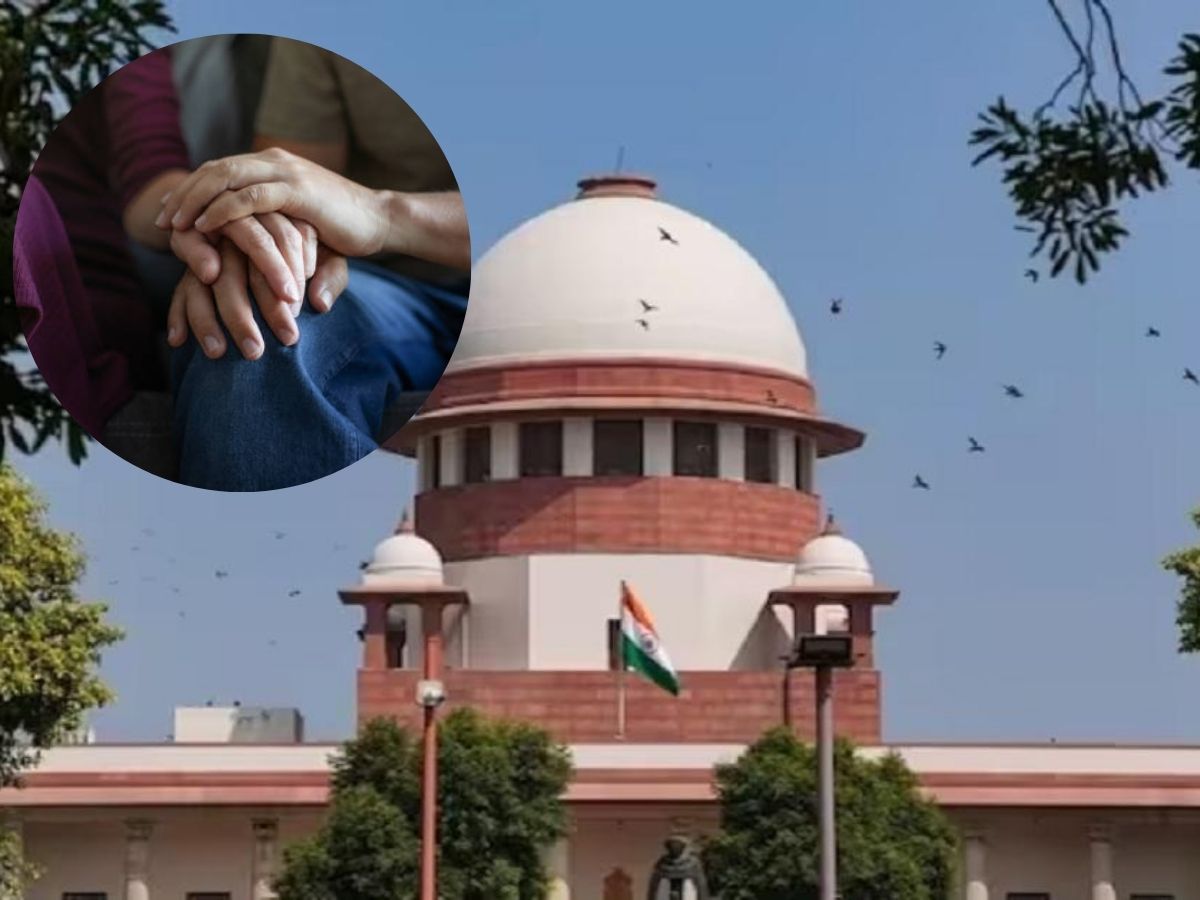
Supreme Court Hails "Rare Settlement" as Wife Walks Away With No Alimony Claims. (Representative Image: Unsplash)
In a remarkable and unusual conclusion to a long-running matrimonial dispute, the Supreme Court has praised a “rare settlement” in which the wife agreed to part ways without seeking alimony or maintenance and even returned all gifts received from her in-laws.
A Bench of Justices JB Pardiwala and KV Viswanathan noted that both parties have consented to the settlement terms, calling it “one of the rare” cases in which the wife sought no financial claims from her husband.
When the couple initially approached the Court, the Bench directed them to consider mediation at the Supreme Court Mediation Centre. In due course, the Court was informed that the mediation had succeeded, and as part of the amicable agreement, the wife had returned the gold bangles she received during the marriage, which had originally belonged to her mother-in-law.
The Bench noted in its order that this case represented a rare instance in which the wife sought nothing from her husband as part of the settlement.
The Bench said, “This is one of the rare settlements we have come across over a period of time wherein nothing has been demanded by the wife from the husband.”
They acknowledge the woman’s decision by saying, “We appreciate this kind gesture which is very rare to be seen nowadays,” the Court said, while exercising its powers under Article 142 of the Constitution to dissolve the marriage.”
Manisha Chauhan is a passionate journalist with 3 years of experience in the media industry, covering everything from trending entertainment buzz and celebrity spotlights to thought-provoking book reviews and practical health tips. Known for blending fresh perspectives with reader-friendly writing, she creates content that informs, entertains, and inspires. When she’s not chasing the next viral story, you’ll find her diving into a good book or exploring new wellness trends.
Manchester City vs Real Madrid Live Streaming: Where to Watch UCL match on TV and Online In India?
Check out the Live Streaming and Telecast details of the Manchester City vs Real Madrid…
Ustaad Bhagat Singh releases worldwide on March 19, 2026, during Ugadi. Starring Pawan Kalyan and…
Mumbai Indians coach Mahela Jayawardene hinted at using Rohit Sharma and Suryakumar Yadav as Impact…
