Karwa Chauth is one of India’s most loved festivals, celebrated with devotion and joy by married women. In 2025, Karwa Chauth will be observed on Friday, October 10. The Puja Muhurat will take place from 05:58 PM to 07:11 PM, while the fasting period will begin early at 06:08 AM and continue until 08:36 PM, when the moon is expected to rise. On this day, married women, and even some men, keep a nirjala vrat (fast without food or water) for their spouse’s long life and happiness.
Karwa Chauth symbolizes love, commitment, and the deep bond between married couples. Women fast from sunrise to moonrise and break their fast only after sighting the moon. The festival holds cultural importance across North India, especially in states like Punjab, Haryana, Rajasthan, and Uttar Pradesh. During the evening, women gather for the Karwa Chauth puja, where they listen to the vrat katha and offer prayers to Goddess Parvati and Lord Shiva for their husbands’ well-being and longevity. The fast reflects endurance, dedication, and spiritual strength.
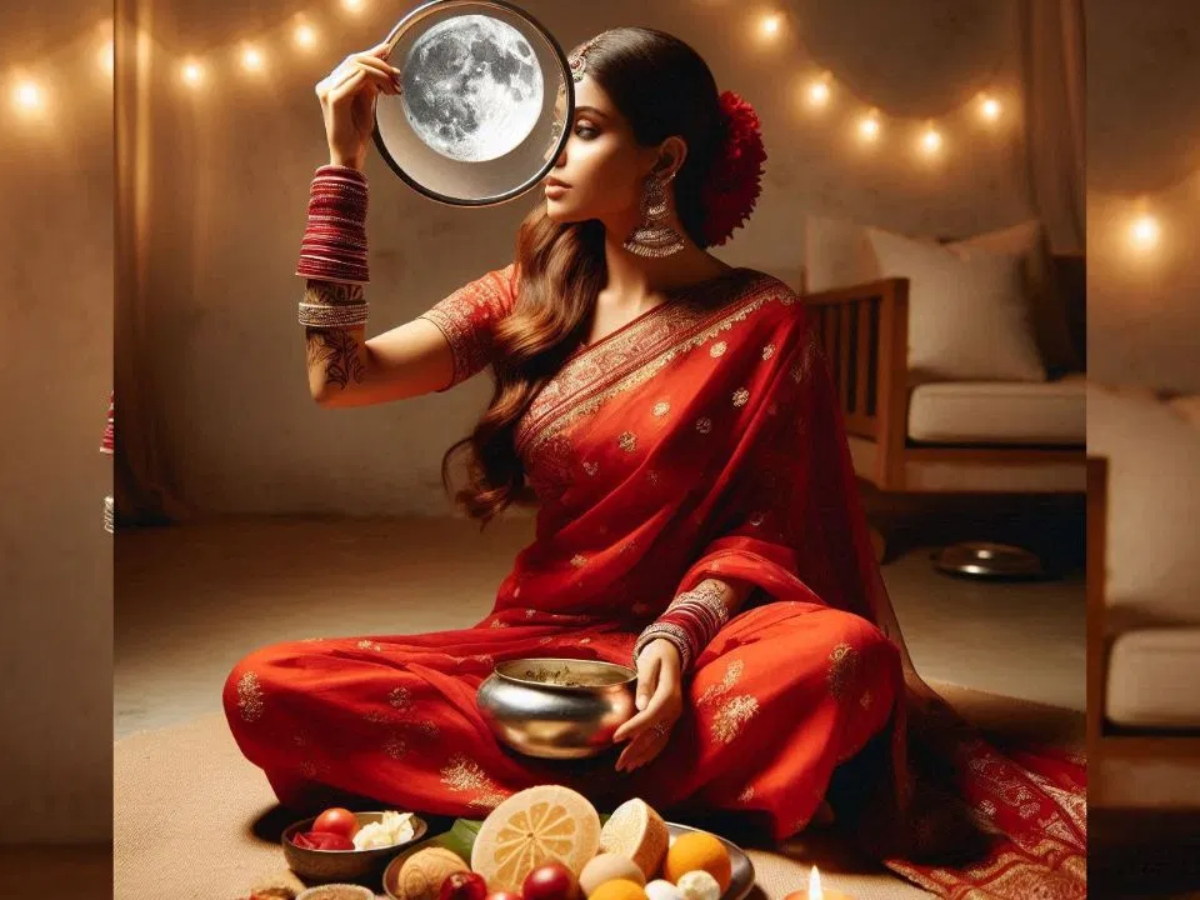
The chalni, or sieve, is one of the most symbolic parts of the Karwa Chauth ritual. As the moon rises, women first look at it through a sieve and then turn it toward their husband’s face before breaking their fast. The sieve represents clarity, purity, and focus.
Just as the mesh separates fine grains from impurities, it symbolically filters distractions from one’s vision. Seeing the moon through it signifies seeking divine blessings, while viewing the husband through the same sieve channels that divine energy toward him. Some homes also place a diya on the sieve during the ritual, adding to its sacredness.
The chalni also connects to traditional customs where women covered their faces with a veil or ghoonghat as a mark of respect. Since Karwa Chauth puja includes worshipping Chandra Dev (the Moon God), the sieve acts as a gentle veil allowing women to see without directly gazing at the divine or their husbands. The sieve, therefore, becomes a symbol of grace, devotion, and modesty. This practice, passed down for generations, continues to be a significant part of the ritual, linking spiritual beliefs with the beauty of cultural tradition.
Many women unintentionally break the traditional order of the ritual, which can reduce its spiritual significance. The correct sequence to perform the ritual is:
First, offer arghya (water) to the moon.
Then, view the moon through the chalni.
Next, look at your husband through the same sieve.
Finally, drink water or eat a small bite of food from your husband’s hand to end the fast.
Following this proper sequence ensures that the vrat (fast) remains spiritually complete and brings good fortune to the couple.
Those keeping the fast for the first time should prepare well in advance. Stay hydrated the day before by drinking coconut water and eating fruits. Opt for light meals and avoid oily foods.
Choose traditional yet comfortable attire in auspicious shades like red, maroon, or pink. Join a community puja in the evening to take part in rituals and stories of devotion. Sharing the experience with others adds meaning and strength to the fast, making the first Karwa Chauth both memorable and spiritually fulfilling.
Swastika Sruti is a Senior Sub Editor at NewsX Digital with 5 years of experience shaping stories that matter. She loves tracking politics- national and global trends, and never misses a chance to dig deeper into policies and developments. Passionate about what’s happening around us, she brings sharp insight and clarity to every piece she works on. When not curating news, she’s busy exploring what’s next in the world of public interest. You can reach her at [swastika.newsx@gmail.com]
Anil Kumble said Sanju Samson is ideally suited for a vice-captain–style role at CSK. With…
Apple’s budget iPhone lineup may see a major upgrade with the rumored iPhone 19e, featuring…
Real Madrid, Arsenal and Paris Saint-Germain advanced comfortably, while Sporting CP staged a historic comeback;…
