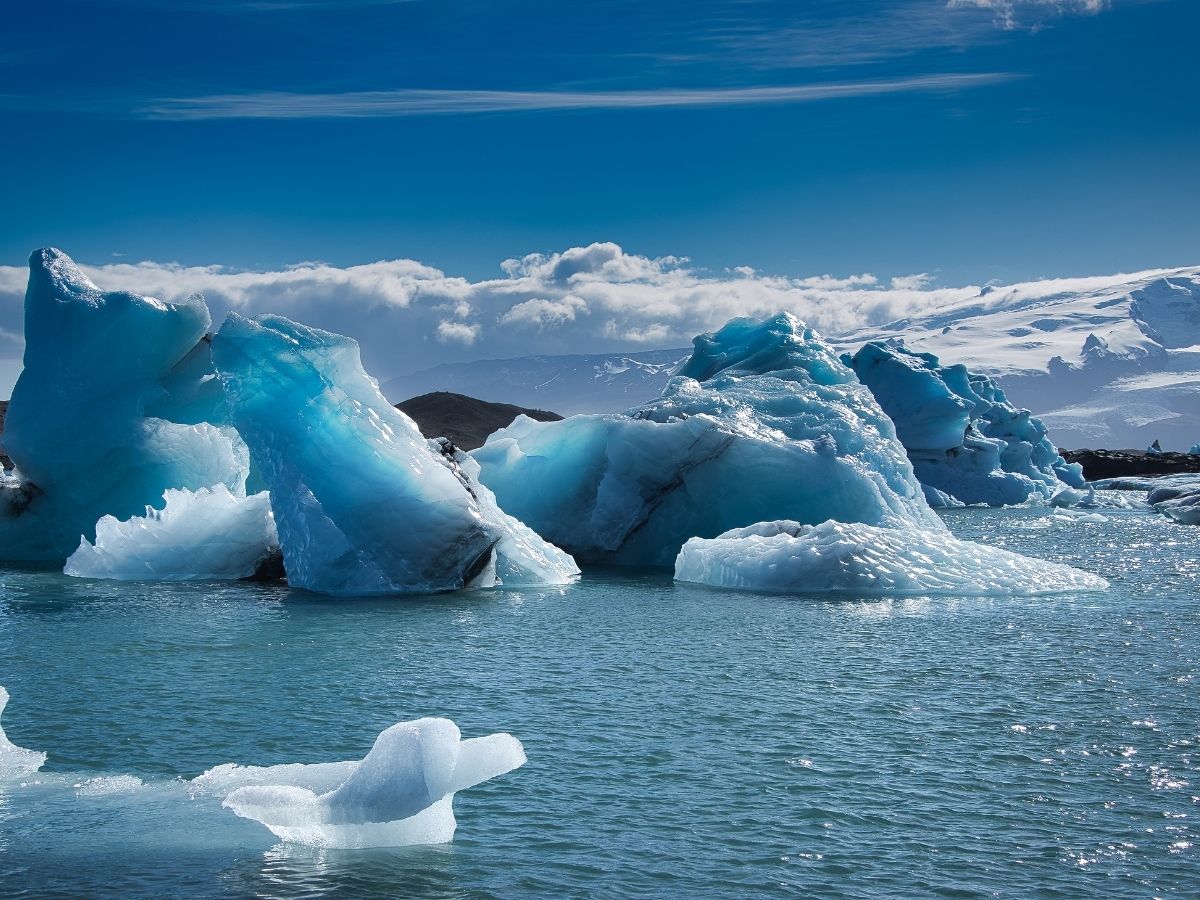
Ice melt reveals remains of Dennis Bell, a British researcher who vanished in Antarctica 66 years ago. (Photo: Canva image used for representation only)
In a remarkable turn of events, mortal remains of a 25-year-old British researcher who vanished into an Antarctic glacier in 1959, have finally been found, CNN reported on Tuesday. The British Antarctic Survey (BAS) said Dennis Bell’s remains were uncovered this January as the glacier receded.
According to the report, Bell had fallen about 100 feet deep into a crevasse while climbing the Ecology Glacier on King George Island, part of the South Shetland Islands. Though he survived the initial fall, a subsequent rescue effort had reportedly failed, leading to his eventual disappearance into the ice. This week, a team from the Polish research station recovered Bell’s remains along with his belongings amid exposed rocks.
During the course of a five-day archaeological survey in February, the Polish team recovered bone fragments and numerous personal items, including a watch with an inscription, a Swedish knife, radio gear, and ski poles among other things.
DNA testing confirmed that the remains found by the researchers were of Bell, providing long-overdue closure to his heartbroken family. “When my sister Valerie and I were notified that our brother Dennis had been found after 66 years we were shocked and amazed,” Bell’s brother David reportedly said via BAS. He added that the family was grateful to the Polish and British teams “for bringing him home” and said the discovery allowed them “to come to terms with the tragic loss of our brilliant brother.”
Meanwhile, BAS director Dame Jane Francis described the moment as “poignant and profound”, as reported by CNN.
Back in 1959, Bell — aka “Tink” — was part of the Falkland Islands Dependencies Survey (FIDS), the forerunner of today’s BAS. Reports suggest he had joined as a meteorologist seeking adventure after a career in the Royal Air Force.
On that fateful day, he and surveyor Jeff Stokes had departed on dog sledges to carry out geological work. When the weather turned and the dogs tired, Bell walked ahead without skis and fell into the ice, the report further said.
Stokes lowered a rope almost 100 feet down and Bell tied himself to it. However, the rope, reports suggest, was incorrectly attached through his belt, which eventually broke at the lip of the crevasse, sending Bell back into the abyss.
While Stokes had marked the spot, worsening conditions at the time had forced him and the others to retreat.
Bell’s belongings and remains were later transported by the BAS ship Sir David Attenborough to the Falkland Islands, then handed over to the British Antarctic Territory coroner and moved to London.
“Dennis was one of the many brave FIDS personnel who contributed to the early science and exploration of Antarctica under extraordinarily harsh conditions,” CNN quoted Francis as saying. “Even though he was lost in 1959, his memory lived on among colleagues and in the legacy of polar research.”
A three-alarm fire ravaged a Midwood commercial building on Avenue H, spreading through six connected…
Israeli PM Benjamin Netanyahu announced that recent joint Israel-U.S. strikes destroyed Iran’s nuclear and missile…
Israeli Prime Minister Benjamin Netanyahu says Israel is weakening Iran’s military, destroying missiles, nuclear infrastructure,…
