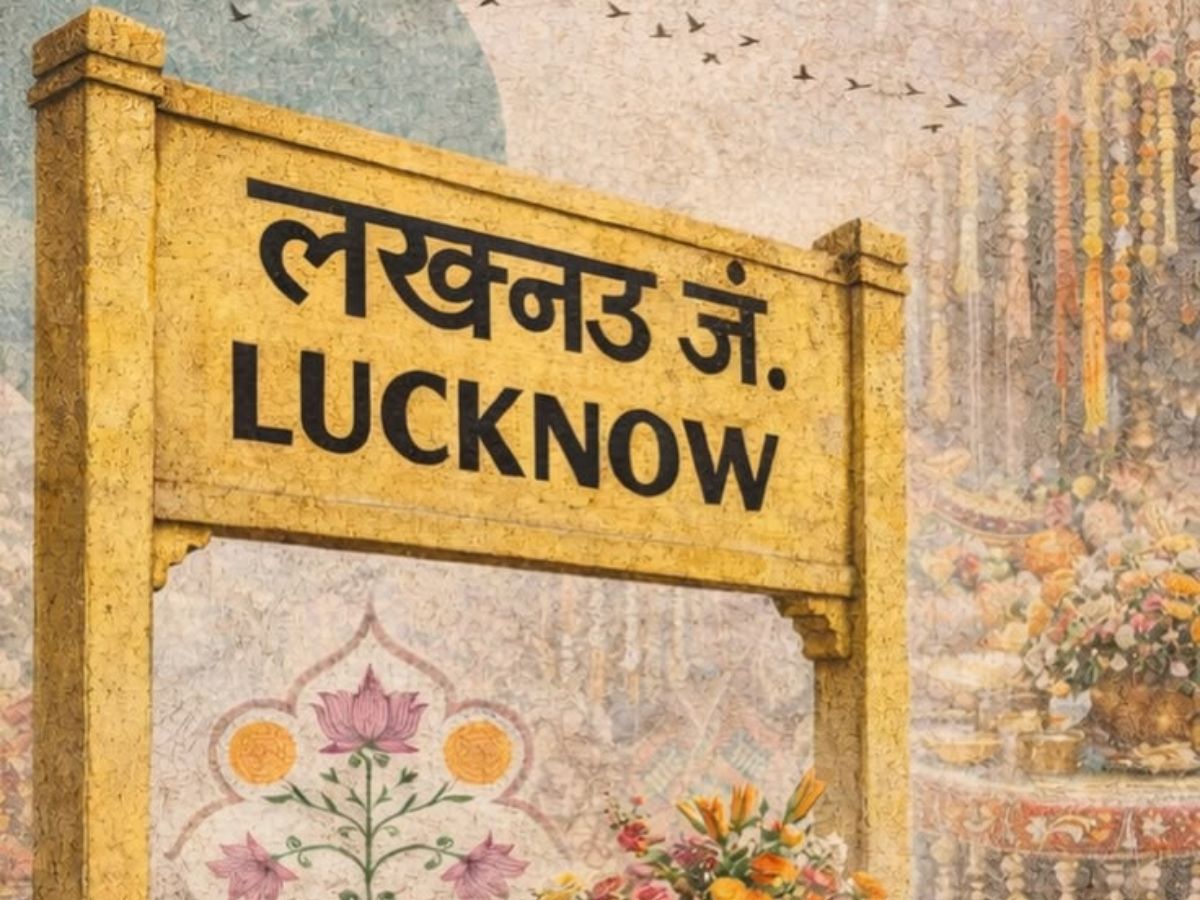
Lucknow
The capital of Uttar Pradesh, Lucknow, is known for its Nawabi culture, monuments and heritage. But, much before it got the title of ‘City of Nawabs’, Lucknow had a different name based on old Indian mythology. The origin of the city is something that has always fascinated all historians and Lucknowites.
Historical and mythological sources claim that earlier, Lucknow was known as either Lakshmanpur or Lakhanpur. The name is said to be derived from Lakshman, who was the younger brother of Lord Ram. Ramayana states that it was Lord Ram who gifted this place to his younger brother Lakshman after he returned to Ayodhya. This was the reason why a settlement was established here and was eventually named Lakshmanpur.
However, with time and advancements, the name changed. According to historians, Lakshmanpur underwent multiple linguistic and cultural transformations and became Lakhanpur and finally, ultimately Lucknow in the present.
Lakshman Tila, an old mound in the city, is one of the most notable landmarks related to this legend. Many consider the place to be the site where Lakshmana either resided or founded his settlement. While there is little evidence to support the claim, the site continues to be of cultural and religious significance to many locals.
The connection to Lakshmana has become part and parcel of Lucknow’s identity and contributes to the city’s deep-rooted historical narrative.
The City of Nawabs
Though it has ancient links to mythology, the city of Lucknow gained significance during the reign of the Nawabs of Awadh in the 18th and 19th centuries. Arts, literature, music, food, and architecture thrived under their benign rule.
Some of the most iconic landmarks of the city, like Bara Imambara, Chota Imambara, and Rumi Darwaza, are structures built during this time. The Nawabs also contributed to the culture of politeness and etiquette that Lucknow is famous for today, known as “tehzeeb.”
Lucknow today is a bustling metropolitan city that marries history with modern development. From its legendary association with Lakshmana, to its glorious Nawabi heritage, the city continues to draw tourists, historians and culture enthusiasts from all over the globe.
The old name of Lucknow is Lakshmanpur. This is what majority believe, though the historians may have some disagreements about the details of the early history of Lucknow.
Whatever be the origins, it is yet another fascinating story which is part of the jeweled culture of one of the most beloved cities of India.
Disclaimer: This article is based on historical accounts, cultural traditions, and commonly accepted beliefs regarding the origins of Lucknow. Some details, particularly those linked to mythology and ancient history, may vary across sources and interpretations. The content is intended for informational and educational purposes only and should not be considered definitive historical evidence. Readers are encouraged to consult academic and historical sources for further research.
I am a content writer with more than 1 year of experience, currently working at ITV Digital. I cover a wide range of topics including entertainment, world news, India news, crime, and astrology, along with writing engaging lifestyle stories and reviews. With a flair for storytelling and a keen eye for trends, I aim to deliver fresh, reader-friendly content across diverse subjects.
Opinion | Two Comedians, One Mistake: Why Pranit More Didn’t Learn From Samay Raina’s Show
Pranit More's controversy mirrors Samay Raina's downfall, proving that in the digital age, comedians can…
FIR Filed Against Mamata Banerjee in Kolkata Over Controversial Rally Speech
Kolkata Police have registered an FIR against TMC chief Mamata Banerjee over alleged inflammatory remarks…
Ex-Mrs Kerala Contestant Harsha Sunny Arrested In Weed Smuggling Case
Harsha Sunny, a 28-year-old model and former Mrs Kerala 2025 contestant, was arrested at Mumbai…
