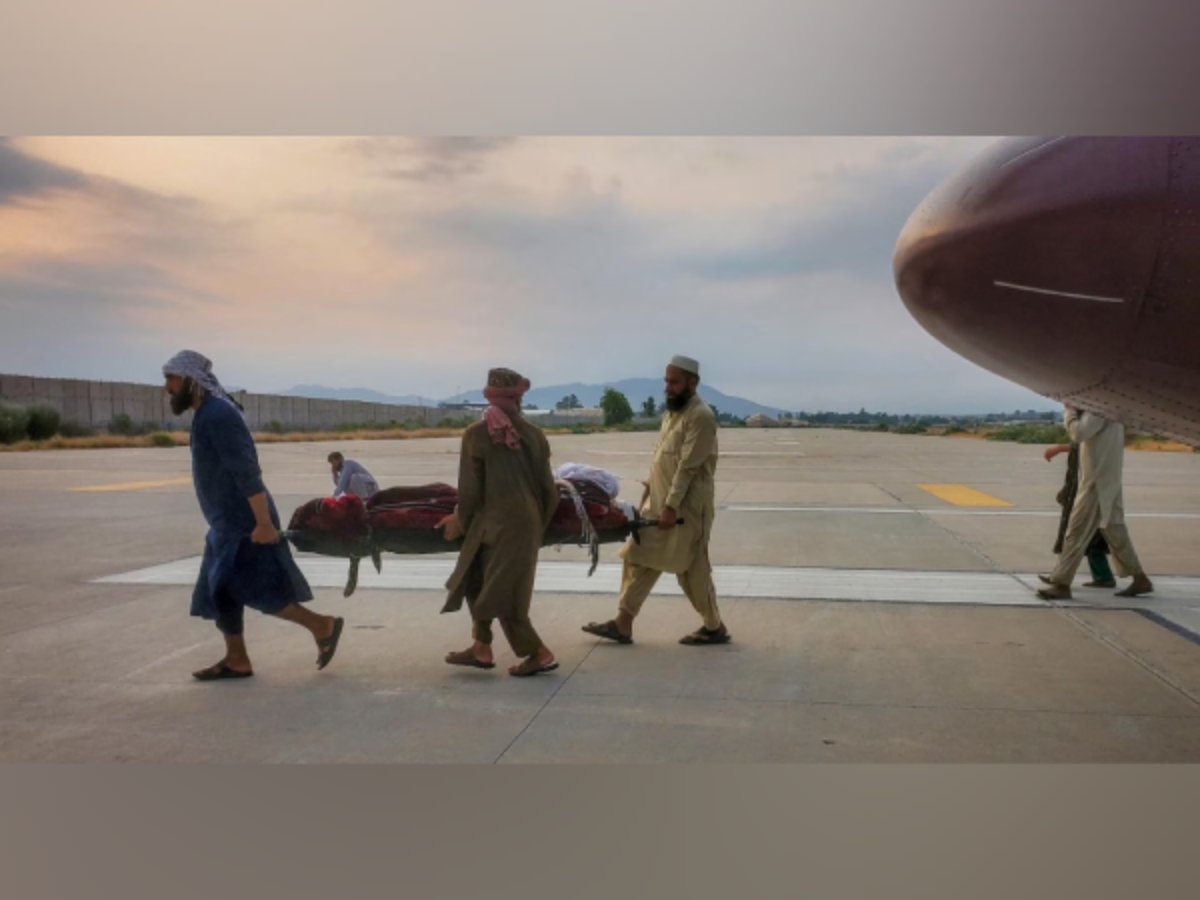
A powerful earthquake in Afghanistan killed 800+, injured 2,500, with rescue efforts underway in Jalalabad’s Nangarhar province. Photo/ANI.
Afghanistan earthquake: Afghanistan on Monday was struck with a powerful earthquake, killing more than 800 people and injuring around 2,500, according to a Taliban government spokesperson. The earthquake hit the eastern part of the country with its epicentre located 27 kilometres east-northeast of Jalalabad city in Nangarhar province, the USGS reported. A subsequent aftershock was recorded on Monday morning.
“Rescue operations are still underway there, and several villages have been completely destroyed. The figures for martyrs and injured are changing. Medical teams from Kunar, Nangarhar and the capital Kabul have arrived in the area,” said Sharafat Zaman, spokesperson for the Ministry of Public Health.
Afghanistan is prone to earthquakes. It has witnessed similar quakes in the past. Last year, a magnitude 4.3 earthquake struck the country.
A large portion of the Afghan population lives in low-rise, mud-brick homes that are highly vulnerable to collapse during earthquakes
Also Read: 6.0-Magnitude Quake Strikes Southeastern Afghanistan Near Pakistan Border
In 2024, more than 1,000 people were reportedly killed in several earthquake-related incidents, according to Reuters.
Afghanistan lies at the meeting point of three major tectonic plates – the Indian Plate, the Eurasian Plate, and the Arabian Plate. These plates are in constant movement. The pressure created due to the movement of these plates makes the country one of the most seismically active regions in Asia.
Every year, the Indian Plate moves northward approximately 5 centimetres per year. Its movement leads to its collision with the Eurasian Plate. The stress generated by these tectonic movements is usually released through powerful earthquakes across Afghanistan and its neighbouring countries, including Pakistan.
In addition, there are some key fault systems around the country. These include the Chaman Fault and the Hindu Kush Fault. Both of these run through Afghanistan, which creates zones of weakness in the Earth’s crust where earthquakes frequently occur.
Zubair Amin is a Senior Journalist at NewsX with over seven years of experience in reporting and editorial work. He has written for leading national and international publications, including Foreign Policy Magazine, Al Jazeera, The Economic Times, The Indian Express, The Wire, Article 14, Mongabay, News9, among others. His primary focus is on international affairs, with a strong interest in US politics and policy. He also writes on West Asia, Indian polity, and constitutional issues. Zubair tweets at zubaiyr.amin
A strong western disturbance brings a sudden weather shift to Delhi. IMD issues yellow alert…
A gondola at Engelberg-Titlis ski resort crashed, killing a 61-year-old woman. High winds up to…
Chaitra Navratri 2026, starting March 19, honors Maa Durga’s nine divine forms. Sharing heartfelt wishes…
