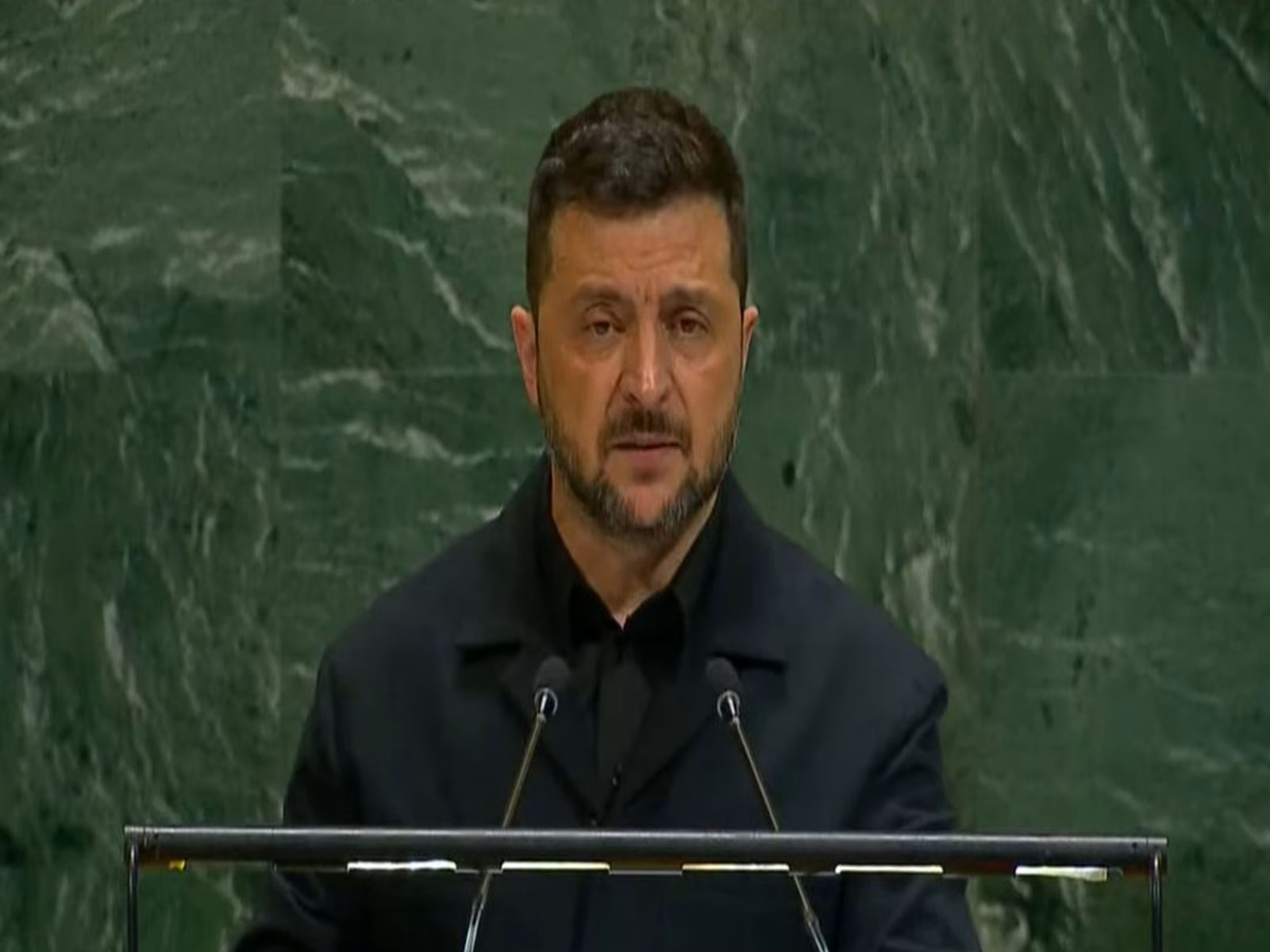
New York [US], September 24 (ANI): The 80th United Nations General Assembly’s General Debate entered its second day on Wednesday, with Ukrainian President Volodymyr Zelenskyy using his opening remarks to question the relevance of the UN in addressing global crises.
Zelenskyy asked, “What can anyone living through war really expect from the UN or the global system for decades? Just statements and statements.” He pointed to Gaza, Syria, and the Russia-Ukraine conflicts, where the international community had failed to provide adequate support.
The Ukrainian leader underscored that the decisive factor in the war with Russia would be weapons rather than legal frameworks. “If a nation wants peace, it still has to work on weapons. It’s sick, but that’s the reality,” he said. “Not international law, not cooperation. Weapons decide who survives.”
His comments come as Ukraine continues to face obstacles in securing approved military assistance from the United States. Zelenskyy also expressed visible frustration with the structure of the UN Security Council, where Russia holds permanent membership and veto power.
“International law doesn’t work fully, unless you have powerful friends who are truly willing to stand up for it,” he added.
Russia holds veto authority in the United Nations Security Council as one of its five permanent members, a privilege created under the UN Charter in the aftermath of World War II.
As one of the five permanent members of the United Nations Security Council (P5), Russia holds the right to veto. This authority enables any of the P5–China, France, the United Kingdom, the United States, and Russia–to single-handedly block substantive resolutions, even those addressing global peace and security.
Russia has exercised this power frequently, using it to halt resolutions on its war in Ukraine as well as the humanitarian crisis in Sudan. Historically, Moscow and its predecessor, the Soviet Union, have resorted to the veto more often than any other permanent member. (ANI)
The article has been published through a syndicated feed. Except for the headline, the content has been published verbatim. Liability lies with original publisher.
Apple’s budget iPhone lineup may see a major upgrade with the rumored iPhone 19e, featuring…
Real Madrid, Arsenal and Paris Saint-Germain advanced comfortably, while Sporting CP staged a historic comeback;…
Craft Group Hosts Channel Partners Awards and Recognition Night in Sonipat
New Delhi [India], March 17: Real estate developer Craft Group of Companies hosted its Channel…
