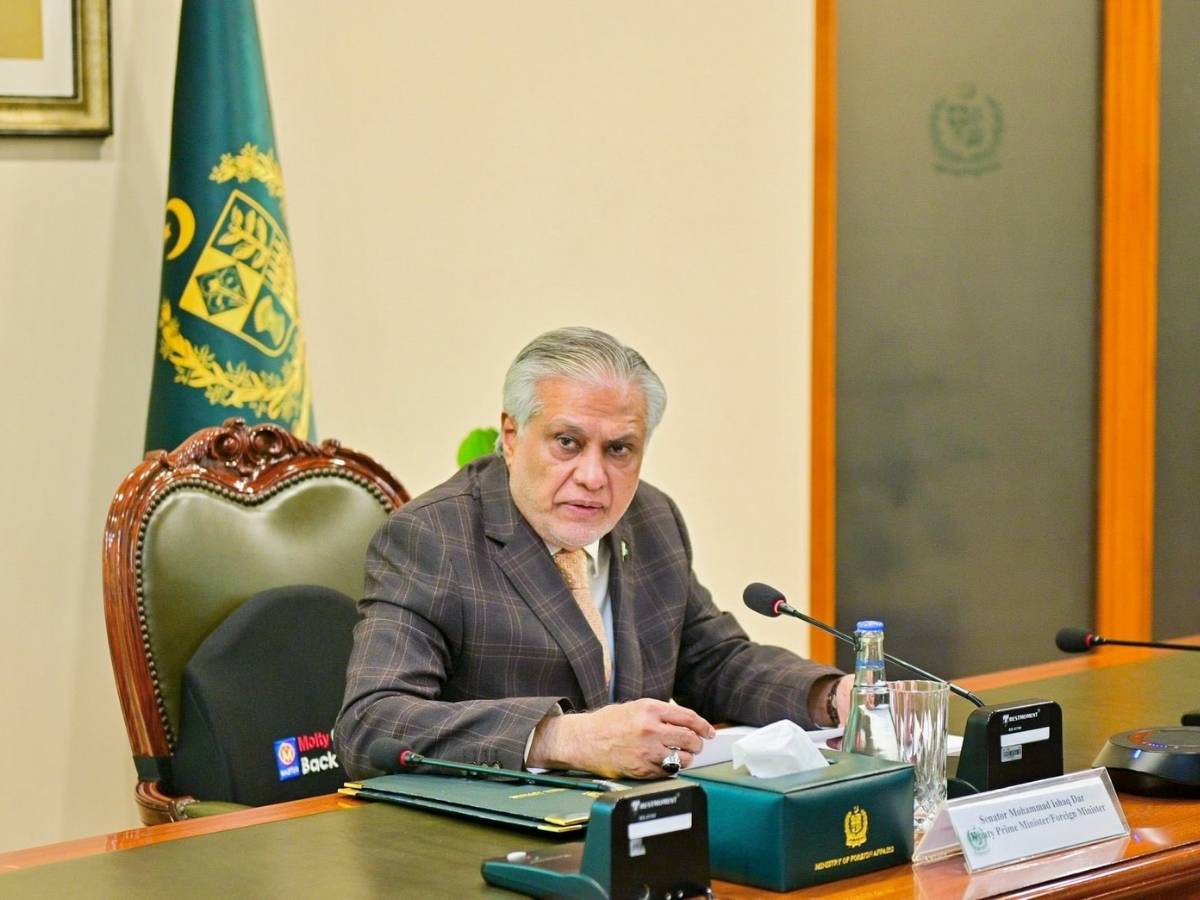
In a big admission, Pakistan’s Deputy Prime Minister Ishaq Dar has confirmed that India’s ‘Operation Sindoor’ actually hit and damaged some of its key airbases. Speaking during a local TV broadcast, Dar named the Nur Khan and Shorkot airbases as being among the targets hit by Indian forces.
The Indian strikes were carried out on the night of May 6 and 7, just days after a brutal terrorist attack in Pahalgam, Jammu and Kashmir, where 26 Indian tourists were killed in front of their families.
In the same TV interview, Dar also said that Saudi Prince Faisal bin Salman offered to reach out to India’s External Affairs Minister S. Jaishankar, saying Pakistan was “ready to stop”. That clearly shows Islamabad reached out for help from both the U.S. and Saudi Arabia, hoping to calm things down after India hit back hard.
This backs earlier reports that Pakistan was trying to bring in international players to stop the tension from getting worse.
Interestingly, this comes just days after Pakistan, on June 4, admitted that India’s Operation Sindoor caused more damage than it had earlier said. A confidential document tied to Pakistan’s own internal military plan, called ‘Bunyan un Marsoos’, revealed that at least eight more sites were hit.
This is seen as a big blow to Pakistan’s credibility, especially after initially downplaying the impact of India’s action.
Reacting to all this, BJP’s IT cell chief Amit Malviya didn’t hold back. Posting on X, he wrote, “So now it’s official: Pakistan admits it was hit. Pakistan admits it ran to both the US and Saudi Arabia, begging India to halt. Pakistan inadvertently admits that Trump wasn’t the only one lobbying India — even Riyadh was roped in.”
He added, “From Balakot to Sindoor, Pakistan’s denials continue to collapse under truth bombs. A national security embarrassment for them, a strategic validation for India.”
On Wednesday, India responded to Pakistan’s ongoing attempts to twist the narrative. At a UN Human Rights Council session in Geneva, Kshitij Tyagi, a senior Indian diplomat, made India’s position clear.“The world sees through Pakistan’s theatre of deception,” Tyagi said.
“When a state harbours terrorists who massacre innocents, defensive action is not just a right, but a solemn duty.”
He reminded the world that the April 22 terror attack in Pahalgam turned a peaceful holiday spot into a scene of horror. “Pakistani terrorists turned a serene sanctuary in Jammu and Kashmir into a killing field on April 22, carrying out a barbaric execution of 26 Indian tourists in Pahalgam in front of their families,” he told the Council.
India launched Operation Sindoor on May 7, hitting terrorist camps and launchpads inside Pakistan-controlled territory. The strikes triggered four days of intense clashes, which ended on May 10 after both sides agreed to step back.
Apart from the airstrikes, India also suspended the 1960 Indus Waters Treaty, a move that shocked many and was strongly criticised by Pakistan.
Pakistan’s public admission is a big deal. It proves what India has been saying all along — that its strikes were real and effective. At the same time, it’s left Pakistan facing some tough questions at home, especially about how they handled the whole situation.
The United States issued a strong warning to Iran, with Press Secretary Karoline Leavitt saying…
A UK court rejected Nirav Modi’s plea to reopen his extradition case, saying there were…
Petrol prices in Mumbai remain unchanged at Rs 103.50–Rs 103.54 per litre on March 26,…
