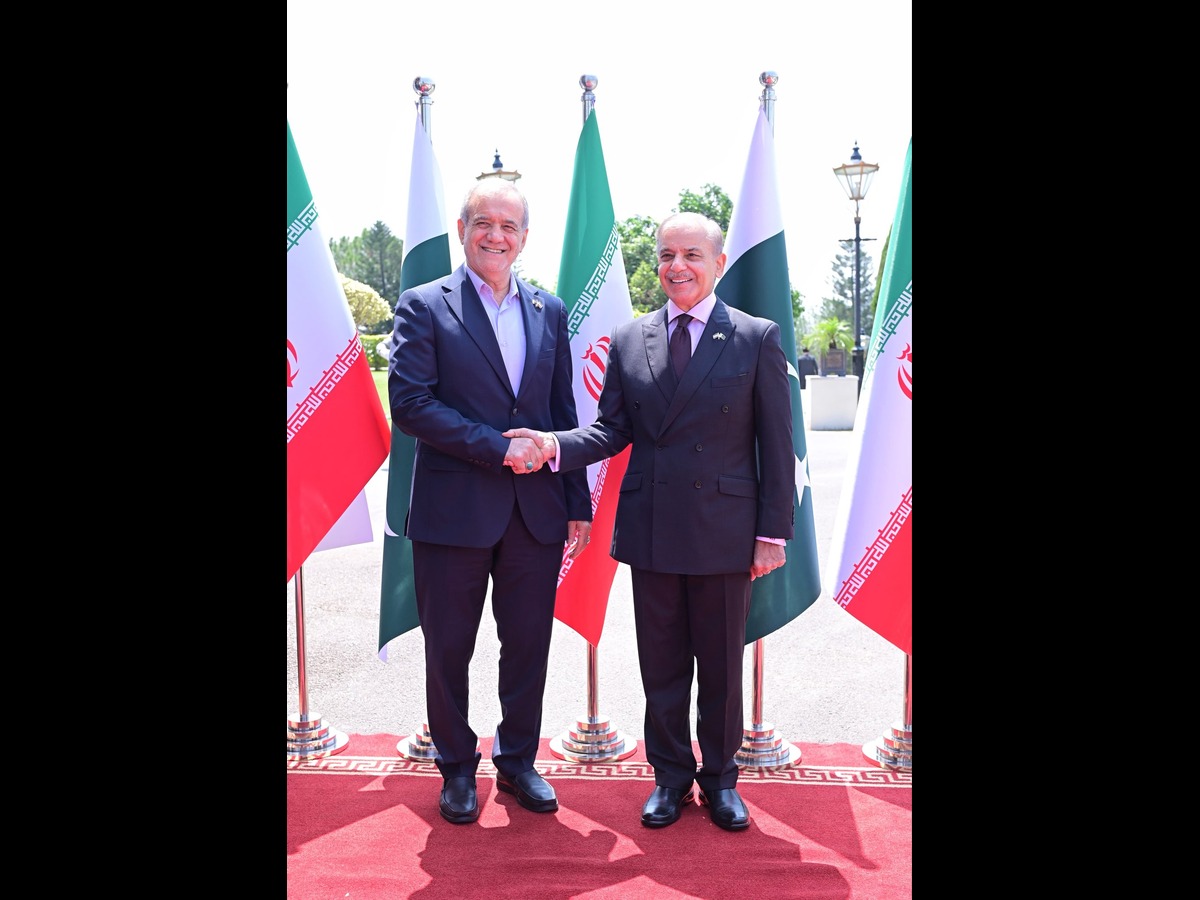
Pakistan and Iran signed 12 deals to enhance bilateral business prospects
Pakistan stated it fully supports Iran’s right to construct nuclear technology for peaceful uses after both nations inked multiple deals to enhance partnership across several fields.
The discussion was held between Iranian President Masoud Pezeshkian and Pakistan’s Prime Minister Shehbaz Sharif. Pezeshkian is on a two-day tour to Pakistan.
Pakistani PM Sharif stated that Iran had the right to use nuclear energy for peaceful purposes, an issue at the heart of Iran’s ongoing tensions with the United States and Israel.
“Pakistan stands with Iran for the acquisition of peaceful nuclear power,” Mr. Sharif said. His comments come at a time of rising tensions between Iran and the US, a country that has designated Pakistan a “major non-NATO ally.” The US and Israel launched airstrikes on Iranian nuclear facilities in June, and as a result, Tehran suspended cooperation with the International Atomic Energy Agency (IAEA).
Pakistani PM condemned “Israeli aggression” and supported Iran’s right to defend itself. He also condemned Israel’s actions in Gaza and urged Muslim countries and global community to take action against human rights violations in Gaza.
12 Memorandums of Understanding (MoUs) and agreements were inked which covered areas such as trade, agriculture, science and technology, culture, tourism, climate cooperation, maritime safety, and innovation.
Strengthening bilateral trade is also a key aim and both agreed to raise trade volume to $8 billion annually, with a goal of eventually reaching $10 billion. During talks between Commerce Minister Jam Kamal Khan and Iranian Minister Mohammad Atabak, emphasis was placed on using geographical proximity, described as the “discount of distance”, to cut trade costs and delivery times.
Minister Khan proposed targeted trade delegations and closer ties between business chambers to expand market access. He also noted how regional models like ASEAN have succeeded in using neighborhood trade to their advantage.
Iranian Minister Atabak welcomed the idea of regular business-to-business (B2B) events and noted traders in both countries were ready to move forward if governments ensured smooth facilitation.
The two sides will now focus on key sectors such as livestock, agriculture, energy, logistics, and services for future collaboration.
Spider-Man: Brand New Day trailer drops today! Tom Holland’s jaw-dropping Peter Parker salary shocks fans…
Chaitra Amavasya 2026 Tonight: Check tithi timings, Pitru Tarpan rituals, Snan-Daan significance and know why…
Karachi Region Whites will play Abbottabad Region in the final of the Pakistan National T20…
