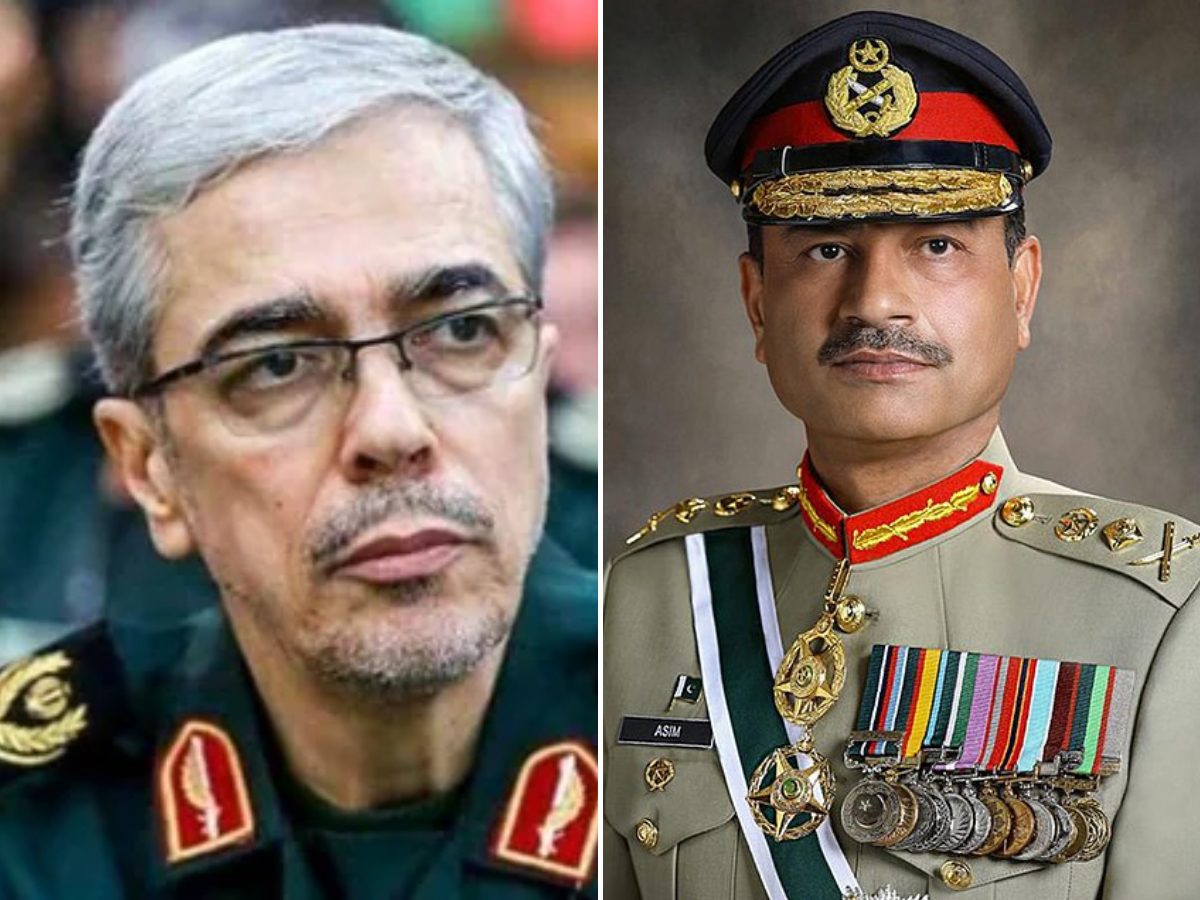
Pakistan Army Chief Asim Munir and Iran’s top military commander, Mohammad Hossein Baqeri
Pakistan’s Chief of Army Staff, General Asim Munir, reportedly met Iran’s top military leader, Mohammad Hossein Baqeri, just days before Baqeri was killed in a targeted Israeli airstrike on June 13.
The high-level meeting took place at the end of May and is now drawing global attention due to the timing and aftermath.
According to various intelligence sources, Munir is believed to have shared sensitive information about Baqeri’s movements with the United States and Israel.
This alleged leak has sparked a major diplomatic controversy, especially after Baqeri and two of his top deputies were killed in the Israeli attack. Iranian officials have long accused Pakistan of playing a “double game” in regional politics—maintaining ties with both Iran and Western powers.
Adding fuel to the fire, reports have surfaced claiming that Munir gifted Baqeri a wristwatch embedded with a GPS tracker during their meeting.
Iranian media outlets allege this device may have enabled Israeli forces to precisely locate Baqeri for the deadly airstrike. Though unverified, the theory has added to rising suspicions and tensions between the two neighboring countries.
The plot thickens with reports that General Munir held a secret meeting with former U.S. President Donald Trump shortly after his trip to Iran. The meeting allegedly took place at the White House, where Trump was photographed hosting the Pakistani army chief earlier this week.
According to insiders, Trump is said to have offered advanced military technology and financial incentives to Pakistan in return for strategic cooperation.
As part of the alleged deal, Pakistan would allow U.S. forces access to its military bases and key logistics routes in exchange for high-end defense equipment, including fifth-generation fighter jets and cutting-edge missile systems.
The discussions point to a growing realignment of Pakistan’s military partnerships amid shifting global alliances.
These developments highlight Pakistan’s increasingly complex role in West Asia. As the world’s only Muslim-majority nuclear power, Pakistan is attempting to walk a fine line—asserting influence while carefully managing its relationships with both Iran and the West.
The ongoing instability along the Pakistan-Iran border, known for smuggling and militant activity, only complicates its position further.
General Munir’s engagement with Trump and the subsequent fallout from Baqeri’s death may mark a significant pivot in Pakistan’s foreign policy. While aiming to solidify its strategic ties with the United States, Pakistan risks straining its already fragile relationship with Iran.
Sources suggest that Pakistan’s move is part of a broader ambition to increase its global standing and align more closely with U.S.-led defense initiatives. Whether this gamble will pay off—or further destabilize regional dynamics—remains to be seen.
JAKSON Group Partners with Sourav Ganguly to Champion a Sustainable Future
Mr. Sameer Gupta: Chairman, Jakson Group with Brand Ambassador Mr Sourav Ganguly at Jakson Group…
Is Leander Paes Joining BJP? Meeting With Bengal BJP Chief Ahead of State Elections Sparks Buzz
Fresh buzz about tennis legend Leander Paes possibly stepping into active politics in West Bengal…
The untimely demise of Harshil Kalia has left both her fans and the entertainment industry…
