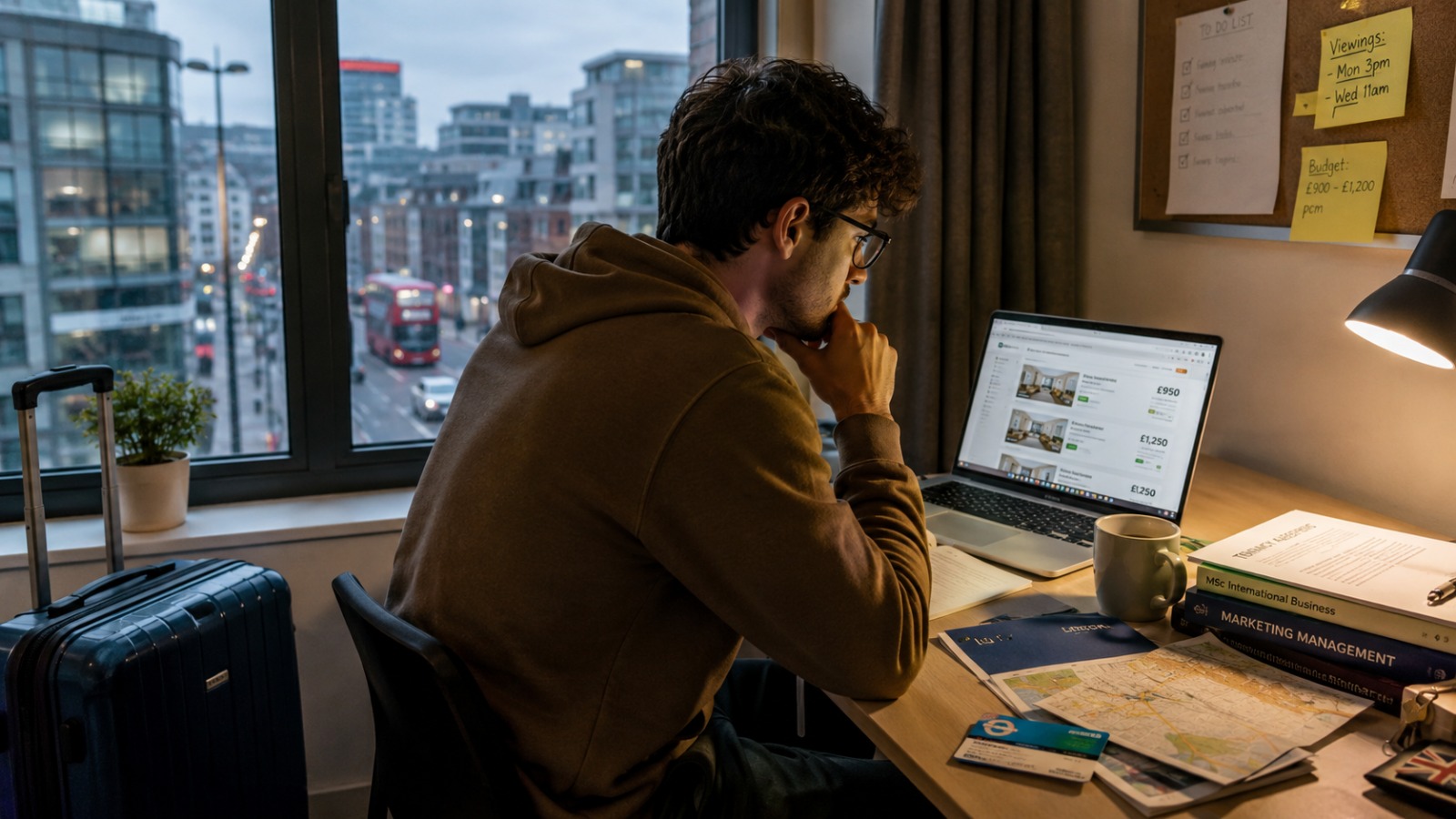
For many international students, the biggest financial hurdle used to be tuition. That is still true, of course. Families spend months planning around university fees, visa requirements, airfare, insurance, and proof-of-funds calculations. What far fewer students prepare for is the housing situation waiting for them after arrival. And increasingly, that is the part causing the most panic.
More than 6 million students now study abroad globally, according to UNESCO estimates. Universities across the UK, Australia, Canada, and parts of Europe continue to expand their international recruitment efforts, but student housing infrastructure has not kept pace in many major cities. According to the Office for National Statistics, private rents increased by 7.4% in 2025.
The result is a growing imbalance: more students competing for fewer affordable places to live.
In some cases, accommodation costs are becoming just as stressful as tuition planning itself.
In cities like London, Dublin, Toronto, Sydney, and Melbourne, students are entering rental markets already under pressure from local housing shortages and rising living costs.
In London, weekly student rent commonly exceeds £250 for standard accommodation.
According to Knight Frank’s UK Student Property Rental Index, student accommodation rents have continued to rise steadily in recent years, with some cities seeing sharper increases as demand outpaces available housing. Industry reports also show that several major student cities recorded noticeable rent increases between 2022 and 2025, driven by limited supply and growing international student demand.
Manchester, once considered a more affordable alternative, has seen steep increases as demand rises year after year. In Toronto and Dublin, shared housing has become expensive enough that some students spend the majority of their monthly budgets on rent alone. And these are not premium apartments.
Students are often paying those prices for small rooms, shared kitchens, long commutes, or temporary arrangements they accepted simply because nothing else was available.
Part of the issue is timing. Universities expanded enrolment, particularly after pandemic restrictions eased and international mobility rebounded, but purpose-built student accommodation did not grow at the same rate. Private rental markets absorbed the overflow, and prices followed.
Inflation only made matters worse. Utility bills climbed. Transportation costs increased. In several cities, students now compete not only with each other, but also with young professionals facing the same housing shortages.
For many students arriving from abroad, the scale of the problem only becomes clear after they begin searching.
Tuition fees are straightforward. Housing rarely is. A student may budget carefully for rent and still underestimate the real cost of securing accommodation abroad. Deposits alone can require several months of rent upfront. Some landlords ask for guarantors. Others charge administrative or booking fees that were never mentioned in headline prices.
Then there are the secondary costs students tend to overlook at first: Wi-Fi, heating, laundry, transport passes, kitchen supplies, bedding, or furniture for unfurnished rooms.
Even location has a financial trade-off. Sometimes the cheaper option ends up costing more anyway. Students move farther from campus to save on rent, then realise they’re spending a surprising amount on trains, buses, or long daily commutes.
Another common problem is arriving without a confirmed place to stay. Some students end up bouncing between hostels, budget hotels, or temporary rentals for days while trying to secure something long term, and the costs add up fast before the semester even properly begins.
By the time classes begin, some have already exhausted a significant portion of the money intended for the semester. That uncertainty can affect far more than finances.
Accommodation stress has become part of the international student experience in a way universities rarely discuss openly.
Students arriving in unfamiliar countries are expected to navigate contracts, rental systems, transport networks, and local scams almost immediately. Most are doing this while adjusting to an entirely new environment. For many, it is their first time living away from home, and the pressure builds quickly once financial worries and housing uncertainty come into play.
Student forums and group chats are full of housing horror stories. Fake listings, edited photos that don’t match reality, and deposits sent to strangers who suddenly stop replying have become surprisingly common.
Some students are still searching for accommodation just days before travelling.
Once options start running out, students usually take whatever they can get. That can mean shared cramped apartments, long daily commutes, or temporary setups that never feel fully stable.
Over time, the impact goes beyond comfort. Coursework, routines, friendships, and even mental well-being can start to suffer.
Missing evening study sessions because the last train home leaves early. Avoiding campus activities because transport costs add up. Spending hours each week searching for better housing instead of focusing on academic work.
These pressures build gradually, but they accumulate.
As competition in student housing markets intensified, students began changing how they search for accommodation.
Relying on social media listings or informal Facebook groups now feels increasingly risky, especially for students booking rooms from another country. Many prefer platforms that verify listings, clarify pricing structures, and provide some level of transparency before money changes hands.
Digital booking tools, virtual tours, verified reviews, and flexible reservation processes have become part of how international students evaluate housing options remotely.
Platforms such as the Casita student accommodation platform have grown partly because students want more certainty before arriving in a new city. Instead of navigating unfamiliar rental markets alone, many now compare verified options online before travelling. The same shift is visible in highly competitive destinations where demand for student accommodation in Edinburgh, London, or Melbourne leaves little room for trial and error.
Universities themselves have also started directing students toward verified accommodation providers more frequently than before, particularly after repeated concerns around scams and unsafe housing conditions.
Housing may be difficult, but preparation still changes outcomes considerably. Students who begin searching several months before arrival generally have more flexibility and better pricing options.
Waiting until the last few weeks often means accepting whatever remains available.
It also helps to look beyond the rent itself. A place can look affordable at first glance, especially compared to options closer to campus. But after adding daily transport costs and long commutes into the equation, the difference is often smaller than students expect.
A lot of students also rush through rental contracts without paying attention to the smaller details. Later on, they discover extra utility charges, strict cancellation terms, or deposit conditions they did not fully understand when booking.
Perhaps most importantly, students need realistic expectations. The idea that accommodation can be figured out after arrival is becoming less practical in many major study destinations. Financial buffers matter more than they once did.
At the same time, the student housing market is becoming more structured and digital. More universities are working with verified accommodation providers, while students increasingly use booking platforms, virtual tours, and verified reviews before choosing housing abroad. For many international students, factors like safety, transparency, and flexibility now matter as much as price.
Studying abroad still offers enormous personal and academic value. That has not changed.
What has changed is the reality surrounding student life outside the classroom. Securing admission is no longer the final challenge in the process. In many cities, finding safe and affordable accommodation has become just as important, and sometimes just as difficult.
India’s petrol and diesel prices remain stable across major cities, with Delhi at ₹94.77 and…
Dharamshala weather could impact the crucial PBKS vs MI IPL 2026 clash as IMD predicts…
May 2026 might be one of the emotionally important months, for Scorpio natives this year.…
