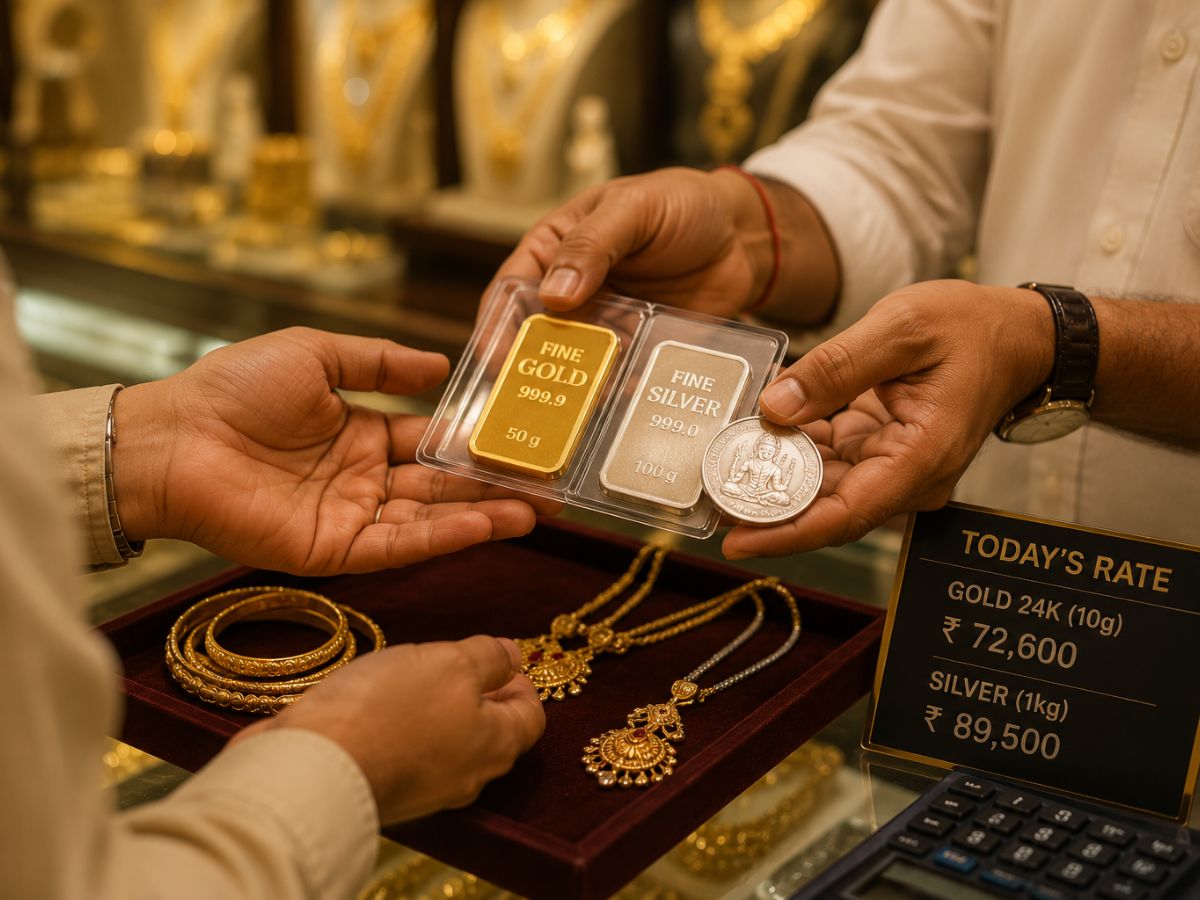
Gold and silver purchases are set to become more expensive after the Centre raised import duty to 15%, impacting jewellery buyers, bullion investors and traders across India. (Representative Image)
Gold import duty: In a strong policy move to curb non-essential imports and conserve India’s foreign exchange reserves in the face of rising global uncertainty, the Centre has raised the import duty on gold and silver to 15 per cent from the earlier 6 per cent, according to the latest government notification.
But this move is much more than just the price of gold going up overnight. The duty hike is part of a larger economic strategy as India grapples with rising crude oil prices, a weakening rupee, pressure on forex reserves and tensions in West Asia. The effect is felt across the entire gold ecosystem – from jewellery buyers to investors, bullion traders and the wedding market.
So if you were planning on buying gold jewellery or coins or investing in bullion anytime soon, your maths may have changed overnight.
This has been the government’s swift response to a call by PM Narendra Modi last week to limit gold imports and spending on the precious metal for a year if possible. The import duty on both gold and silver will be the basic customs duty of 10% plus a 5% AIDC, totalling 15%.
According to the market experts, it is not merely a routine hike but a well-thought-out macroeconomic decision by the government to check dollar outflows at a time when India’s import bill is high because of spiralling oil prices and geopolitical threats emerging from Iran.
Why has it been so quick, and what do all these imply for the buyers, investors and the economy?
The reason is simple. India imports most of its gold and pays for it in US dollars.
Unlike countries that mine large amounts of gold at home, India depends heavily on imports to meet demand from weddings, festivals, investment and household savings.
India alone spent close to $72 billion on gold imports in FY26, one of the biggest import bills ever on the precious metal in the country, it is reported.
Meanwhile crude oil has soared amid rising tensions in West Asia and fears about the Strait of Hormuz shipping route. India imports nearly 88% of its crude oil needs, and rising oil prices are already putting pressure on the country’s dollar reserves.
Now add huge gold imports into the equation, and the pressure gets even bigger.
The government’s concern is clear. Too many dollars going out of India for non-essentials like gold could put more pressure on the rupee and increase the current account deficit (CAD).
Basically, the government wants people to buy less imported gold.
If gold becomes more expensive, demand may cool off. When demand comes down, imports come down. When imports come down, dollars don’t go out of India.
Even with a fall of 30-40 per cent in gold imports, economists say that India could save close to $20-25 billion in foreign exchange every year.
The idea is to conserve forex reserves for vital imports, like:
Petroleum, Crude
Fertilisers
Raw materials for industry
Defence equipment
Imports of infrastructure and technology
This is why the move is being regarded as an economic protection step and not only a taxation decision.
Yes — and buyers are likely to feel the impact almost right away.
Even before this move, gold prices in India traded near record levels. At current rates, 24K gold is hovering around ₹15,475 per gram, while silver prices are close to ₹2.78 lakh–₹2.90 lakh per kilogram.
Under the earlier 6% duty structure, the import duty burden on gold worth ₹154,750 was about ₹9,285.
The new 15% duty structure takes that up to over ₹23,000 – and that is before adding GST, making charges and jeweller margins.
That means your jewellery bill could shoot up.
The move hits investment buying and cultural gold consumption.
Buying gold in India is a deeply emotional process. Demand is often driven by weddings, festivals and family traditions regardless of prices. But clearly the government is trying to discourage new purchases, especially large discretionary buying.
The coming attractions:
Some families may postpone buying jewellery
Investors may turn to Gold ETFs or digital gold
Light jewellery could see increased demand
More people could be trading old jewellery for new gold
Interestingly, in recent months investors had already started to move to paper gold products, such as ETFs.
This move is important because it directly affects India’s dollar outflow.
You can reduce gold imports by:
Defend foreign exchange reserves
Alleviate rupee pressure
Reduce the current account deficit
Stop the speculative hoarding of gold
Support critical imports like crude oil
The government has also announced concessional duty rates for the precious metal recycling and recovery categories, indicating its desire for the industry to recycle more gold domestically instead of relying heavily on imports.
This is one of the biggest criticisms of the bullion industry that is being raised right now.
When import duties on gold are increased sharply, illegal trade often becomes profitable again due to the gap in price between legal and smuggled gold.
Industry experts worry that:
Smuggling routes across neighbouring countries may be reactivated.
Bullion cash trade transactions may increase
Customs enforcement challenges may increase
Gold smuggling had declined following the tariff reductions in 2024, but the latest increase could change that.
This move could put immediate business pressure on jewellers.
The industry could see higher inventory costs, softer customer demand and rising working capital needs in the near term. Higher duties are now also applicable to jewellery findings and components.
But several trade groups appear divided on the issue. Many traders are concerned about weak demand, but some have also publicly supported the government’s move, calling it necessary in the current global scenario.
Much more than making jewellery expensive is this hike in duty on gold imports.
This is a move by India to save dollars, to shield forex reserves and to ease economic pressure when crude oil prices, geopolitical tensions and rupee weakness are all mounting at the same time.
This means higher prices for consumers. For investors, that could mean more money going into ETFs and digital gold. And for the economy, the government hopes it will help reduce unnecessary dollar outflows and stabilise the external balance.
The bigger question now is whether higher prices will really hit gold demand – or simply push more trade into unofficial channels.
Also Read: Gold, Silver Imports Get Costlier! India Hikes Duty To 15% In Midnight Action
Q. When did the revised gold import duty come into effect?
The revised import duty structure will come into effect at midnight following the CBIC notification.
Q. What is the revised import duty on gold and silver?
India increased effective import duty on gold and silver from 6% to 15%.
Q. Why has the government increased the duty?
The increase is intended to curb imports, support forex reserves, defend the rupee and address pressure on the dollar due to soaring crude oil prices and geopolitical stress.
Q. Would gold prices rally further in India?
A higher import duty could push domestic gold prices even higher and could put pressure on jewellery demand; however, prices could follow global trends.
Q. What did PM Modi say about buying gold?
Prime Minister Narendra Modi has asked Indians to not buy gold for one year so that India could maintain its foreign exchange reserves.
Priyanka Roshan is a business writer and chief sub-editor at the NewsX website who tracks everything from stock market swings and corporate earnings to personal finance trends and policy shifts. Known for turning fast-moving business developments into sharp, reader-friendly stories, she combines speed, accuracy, and a data-driven approach to break down complex financial news for everyday audiences.
With over 9.5 years of newsroom experience, Priyanka has worked with leading media organisations, including Moneycontrol, Times Now, and Ping Digital, covering diverse beats such as business, politics, technology, auto, travel, sports, and the world. From live breaking news desks to SEO-led digital storytelling, she specialises in creating engaging content that keeps readers informed without overwhelming them.
PM Modi Cuts Convoy, WFH Push In UP, Ministers Taking Metro: What’s Behind Extreme Measures
Prime Minister Narendra Modi has launched a nationwide austerity and fuel-conservation drive. From reducing convoy…
Who Is LizLaz? German Model Claims Media Tried To Defame Virat Kohli, Says ‘I Won’t Lie For …’
LizLaz claimed she was allegedly offered money by journalists to make false statements against Virat…
Stock Market Today: After Two Days of Bloodbath, Dalal Street Finally Finds a Pulse Again, Sensex…

