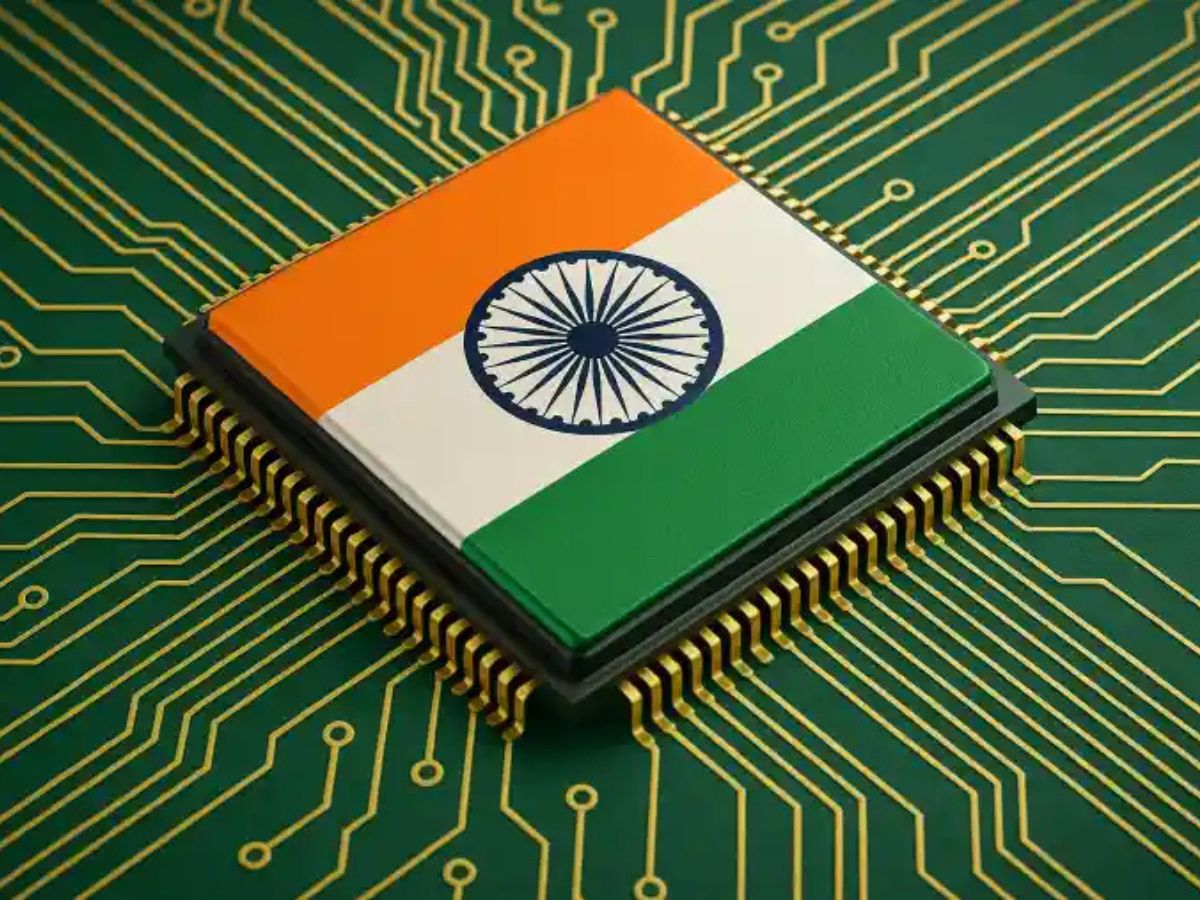
As India targets on becoming a global manufacturing hub for semiconductor, a key question is emerging: Does it have the talent and capacity to support such an ambitious dive?
India’s semiconductor chip dream may face talent crisis
Indian has projected six semiconductor manufacturing units which are under development and multi-billion-dollar agreements with companies like the Micron, planning to set up a plant in Gujarat.
GoI pushes toward self-reliance chip manufacturing units across states by offering land, tax breaks, incentives, and other related benefits through national policies that are aligning to attract global investment. But even though the infrastructure roadmap is being well placed, the talent gap is a major bottleneck.
Engineering graduates are surplus, but required skills are uncommon
India produces over 1.5 million engineering graduates every year. But the numbers are not the issue here, it’s particularly the skillset. In comparison to the IT services, semiconductor manufacturing and design demand needed an expertise in chip building, process nodes, packaging, and cleanroom operations. Currently, India’s talent pipeline is more attuned to software than silicon.
IIT and IISC are launching Chip focused Master’s and PhD programs
This will start to change somehow. India’s key technical institutions, IITs and IISc are launching chip-focused Master’s and PhD programs to train the engineers. Intel, AMD, and Qualcomm are expanding their Research & Development centers in Bengaluru, Hyderabad, and Noida. As global companies are outsourcing high-value chip design work to India, the country is laying a foundation for a skilled semiconductor workforce.
Even more promising is the slow but continuous reverse migration of Indian-origin engineers from Silicon Valley and Taiwan’s Science Park. These returnees are launching startups and mentoring new talent.
Semiconductor Chip: Talent deficiency may threaten domestic demand
Developing infrastructure seems to be faster than nurturing talent. Without a strategy which is focused on training, upskilling, preventing brain drain among semiconductor professionals, it may be a challenge for the state-of-the-art factories to manage the shortfall of skilled engineers.
However, can India link the talent gap before the chip wave clatters? The next stage of its semiconductor vision may depend more on people than on plants.
Ankur Mishra is a journalist who covers an extensive range of news, from business, stock markets, IPOs to geopolitics, world affairs, international crises, and general news. With over a decade of experience in the business domain, Ankur has been associated with some of the reputed media brands. Through a sharp eye on global marketplaces along with deep insights and analysis of business strategies, Ankur brings simplicity to the complex economic matrix to decode market trends and empower people.
He is committed to entrenched data, facts, research, solutions, and a dedication to value-based journalism. He has covered trade tariff wars, international alliances, corporate policies, government initiatives, regulatory developments, along with micro- and macroeconomic shifts impacting global fiscal dynamics.
At the 98th Academy Awards, Alexandre Singh won Best Live Action Short Film for Two…
India head coach Gautam Gambhir admitted that 'mistakes' during his tenure may have contributed to…
The NDA swept all five Rajya Sabha seats in Bihar as Chief Minister Nitish Kumar…
