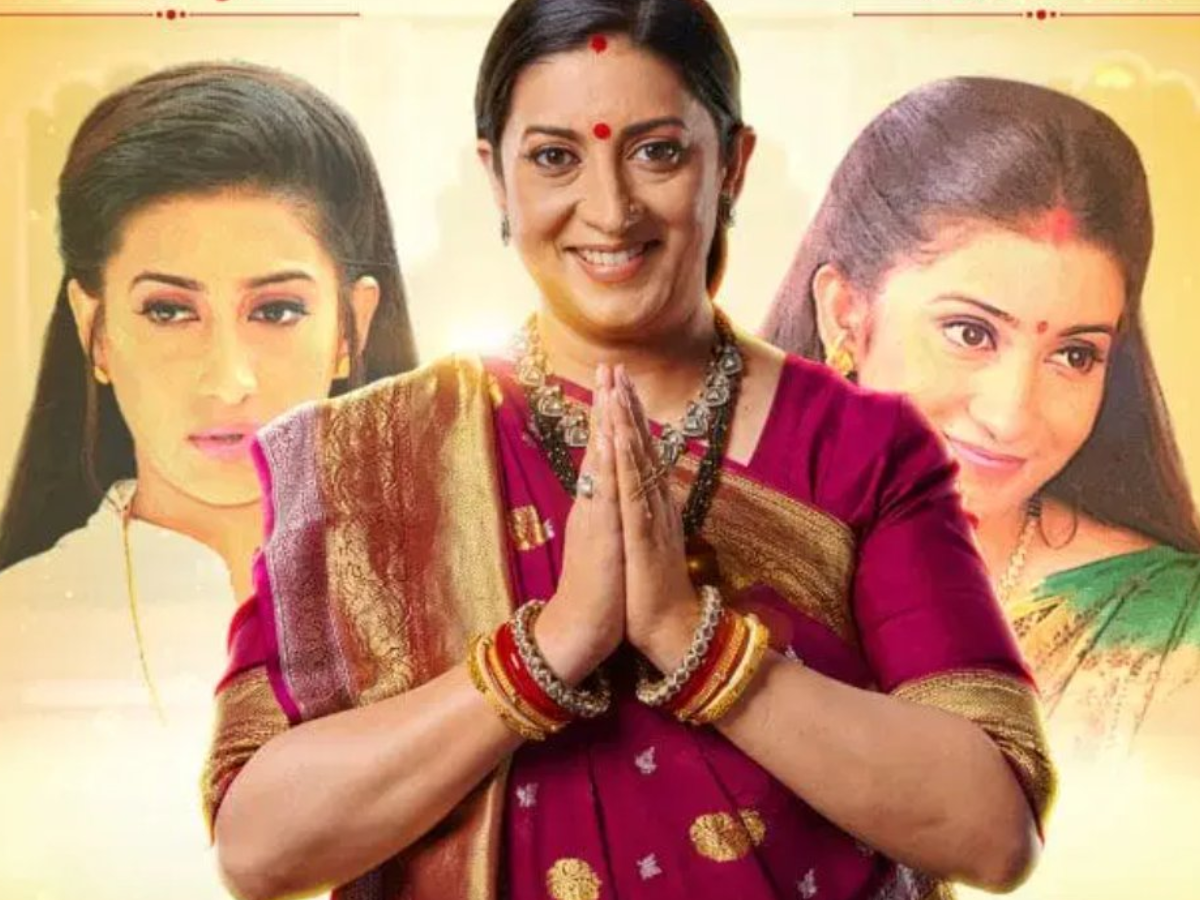
Tulsi wins Gen Z hearts—Kyunki isn’t just drama, it’s legacy.
For years, there has been a constant the sound in my childhood reverberating from the parent’s TV, “Kyunki Saas Bhi Kabhi Bahu Thi”. The title immediately conjured up memories of heavy, dramatic close-ups, glittering sarees, and the never-ending family melodrama. I was a genuine card-holding Gen Z snob whose references were confined to social media memes and marathoning K-dramas while arguing the merits and demerits of various streaming platforms.
But a bout of recent nostalgia sent me tumbling down the rabbit hole and I finally got around to playing the mythic Ekta Kapoor serial. And oh, what an eye-opener it was. I finally get why it dominated the screens, why my aunts tuned in devoutly, and why even now its cult status persists. Take a bow, Kyunki, you’ve turned a cynic.
The first couple of the episode were like a time warp. The pacing was slow, the sets lavish to the point of overwhelming, and the sheer number of characters vertiginous. But as I got used to it, a curious fascination gripped me. The household politics, the unspoken power games, the astonishingly complex web of relationships was like sitting through a masterclass in social dynamics, one on a theatrical scale, at least. The idea of the combined family was what really caught our attention. Nuclearism has indeed made societies more individualistic and in such a society, depiction of households consisting of more than one generation cohabiting, sharing joys and sorrows, seems anachronistic.
Yet, it spoke of a long entrenched cultural value, which perhaps we have begun to become blind to. The relentless chasing of “family honor,” the unshakeable dedication (and sometimes manipulation) to defend it, created an intimate portrait of the past, or at least a greatly exaggerated rendering thereof.
Prior to watching, I had seen Tulsi Virani only in memes and satirical skits. A stoic figure, always absorbed in suffering, an Indian epicenter of womanhood, and always being made fun of for her sacrifices-well, it was my personal opinion to see a lot of might, willpower, and moral strength inside this woman. I found her journey fascinating from being a simple girl to a mighty matriarch of the Virani family. Some of the tracks and storylines sometimes seemed a bit dated or too simplistic, though I could relate to how Tulsi struggled with all those issues. Justice for him, love for his family even when they betrayed him, and quiet dignity in the face of adversity have been refreshing.
This is not just a drama. There is a woman trying to hold her family together through all the odds. It began asking in its own terms the questions of duty, sacrifice, and the plausible nature of human relationships, in a way that has always dwarfed its similarly caricatured image. It was more than just an evening soap; it held a mirror to the society, showcasing a whole generation’s aspirations, fears, and values.
A recent media graduate, Bhumi Vashisht is currently making a significant contribution as a committed content writer. She brings new ideas to the media sector and is an expert at creating strategic content and captivating tales, having working in the field from past four months.
One of the biggest pre-release rumours was about Yami Gautam making a cameo, which has…
Eid 2026 Moon sighting timings for Gulf countries: Check sunset and crescent visibility timings for…
SC Delhi vs Jamshedpur FC Live Streaming: Where to Watch ISL match on TV and Online In India?
Check out the Live Streaming and Telecast details of SC Delhi vs Jamshedpur Indian Super…
