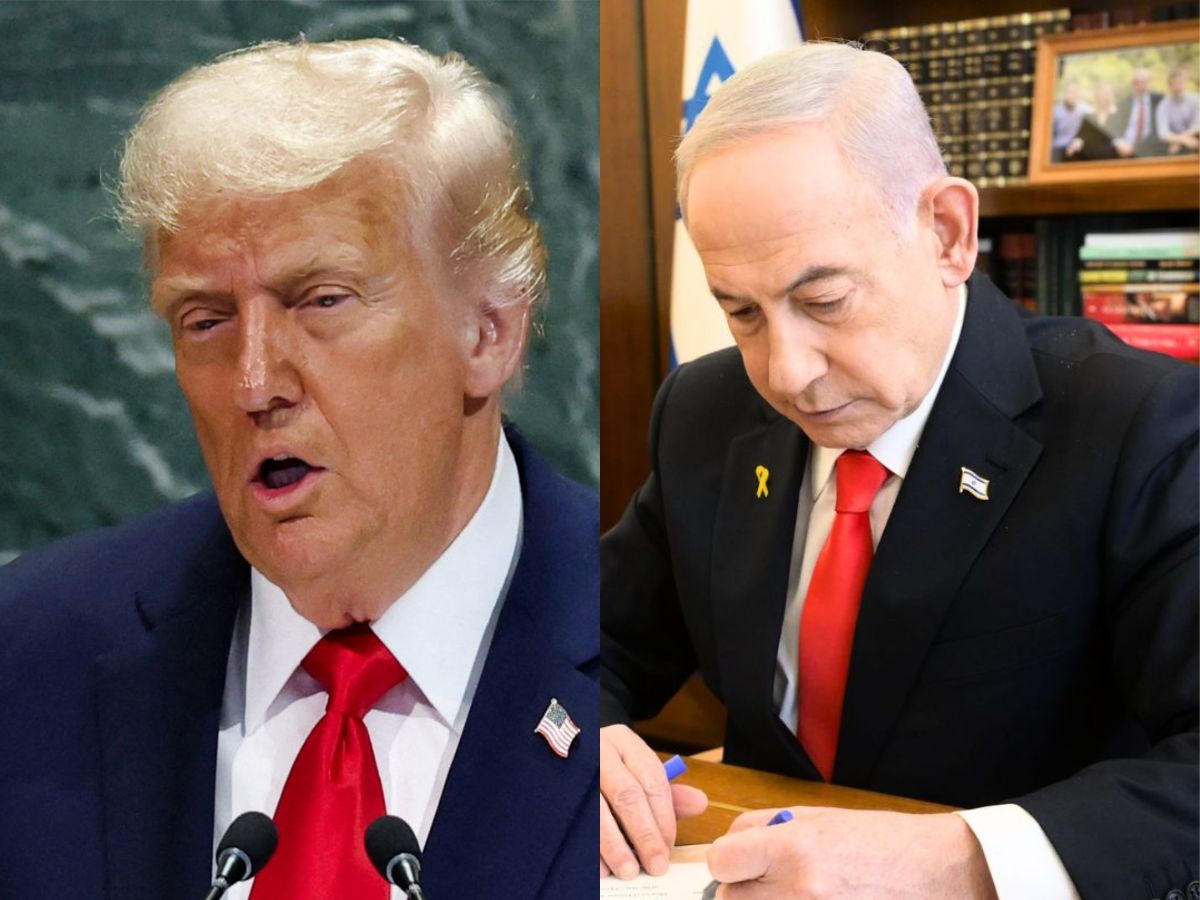
(Image Credit: ANI/ @IsraeliPM via X)
On the 26th of December, 2025 Israel became the first ever nation to acknowledge Somaliland as an independent and sovereign state through formal recognition thus ending over 30 years of cut-off diplomatic relations for the secessionist region. Prime Minister of Israel Benjamin Netanyahu made the declaration and pointed out that it was taken ‘in the context of the Abraham Accords’ and was a great breakthrough in diplomacy for both Jerusalem and Hargeisa. Amongst others, Israel’s actions included signing a mutual agreement with Somaliland to develop full diplomatic ties and the two sides would share their cooperation in different areas such as agriculture, health, technology, and economic development.
Somaliland, which is located in the northwestern region of Somalia, has been a self governing entity since 1991 and has been issuing its own currency, maintaining an army and building a relatively stable political system for years, but none of the UN member states have ever recognized it until now. The superb positioning of the area on the Gulf of Aden along with its strategic geography are a great temptation for the superpowers and thus recognition comes along with geopolitical significance in layers.
So, diplomatic relations are not the only reason for this Israeli tactical move with possible applications, since it aims at enlarging its presence in Africa and consolidating its ties with non-Middle Eastern countries. Still, the decision was not well received by many nations and international bodies that indicated the extent of the division among the various parties around the globe. At the time, US President Donald Trump, when questioned if the US would imitate Israel, was not really excited and he doubted the whole idea. As per the reports, Trump actually said, ‘Simply put, No’. and he also jested, ‘Is there anyone who knows what Somaliland is, honestly?’ making it clear that the US is still not prepared to acknowledge Somaliland, even with Israel’s effort.
The response from the African nations and the regional bodies was very harsh and raised the issue of sovereignty and how stable the region would be. The African Union totally denied Israel being recognized, saying that Somaliland is still a part of the Federal Republic of Somalia and alerting that such a recognition without consulting the parties could lead to a loss of peace and stability in the continent. Somalia’s central government went on to denounce the move as an illegitimate aggression against its territorial integrity and announced that it would resort to both diplomatic and legal avenues in asserting its right to the territory.
The dissenting voices did not come solely from Africa but also from the Arab nations and other countries in the Islamic world. The transfer of the capital from Mogadishu to an alternate site in the North was rejected by the aforementioned nations, including Saudi Arabia, Egypt, Qatar, and Kuwait, which considered it a violation of international law and expressed their support for the unification and territorial integrity of Somalia. The countries cautioned that the recognition of a separatist region would create a turbulent situation and might trigger other areas aspiring for self-rule and thus, cause the loss of stability by the existing states. Not the least bit surprising, the supporters of recognition maintain that the de facto independence and stable governance of Somaliland for such a long time are the features which make it different from the rest of the world regions and that, besides, recognition could lead to new openings for investment, development, and diplomatic engagement.
Toyota has unveiled its first three-row electric SUV, the 2027 Highlander EV, featuring a new…
Cost-Driven Data Recovery Decisions and the Overlooked Security Risks
When data loss occurs, users often prioritise turnaround time and pricing while selecting a data recovery…
How to Choose the Best Hair Transplant Clinic in Delhi, India?
New Delhi [India], February 10: Hair transplant has become an effective and reliable method of…
