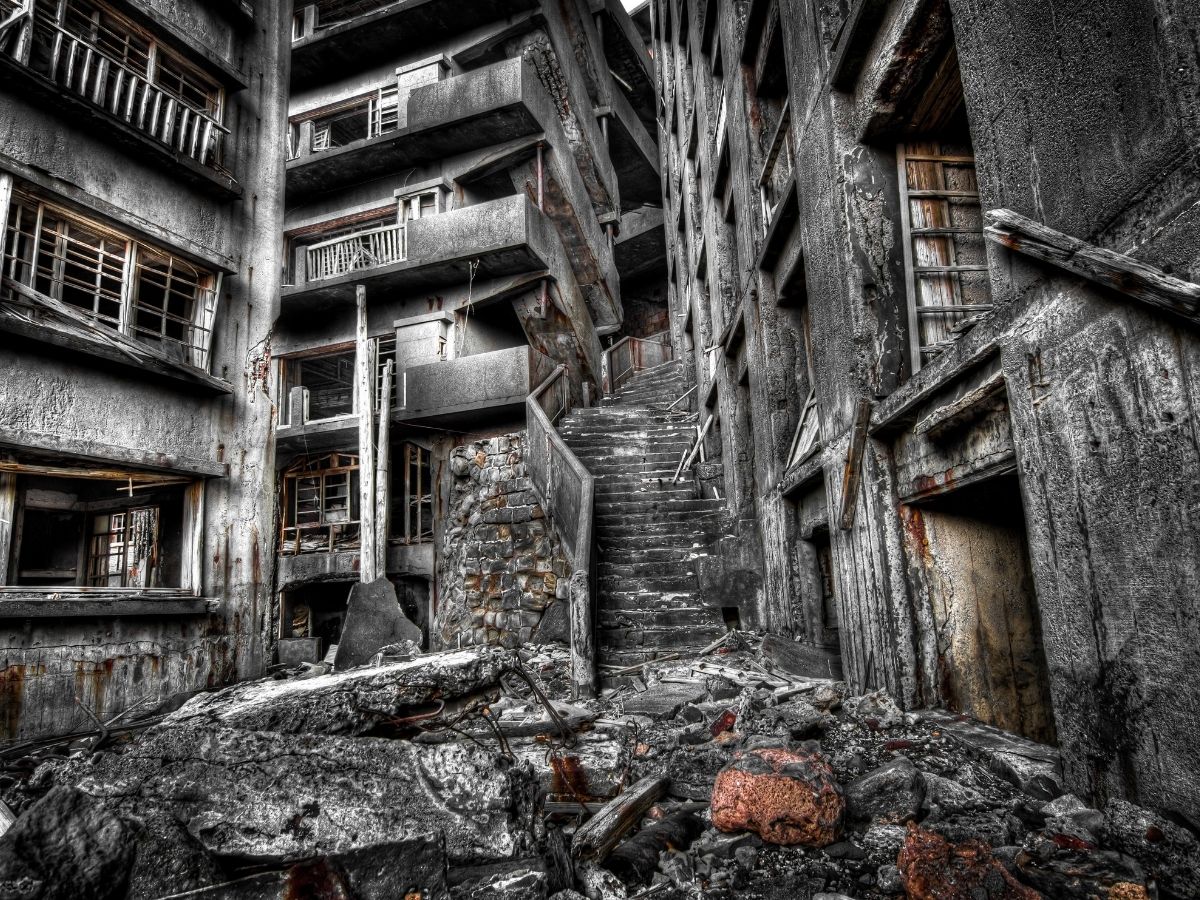
Every August 6, the world marks the anniversary of the 1945 Hiroshima bombing, when the US dropped the uranium-based atomic bomb "Little Boy," killing tens of thousands and leaving lasting devastation. (Photo: Canva image used for representation only)
Every year on August 6, the world remembers the bombing of Hiroshima, an event that changed warfare forever. On that day in 1945, the US dropped Little Boy, the uranium-fuelled atomic bomb, directly over the Japanese city, killing tens of thousands and causing devastation felt for generations.
Three days later, Fat Man, a more powerful plutonium bomb, was detonated over Nagasaki. While these remain the only wartime uses of nuclear weapons, their long-drawn effects continue to shape policies across the world even to this date.
In Hiroshima, Little Boy exploded with a force equivalent to 15,000 tons of TNT, and an estimated total of 140,000 people had died by the end of 1945, including 38,000 children. About 70% of the city’s buildings were destroyed.
Three days later, Nagasaki was hit with Fat Man, whose yield was even larger — about 21,000 tons of TNT. This destroyed 6.7 square kilometers of the Japanese city and claimed approximately 74,000 lives. Ground temperatures soared to 4,000 °C even as radioactive rain fell over the devastated urban areas.
Radiation exposure didn’t stop at day one. Reports suggest that within five to six years, leukemia rates among survivors spiked dramatically. And a decade on, cases of thyroid, breast, lung, and other cancers are still reported to be on the rise. Pregnant women who survived saw higher miscarriage rates, and subsequently generations of their children suffered from stunted growth and cognitive disabilities. Even 70 years later, cancers related to radiation reportedly continue to affect survivors across generations.
The bombings were at the tail end of World War II in the Pacific. Following Japan’s rejection of unconditional surrender after fierce firebombing of cities such as Tokyo, American leaders authorized the employment of atomic weapons partially to prevent a full-scale invasion that would cost immense lives. The second bomb was dropped not only to initiate surrender but as geopolitical messaging after the Soviet Union had joined the war against Japan, thereby reinforcing the US power as the post-war world began to form.
The bombings led to Japan’s surrender on August 10, 1945, and the US occupation by General Douglas MacArthur. They also set the stage for the brewing Cold War and an international nuclear arms race.
The hibakusha, Hiroshima and Nagasaki survivors, continue to tell their individual stories, keeping the world in mind of the bombs’ human cost. Their stories, reported and magnified by many media sources, have fueled annual peace ceremonies as well as fuelled world-wide disarmament campaigns.
The Comprehensive Nuclear-Test-Ban Treaty (CTBT), signed in 1996, was one success: the prohibition of all nuclear test explosions. While almost universally endorsed, it remains to be ratified by nine major powers. The monitoring system of the CTBT Organisation also has humanitarian and environmental research applications.
Why Hiroshima Day Still Matters
August 6 stands as a stark reminder that nuclear weapons continue to be existential threats, and the bombings of Hiroshima and Nagasaki seem to indicate that no destruction is ever too extreme.
uCT 960+ is an advanced AI Powered 640-Slice CT Scanner. Collaboration between Vista Imaging, Medikabazaar…
BSEB Bihar Board Class 12 Result 2026: Where and How to Check Inter Results
The Bihar School Examination Board (BSEB) is expected to declare the Bihar Board Class 12…
Advance bookings for regular shows starting Thursday opened on Saturday. So far, the film has…
