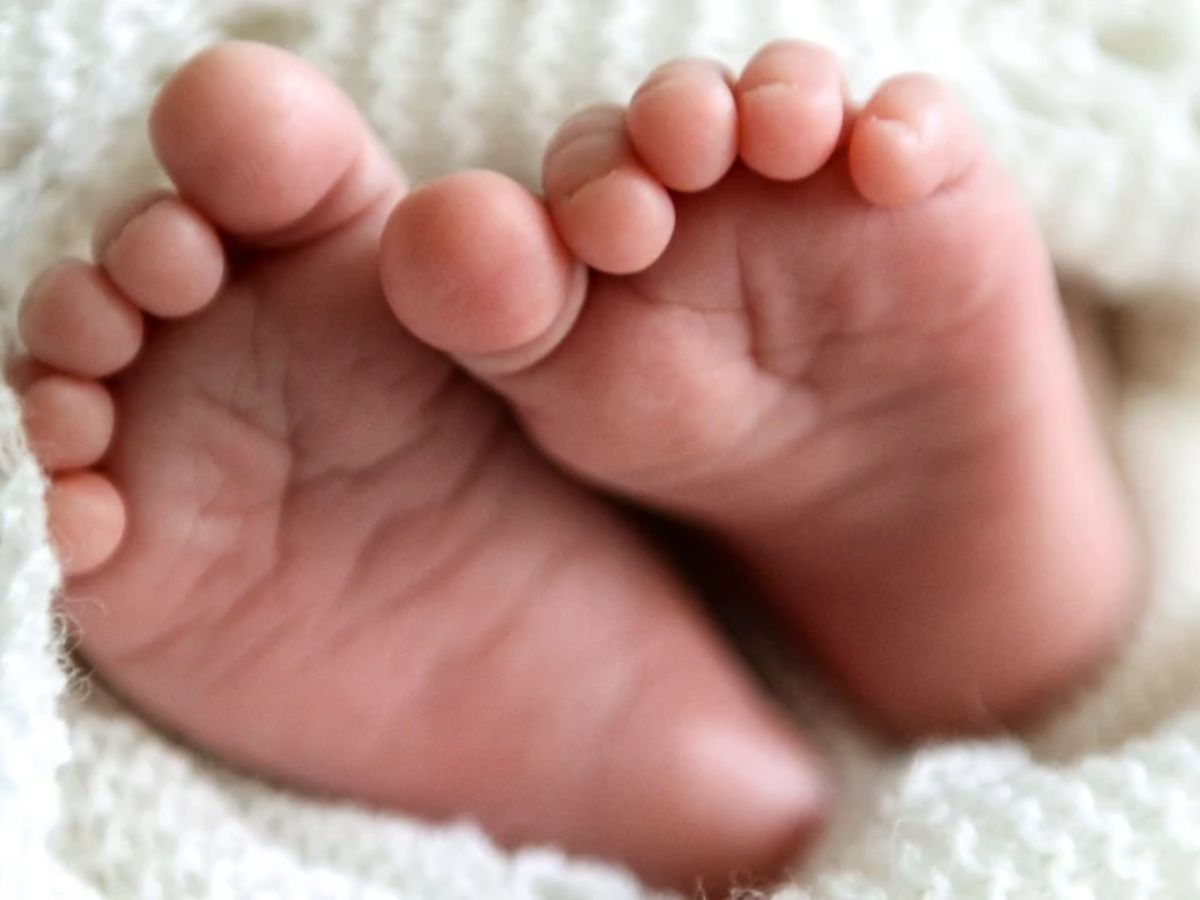
Eight healthy UK babies born using mitochondrial donation therapy to prevent severe inherited mitochondrial disease. Photo/X.
Eight babies have been born in the UK with DNA from three people after undergoing a procedure known as mitochondrial donation therapy. The procedure has been designed to eliminate a severe inherited mitochondrial disease aimed at preventing life-limiting and often fatal diseases caused by mutations in mitochondria.
The UK permits the procedure but strictly regulates the human embryo research has allowed this controversial procedure, once criticized for creating so-called “three-parent babies,” to move forward. The babies, including four girls and four boys (two of whom are identical twins), were all born within the last five years and are reportedly healthy, according to new research published in the New England Journal of Medicine.
Also Read: Staying Active In Adulthood Can Cut Death Risk By 40%, Says Major Study
Sir Doug Turnbull, emeritus professor at the University of Newcastle and one of the pioneers of the treatment, described the development as “a great success for these families.”
He said, “this is a devastating disease with no cure and without this technique, they would not feel that their families were free of mitochondrial disease. This gives them that opportunity.”
The severity and symptoms of mitochondrial disease vary widely depending on the number and type of mitochondrial mutations, but they commonly include neurological, metabolic, and developmental disorders.
Only women at high risk of passing on severe mitochondrial disease qualify for the procedure, which is currently offered exclusively through a specialist service at Newcastle upon Tyne Hospitals NHS Foundation Trust.
The identities of the seven families and their babies have been kept confidential. However, one mother of a baby boy, speaking anonymously, expressed her relief: “The emotional burden of mitochondrial disease has been lifted, and in its place is hope, joy, and deep gratitude.”
The technique involves removing the nuclear DNA from an affected mother’s fertilized embryo and inserting it into a donor embryo that has had its nuclear DNA removed but retains healthy mitochondria. This way, the new embryo contains healthy mitochondria from the donor while maintaining the mother’s nuclear DNA.
Mitochondria carry a small amount of their own genetic material, meaning the resulting child inherits DNA from three people – the mother, father, and mitochondrial donor. However, this mitochondrial DNA accounts for just 0.02% of the total DNA and does not influence inherited traits, leading researchers to reject the label “three-parent baby.”
Out of 22 women who underwent the procedure, only seven became pregnant, resulting in eight healthy births — a success rate of 36%. Of these babies, five were born with no detectable mitochondrial disease. However, tests showed that three had a small percentage of mutated mitochondria carried over during the process.
Though these levels are too low to cause disease, the babies will undergo ongoing monitoring to ensure normal development. Professor Bobby McFarland, who leads the Newcastle service, said, “We have designed a study specifically for that purpose. That’s what is unique about us offering this in Newcastle because there isn’t anywhere else in the world that’s doing this in a regulated way.”
While the procedure treats the mitochondrial disease, new issues of ethical boundries arise. Because mitochondria contain their own genetic code, girls born through the technique will pass the donor’s mitochondrial DNA to their children, effectively altering the human germline.
Despite these concerns, the procedure is hope for many to prevent a devastating disease that has plagued families for generations.
Also Read: PCOS Beyond Periods: How The Syndrome Affects Mental Well-Being
Zubair Amin is a Senior Journalist at NewsX with over seven years of experience in reporting and editorial work. He has written for leading national and international publications, including Foreign Policy Magazine, Al Jazeera, The Economic Times, The Indian Express, The Wire, Article 14, Mongabay, News9, among others. His primary focus is on international affairs, with a strong interest in US politics and policy. He also writes on West Asia, Indian polity, and constitutional issues. Zubair tweets at zubaiyr.amin
A three-alarm fire ravaged a Midwood commercial building on Avenue H, spreading through six connected…
Israeli PM Benjamin Netanyahu announced that recent joint Israel-U.S. strikes destroyed Iran’s nuclear and missile…
Israeli Prime Minister Benjamin Netanyahu says Israel is weakening Iran’s military, destroying missiles, nuclear infrastructure,…
