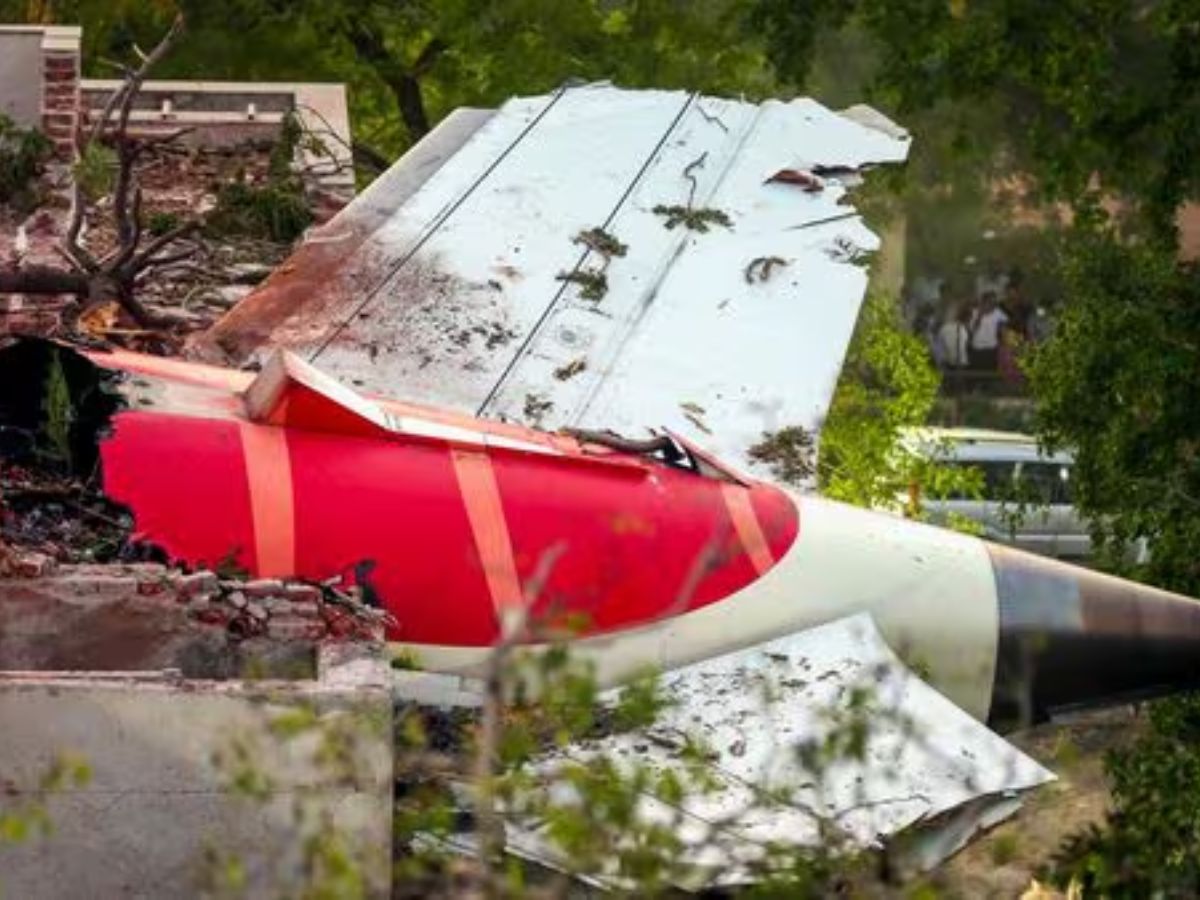
Since the tragic crash of Air India Flight 171 on June 12 in Ahmedabad, a flurry of aviation jargon has dominated headlines and social media. As the investigation unfolds into the Boeing 787 Dreamliner disaster that claimed 274 lives, including people on board and on the ground, many are struggling to make sense of technical terms now part of everyday news.
Here we explain the aviation terms you’re likely seeing and what they actually mean.
This distress call was reportedly issued moments before AI 171 crashed. “Mayday” is an emergency radio signal used internationally by aircraft or ships in life-threatening situations. It’s always repeated three times “Mayday, Mayday, Mayday” to ensure clarity and urgency.
The Aircraft Accident Investigation Bureau (AAIB) is India’s aviation crash investigation authority. Operating under the Ministry of Civil Aviation, the AAIB is currently leading the probe into the Ahmedabad crash, tasked with identifying the cause and issuing safety recommendations.
This small, wind-powered turbine automatically deploys if a plane loses engine power. It helps generate emergency power to operate vital systems. Rumors suggest AI 171’s RAT was deployed, pointing to a possible dual engine failure a rare and catastrophic event.
The Boeing 787 Dreamliner is a fuel-efficient, twin-engine aircraft used on long-haul routes. Known for its advanced safety features, this model had a clean crash record until AI 171. Over 1,100 Dreamliners have been delivered globally since its launch.
Often referred to as part of the “black box,” the FDR logs vital flight data such as speed, altitude, and engine performance. It helps investigators reconstruct what went wrong.
The second component of the black box, the CVR records audio inside the cockpit including pilot conversations, alarms, and air traffic control communications. It offers insight into what the crew was experiencing in the final minutes.
Despite the name, it’s actually bright orange. The term refers to the FDR and CVR combined. Black boxes are designed to survive extreme conditions, including fire and impact. AI 171’s black box reportedly withstood temperatures over 1,000°C.
ATC monitors and guides aircraft from the ground, coordinating take-offs, landings, and in-flight routing to avoid collisions. Transcripts between ATC and AI 171 are critical to understanding the aircraft’s final seconds.
Key during take-off and landing, flaps are movable parts of an aircraft’s wings that provide extra lift at lower speeds. Whether AI 171’s flaps were properly deployed is a major focus of the crash probe.
The NTSB is the U.S. agency responsible for transport accident investigations. Although based in the U.S., the NTSB is expected to assist in the Ahmedabad crash inquiry due to the Dreamliner’s American origin.
The crash of Air India Flight 171 is one of the deadliest in recent Indian aviation history. Understanding these technical terms helps make sense of ongoing updates, and sheds light on the complex world of air crash investigations.
ALSO READ: Murder Weapon Recovered In Meghalaya Honeymoon Killing Of Raja Raghuvanshi
Sofia Babu Chacko is a journalist with over five years of experience reporting on Indian politics, crime, human rights, gender issues, and stories about marginalized communities. She believes journalism plays a crucial role in amplifying unheard voices and bringing attention to issues that truly matter. Sofia has contributed articles to The New Indian Express, Youth Ki Awaaz, and Maktoob Media. She is also a recipient of the 2025 Laadli Media Awards for gender sensitivity. Beyond the newsroom, she is a music enthusiast who enjoys singing. Connect with Sofia on X: https://x.com/SBCism
The Trump administration has shared a 15-point peace plan with Iran through intermediaries, including Pakistan,…
Alan Ritchson, star of Reacher and War Machine, is under investigation after a physical altercation…
Iran says the US and Israel struck targets near the Bushehr Nuclear Power Plant, raising…
